
Livraison le jour même ou le lendemain

Qualité garantie

Débloquez vos offres de bienvenue: Livraison GRATUITE | Jusqu'à -80 % | 30 jours d'essai gratuits à JoyPlus
Téléchargez l'application
The dining table is the beating heart of the home. It's where we gather for family meals, dinners with friends, or kids' painting sessions. But every spilt drink or overly generous serving of a saucy dish can quickly turn this shared space into a stress zone. The promise of a stain-resistant tablecloth sounds like a miracle solution. Be careful, though: the market is flooded with products bearing misleading labels, and disappointment often follows.
To ensure you don't regret your purchase, let's break down the most common pitfalls together:
To help you see things more clearly, we've scrutinised the criteria that truly separate a simple piece of fabric from a true everyday ally.
The term "stain-resistant" covers several different realities. The choice of material is the first decisive criterion, as it determines the appearance, feel, and level of protection.
The Oilcloth Tablecloth (Vinyl): This is the champion of protection. Made of a PVC-coated canvas, it is completely impermeable to liquids and grease. A simple wipe with a damp sponge is all it takes to clean it. Recent models have evolved significantly: oilcloth by the metre is now more flexible and comes in a wide variety of patterns, from the most classic to the most modern. It's the perfect ally for intensive, hassle-free daily use.
The Coated Cotton Tablecloth: This offers an excellent compromise. It is a fabric tablecloth (cotton, linen, polyester) covered with one or more layers of acrylic coating. This treatment makes it water-repellent and resistant to most everyday stains, while retaining a more natural textile look and feel than an oilcloth. Most are machine-washable tablecloths at low temperatures.
The Recycled Cotton Tablecloth with Treatment: For those who prioritise the aesthetic of fabric and an eco-conscious approach, the recycled cotton tablecloth is an interesting option. Some models feature a stain-resistant treatment that makes cleaning up small accidents easier, without being completely waterproof. They offer an elegant drape and a pleasant texture, ideal for hosting guests.
Ease of maintenance is the crux of the matter when looking for a stain-resistant tablecloth.
A well-sized tablecloth transforms the look of a table. The key is to allow for a "drop," which is the length of fabric that hangs down on each side of the tabletop.
For an aesthetic result, plan for a drop of 20 to 30?cm on each side.
This margin ensures an elegant drape without the tablecloth dragging on guests' laps.
Because every home is unique, here is our selection designed for different needs, ticking all the boxes for style and practicality.
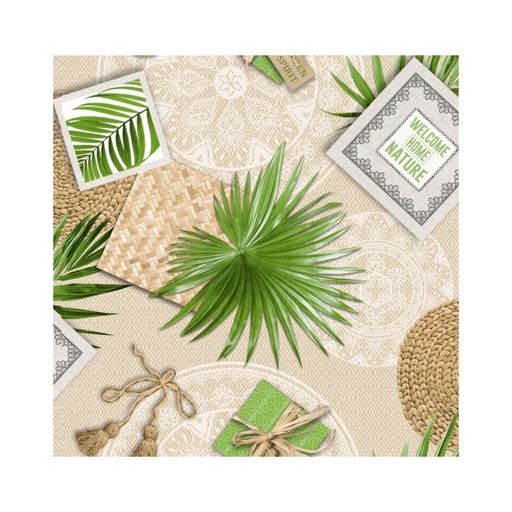
Why we chose it: For families with young children, peace of mind is priceless. This tablecloth combines a trendy botanical pattern with the absolute protection of vinyl. Say goodbye to the stress of spilt juice or felt-tip pen marks.
It sidesteps the "plastic" look thanks to its satin finish and delicate pattern, making it a true designer table protector, light years away from the oilcloths of yesteryear.
Maximum protection and instant cleaning with a single wipe. Delivered rolled to prevent creases.
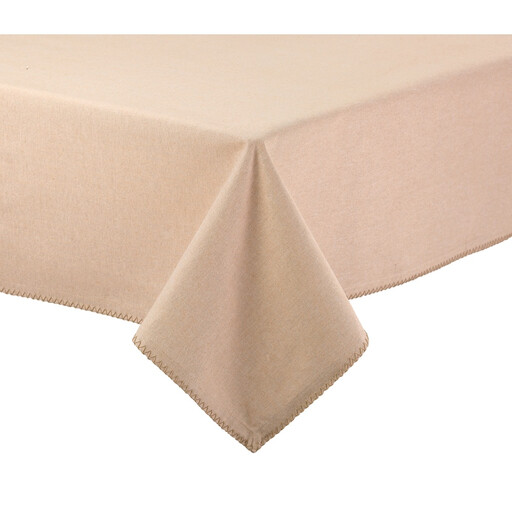
Why we chose it: Perfect for those who refuse to choose between the elegance of fabric and more conscious consumption. It offers the drape and texture of a natural fibre tablecloth, with the practicality of a stain-resistant treatment and eco-friendly manufacturing.
It solves the dilemma between aesthetics and protection. Its treatment helps fend off minor accidents while maintaining an authentic fabric texture, far from the total impermeability of an oilcloth.
Made from 80% recycled cotton, Oeko-Tex certified, and featuring a neat "saddle stitch" finish.
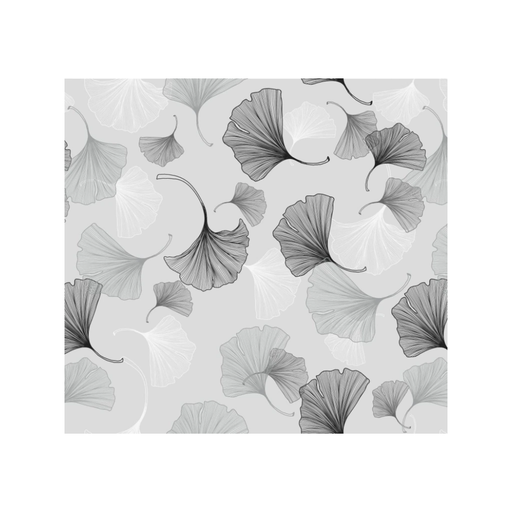
Why we chose it: Perfect for dressing a round table in a modern kitchen or dining room. Its graphic Ginkgo leaf pattern in shades of grey and silver adds a touch of sophistication while ensuring flawless protection.
It proves that a practical tablecloth can be a centrepiece of your decor. Its modern tablecloth pattern is the polar opposite of the dated prints sometimes associated with oilcloth.
A 140 cm round tablecloth format suitable for tables seating 4 to 6 people, combining a chic design with maximum ease of maintenance.
We have put together a complete selection of tablecloths that meet our criteria for style, practicality, and safety.
A water-repellent tablecloth causes liquids to bead on its surface, but if the liquid is not wiped up quickly, it will eventually penetrate the fibres. A true stain-resistant tablecloth, like an oilcloth, is waterproof: the liquid cannot pass through it, which completely protects the table underneath and prevents the stain from setting.
Oilcloth tablecloths are often delivered rolled to avoid creases. If creases do form, never iron it directly. You can lay it out in the sun for an hour to let the heat soften the vinyl, or use a hairdryer on a low setting and from a safe distance, smoothing the crease out by hand.
For a table that is 180?cm long, applying the rule of a 20 to 30?cm drop on each side, the ideal length for your tablecloth will be between 220?cm (180 + 20 + 20) and 240?cm (180 + 30 + 30). A rectangular tablecloth that is 250?cm long is a standard size that will also work very well.