
Livraison le jour même ou le lendemain

Qualité garantie

Débloquez vos offres de bienvenue: Livraison GRATUITE | Jusqu'à -80 % | 30 jours d'essai gratuits à JoyPlus
Téléchargez l'application
A splash of red wine, a smear of sauce, a sweat mark or a make-up stain – each one needs a different approach. Yet many shoppers still pick a stain remover based purely on the promise printed on the bottle. The result? A product that may be ill-suited to the job, or worse, one that damages certain fabrics.
The phrase "colours and whites" doesn't mean the product is suitable for all fabrics. Wool, silk, leather, flame-retardant materials and dry-clean-only garments often require special care.
A stain remover that works on cotton and synthetic fibres may be unsuitable for a silk blouse or a woollen jumper. Always check the garment's care label, as well as any exclusions listed on the product.
An active-oxygen stain remover that claims to be effective at low temperatures can be handy for a 20°C or 30°C wash. However, the result also depends on the type of stain, how long it has been there and how much product you use. An old or greasy stain may need pre-treatment and targeted application.
A large pack isn't always better value – it all depends on the recommended dosage and how often you use it. Conversely, a small 50 ml bottle can be perfect for the occasional treatment of rust or deodorant marks, without having to store a bulky product.
Start by identifying the type of soiling:
The ingredients list also offers valuable clues. Some powders, for example, combine oxygen-based bleaching agents, enzymes and surfactants. This doesn't guarantee the same effectiveness on every stain, but it does help you match the formula to your intended use.
The right format depends largely on your habits:
Also check the maximum dwell time. Some products work in just a few minutes and must not be allowed to dry on the garment.
A stain remover described as colour-safe can be used on coloured clothing, provided you follow the manufacturer's instructions. Nevertheless, always test it on an inconspicuous area, especially with dark shades or delicate fabrics.
For wool and silk, only choose a product that clearly mentions these fibres. Powders containing oxygen-based or enzymatic agents may have specific exclusions. Carpets and sofas also need a formula designed for upholstery fabrics, with a preliminary test on a hidden area.
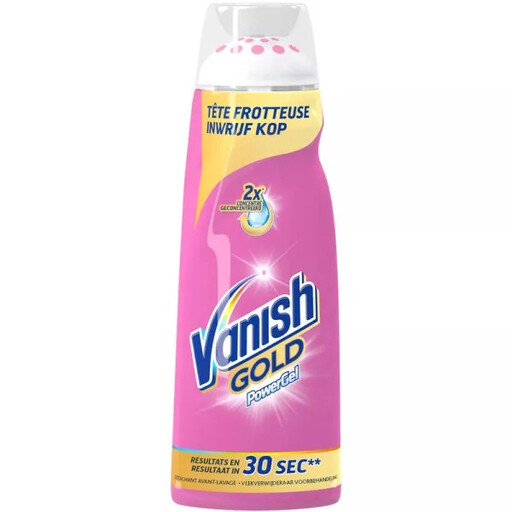
Why this suits this profile: its 200 ml format and applicator tip make it easy to treat everyday stains locally, without investing in a large container.
Targeted application reduces waste compared to treating the entire wash load. The instructions recommend a maximum dwell time of five minutes.
A concentrated gel with no chlorine bleach, designed for colours and whites. Not recommended for wool, silk or leather.
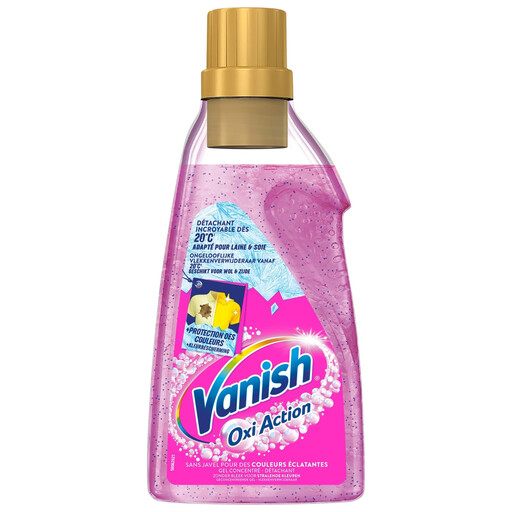
Why this suits this profile: this large format combines a gel, a dosing cap and a rubbing head – a practical set for users who regularly treat their laundry.
The stated compatibility with wool and silk meets a specific need, unlike formulas that exclude these fibres.
A gel with no chlorine bleach, claimed to be effective from 20°C, with colour-loss protection according to the product sheet.
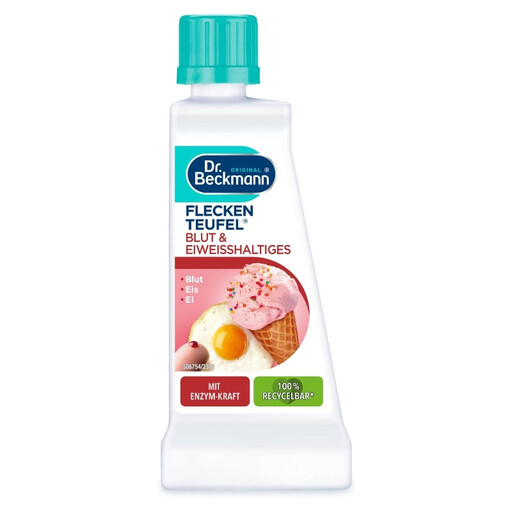
Why this suits this profile: this compact bottle targets rust, deodorant and sweat marks, which are often difficult to remove with a general-purpose powder.
Its specialist use avoids overdosing a multi-purpose stain remover for a small area. Carpets and leather, however, should be excluded.
An anti-oxidation complex stated on the product sheet, a 50 ml format and claimed use on coloured textiles, excluding carpets and leather.
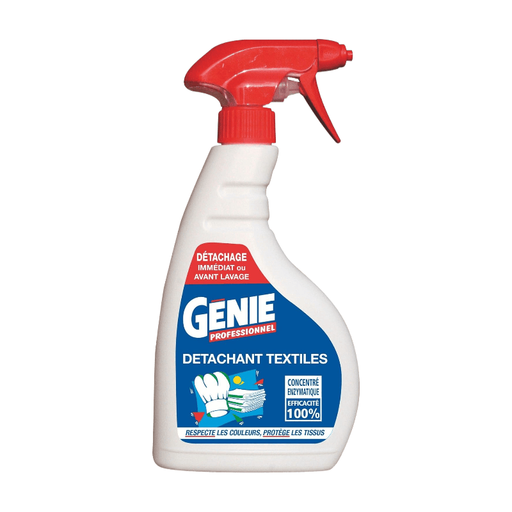
Why this suits this profile: its ready-to-use spray can be applied to fabrics, carpets and sofa upholstery for local treatment without immediately needing the washing machine.
It meets a need often overlooked by clothing stain removers. A test on a discreet area is still recommended before any application.
A 500 ml spray that can be used for pre-treatment or immediate stain removal, with claimed compatibility with upholstery fabrics.
We've put together a comprehensive, real-time updated selection of products that meet these selection criteria and the requirements of European safety regulations.
Products with a hazard classification, particularly corrosive or irritant ones, must be handled with care. In case of contact with eyes or skin, follow the instructions on the packaging.
A pre-wash stain remover is applied directly to the affected area before the cycle. It is particularly suitable for localised stains. Depending on the manufacturer's instructions, a powder can be added to the drum, used for soaking, or turned into a paste for pre-treatment. The choice depends on the fabric, the stain and the instructions for use.
Some products are designed for both colours and whites. However, you must follow the dosage and carry out a colour-fastness test. Products intended for white laundry may contain anti-greying agents or optical brighteners, which are not necessarily suitable for all coloured fabrics.
Consumption varies depending on the format and method of application. A spray or gel intended for local use can be used several times to treat small stains. A 960 g, 1.445 kg or 2.7 kg powder is more suited to regular machine use, provided you stick to the dose stated on the packaging.