
Same-day & Next-day Delivery

Quality Guaranteed

Unlock Your Welcome Offers: FREE Delivery | Up to 80% OFF | Free 30-day JoyPlus trial
Download the APP
Red wine on a tablecloth, coffee on a shirt, grease on a child’s clothes or a mark left by a pet on a rug: the right fabric stain remover depends on both the stain and the material you need to treat. Packaging often promises to tackle «everything», without always making the product’s limitations clear.
Before buying a laundry stain remover, check three things: which fabrics it’s suitable for, how to apply it and the temperature it’s designed to work at. A formula that works well on cotton may not be suitable for wool, silk, leather or upholstery.
A product designed for the kitchen, bathroom or washable surfaces isn’t necessarily suitable for clothes. Bleach-based gels, abrasive pastes and some bathroom cleaners can damage fibres, discolour fabrics or affect coatings.
For laundry, look for clear wording such as pre-wash stain remover, clothing stain remover or suitable for washable fabrics. For rugs and carpets, choose a formula specifically designed for those surfaces.
Coloured, greasy and protein-based stains need different treatments. Wine, tea and fruit stains are generally oxidisable. Oil and butter need a formula that targets grease. Blood, milk and egg stains, meanwhile, are protein-based.
An oxygen-based stain-removing powder may be suitable for some coloured stains, while a stain-removing spray lets you treat a small area quickly. It’s better to check the stains listed on the label than to rely on an overly general claim.
Even if a formula is described as colour-safe, always test it on a hidden area first. The result can vary depending on the dye, the age of the garment and any treatments applied to the fibres.
Always follow the care label. Don’t apply the product to wool, silk, leather, suede or a garment that requires dry cleaning if the stain remover manufacturer advises against it.
For coloured stains, look for wording such as active oxygen stain remover or oxygen-based bleaching agents in the ingredients. For food stains, formulas combining active oxygen and enzymes may tackle several types of stain, depending on the manufacturer’s instructions.
For a single stain, a spray or gel allows precise application. Powder is generally used alongside detergent, for soaking or as a pre-treatment, following the instructions for use.
If you often wash at 20 °C or 30 °C, choose a formula that clearly states the temperature at which it works. Some products in this selection claim to work from 20 °C or 30 °C. This doesn’t guarantee the same results on every stain: contact time, dosage and how long the stain has been there also make a difference.
Never exceed the recommended dose. Using more won’t necessarily improve the result and will increase contact with the product unnecessarily.
A 50 ml bottle is handy for occasional use, for example on a rust or drink stain. For a family, a large tub of powder or a 750 ml bottle means you won’t need to restock as often. If you use a carpet-cleaning machine, look for a concentrate designed for that type of appliance.
Also check the hazard pictograms, recommended protective equipment and storage instructions. Never mix cleaning products, especially those containing bleach, ammonia or acids.
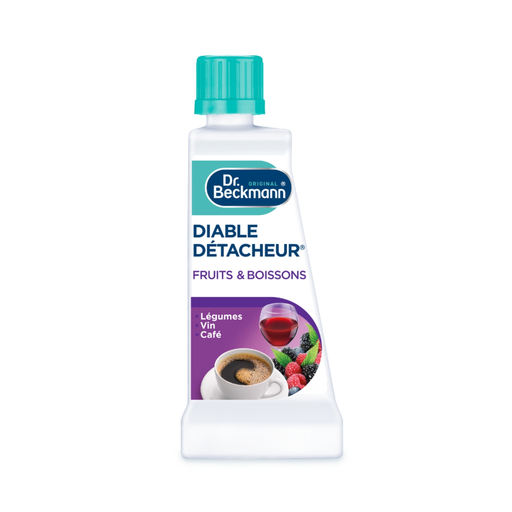
Why it suits this need : Its compact size is ideal for occasional use on coffee, tea, red wine, fruit and juice stains.
The product information says it can be used on washable and non-washable fabrics, but excludes rugs and upholstery.
An active-oxygen powder, with no chlorine, fragrance or colourants according to the product description.
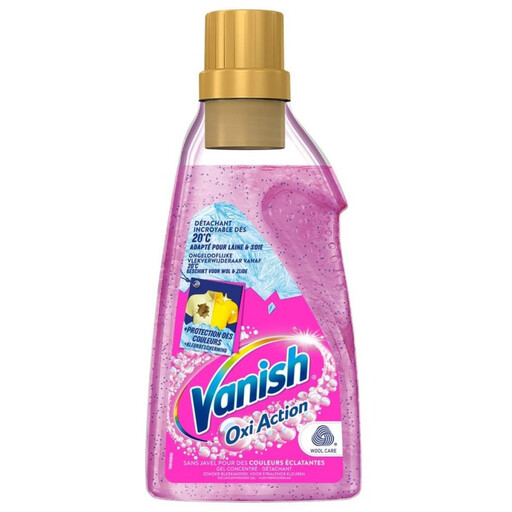
Why it suits this need : The 1.5 l bottle and applicator tip make it a good choice for regular use and targeted application.
The description lists wool and silk among the suitable fabrics, but the manufacturer’s instructions and the garment’s care label should always take priority.
An active-oxygen gel that’s said to work from 20 °C, with non-ionic and anionic surfactants.
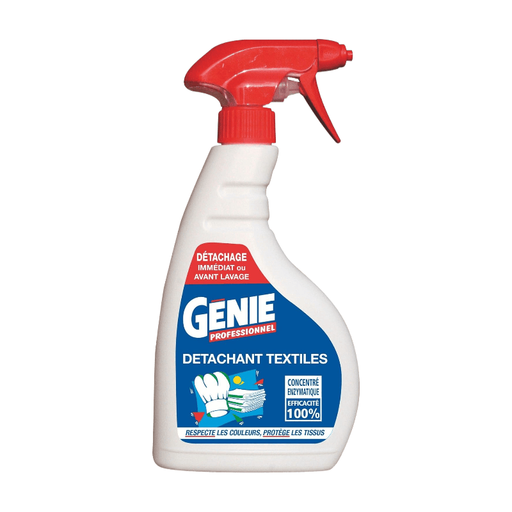
Why it suits this need : Its ready-to-use spray is designed for clothes, rugs and upholstery — a real plus for households with children or pets.
The compatible surfaces are clearly listed, so you won’t mistake it for a general-purpose household cleaner.
Use it as a pre-treatment or to tackle stains straight away, in a handy 500 ml spray bottle.
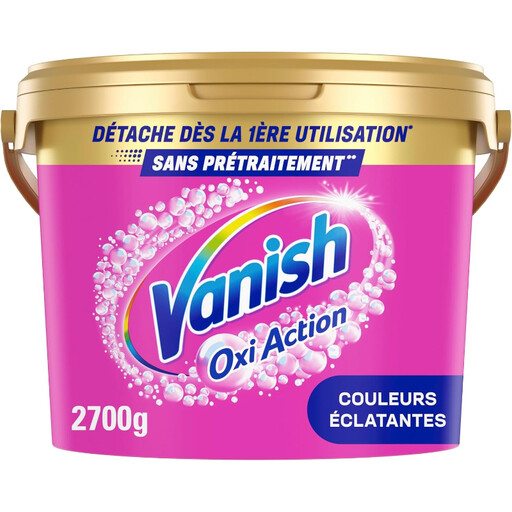
Why it suits this need : Its large size and claimed effectiveness from 20 °C make it a practical choice for households with frequent laundry loads.
The product information lists fabrics to avoid, including wool, silk, leather and certain treated items.
A chlorine-free powder said to be suitable for colours and whites, with dosage instructions for machine washing, hand washing and pre-treatment.
We’ve put together a comprehensive selection, updated in real time, of products that meet these strict criteria and comply with European safety regulations.
Choose a product to suit the stain: an active-oxygen formula for some coloured stains, an enzyme-based product for protein stains and a targeted spray for quick treatment. Always check colourfastness and read any restrictions on the packaging.
Some products claim to work from 20 °C or 30 °C. Results still depend on the fabric, dosage, contact time and how long the stain has been there. Washing at a low temperature doesn’t mean you can skip the instructions.
No, unless the manufacturer explicitly says it’s suitable for rugs, carpets or upholstery. A stain remover made for laundry may leave a mark or damage the covering. For these surfaces, look for a rug and carpet stain remover or an upholstery stain remover, and test it on a hidden area first.