
Livraison le jour même ou le lendemain

Qualité garantie

Débloquez vos offres de bienvenue: Livraison GRATUITE | Jusqu'à -80 % | 30 jours d'essai gratuits à JoyPlus
Téléchargez l'application
A grease stain on clothing, red wine on a tablecloth, or limescale in the bathroom – these aren't treated the same way. Yet many products are sold as all-purpose. The result? Incorrect use, risk of discolouration, or a purchase that simply isn't right for the task.
This guide helps you choose a stain remover for fabrics or an anti-stain cleaner based on the surface, the type of soiling, and the application method you need. The products featured are compared using information provided by the manufacturers and practical criteria that are useful both at home and in a professional setting.
A spray designed for laundry won't necessarily work on wood, metal, or painted surfaces. Conversely, an anti-limescale cleaner, a household degreaser, or a scouring cream can damage textile fibres.
Before placing your order, always check the intended use stated on the packaging: laundry, rugs, carpets, sofas, bathrooms, or kitchen surfaces.
The nature of the stain remains the most important factor to consider. Enzymes are generally used against organic residues like blood, milk, or chocolate, while surfactants target greasy soiling more effectively. A product designed to dissolve limescale won't perform the same role as a pre-wash stain remover intended for fabrics.
The formulation and claimed results vary from one product to another. They should be taken as manufacturer guidelines, not as a guarantee that works on every material.
Wool, silk, leather, flame-retardant fabrics, and dry-clean-only garments require special care. Even when a product is described as colour-safe, always test it on an inconspicuous area first.
The dwell time also deserves your full attention: some gels need to be rinsed or washed off quickly, while certain prepared powders must be used without delay.
If you regularly treat large volumes of laundry, check the net weight and the dosage required per cycle. A large container isn't necessarily more economical if each use demands a significant amount of product.
Look for specific mentions: colours and whites, machine-washable fabrics, wool, silk, or upholstery materials. Formulas containing oxygen-based bleaching agents may be suitable for some textiles, but the instructions on the label should always take priority.
Avoid mixing different cleaners. Products containing bleach, in particular, must never be combined with other products – dangerous gases can form.
Depending on its formulation, a product may irritate the skin or eyes, or even be corrosive. Use it according to the instructions on the label, keep it out of reach of children, and ventilate the room when the instructions recommend it. For some products, wearing gloves and eye protection may be necessary.
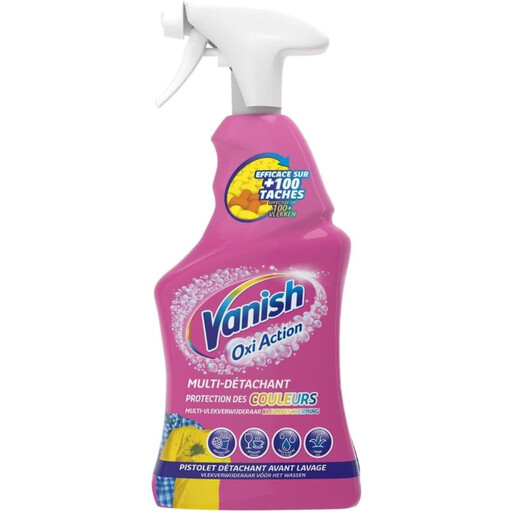
Why this product suits this profile: its 750 ml spray format lets you treat common or stubborn stains directly before a regular wash.
The instructions specify which materials to avoid, including wool, silk, and leather. This reduces the risk of incorrect use.
Direct application, a recommended dwell time of 1 to 2 minutes, and claimed compatibility with both whites and colours.
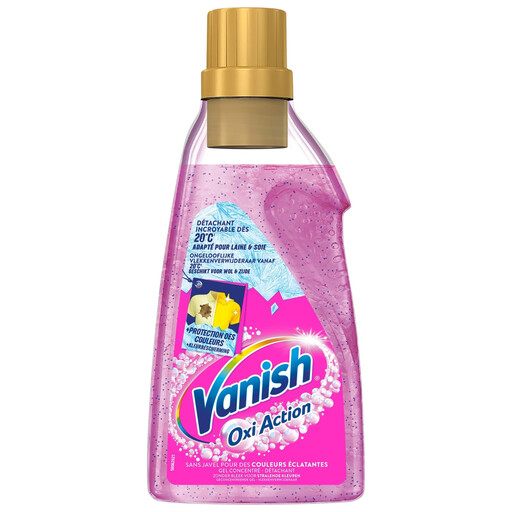
Why this product suits this profile: its 1.5 litre gel format and applicator cap are designed for those seeking a precise solution for the laundry types listed on the packaging.
Its use relies on the dosage instructions and the garment's washing guidelines, rather than a one-size-fits-all promise.
Concentrated gel, claimed action from 20 °C, and an integrated scrubber head in the cap.
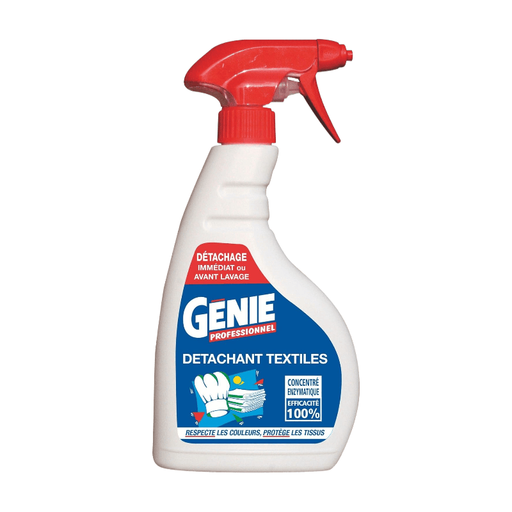
Why this product suits this profile: this ready-to-use spray targets laundry, rugs, carpets, and upholstery fabrics for spot treatment.
Its multi-textile purpose is clearly stated. However, a preliminary test on delicate materials is still recommended.
500 ml format, usable as a pre-treatment or for spot stain removal, with manufacturing stated in France.
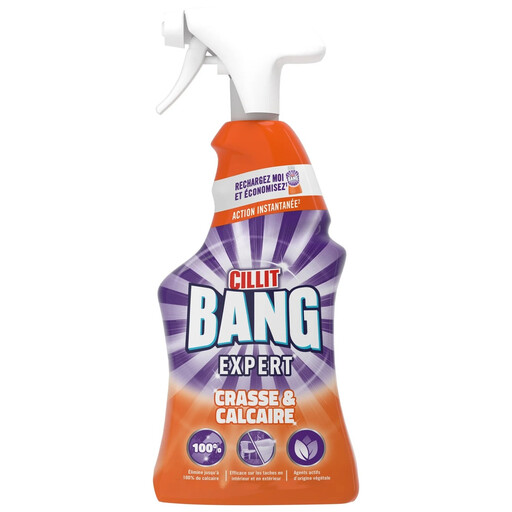
Why this product suits this profile: its bathroom-specific purpose meets the needs of tackling limescale, soap scum, and soiling on various surfaces.
It does not replace a laundry stain remover: the product page states it is intended for interior and exterior surfaces, with rinsing or wiping after application.
750 ml spray, foam designed to tackle limescale and soap scum, with a refillable bottle according to the product page.
We've compiled a complete, real-time updated selection of products that meet these demanding criteria and comply with European safety regulations.
For specific stains, a targeted formula will often be more effective: a stain remover for grease and oil, a product for fruit and drinks, or one suited to colours and whites. Professionals can also choose between ready-to-use solutions and powders to dose according to the volume of laundry.
Spray is ideal for a localised stain and quick application. Gel allows for more precise work, especially when it has an applicator nozzle. Stain remover powder is more commonly used in the machine, for soaking, or as part of a treatment to be prepared according to the instructions on the label.
Yes, but only if the product page mentions upholstery fabrics, rugs, or carpets. First test it on an inconspicuous area, apply the recommended amount, and dab with a clean cloth. A product designed for laundry is not automatically compatible with upholstery surfaces.
It depends on the product and its storage conditions. Check the date or instructions on the packaging, then store the product tightly closed, in a cool, dry place away from heat and direct light.