
Livraison le jour même ou le lendemain

Qualité garantie

Débloquez vos offres de bienvenue: Livraison GRATUITE | Jusqu'à -80 % | 30 jours d'essai gratuits à JoyPlus
Téléchargez l'application
A coffee stain on a shirt, grease on a tablecloth, or mud on a child’s clothing doesn’t always need the same treatment. Yet, packaging for stain remover often promises “fast” or “complete” action, without always specifying the limits of use, the recommended temperature, or which fabrics are incompatible.
To avoid buying the wrong product, it’s best to compare the format, the stated ingredients, and the method of application. Here is a selection of recommended options for 2026, designed for individuals, families, and cleaning professionals.
A laundry stain remover added to the drum complements the action of your detergent and is suitable for regular washes. In contrast, a pre-wash stain remover is applied directly to a specific area. It usually requires a short dwell time before going into the machine.
Buying a spray to treat an entire wash load can therefore lead to unnecessary waste. Conversely, using only a powder in the drum on an old stain may not be enough.
A formula without chlorine bleach is not automatically compatible with all fabrics. Wool, silk, leather, water-repellent fabrics, or garments requiring dry cleaning may have specific restrictions.
Before any application, check the care label and test on an inconspicuous area. This precaution is especially important with a stain remover for tough stains that contains oxygen-based agents, enzymes, or surfactants.
A 50 ml or 200 ml bottle can be handy for a targeted stain, while a 1 kg to 2.7 kg pack will be more suitable for frequent laundry loads. The price of the container alone isn’t enough to compare offers: also look at the number of doses, the recommended dosage, and the intended type of use.
A stain remover that works at low temperatures can be useful for cycles at 20 °C or 30 °C. The product sheets for some powders and gels indicate use from 20 °C, while other formulas claim to work from 30 °C.
These indications do not guarantee that all stains will disappear automatically. The result also depends on how old the stain is, the fabric, the dosage, and the cycle length.
Greasy stains — oil, butter, sauce, or make-up — need a suitable formula. Wine, coffee, berries, and blood may require a different treatment. For a stain remover for carpets and sofas, check that the manufacturer explicitly allows its use on carpets, rugs, and upholstery fabrics.
Non-washable surfaces often require local treatment, a controlled dwell time, and dabbing with a clean cloth rather than thorough rinsing.
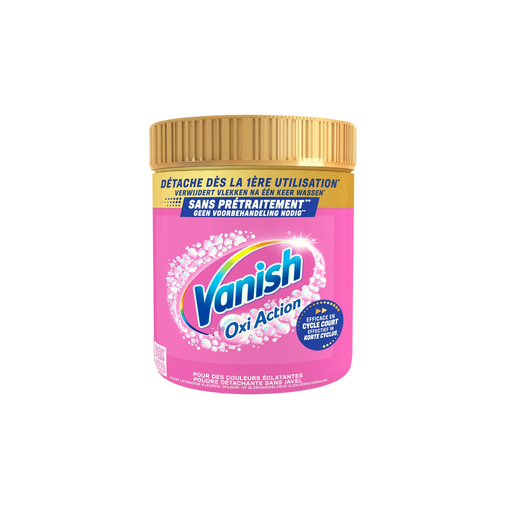
Why this choice suits this profile: a versatile powder to add to your wash or use as a pre-treatment, with effectiveness claimed from 20 °C according to the product sheet.
The 1.445 kg format avoids having to buy lots of small bottles for family laundry. However, it is still essential to follow the recommended dosage.
Formula claimed to be chlorine-free, oxygen-based bleaching agents, and a cap with an integrated brush head.
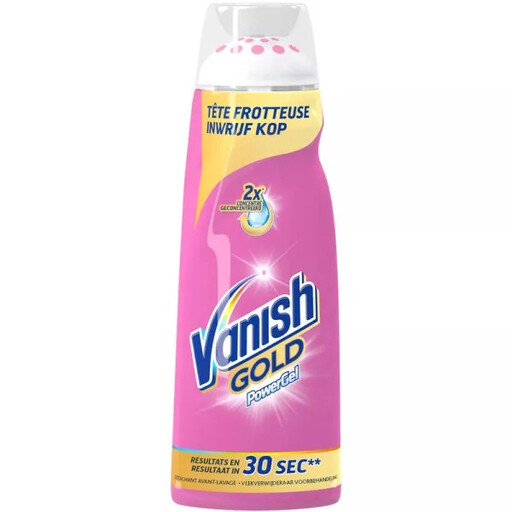
Why this choice suits this profile: its applicator tip allows you to apply the product directly onto a stain from mud, grass, oil, or make-up.
The stated dwell time is no more than five minutes. Do not let the gel dry on the fabric and do not use it on wool, silk, or leather.
200 ml format, formula claimed to be bleach-free, and localised application on both colours and whites, according to the instructions.
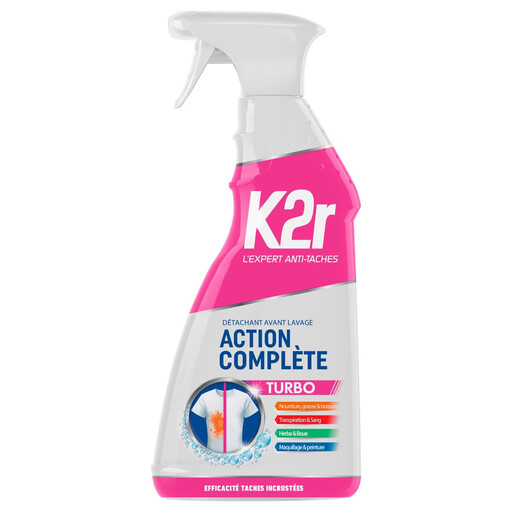
Why this choice suits this profile: its large format is ideal for big families and frequent use on grease, blood, or make-up stains.
This is a pre-treatment: spray, rub gently, then wash. Test the product first on a hidden area and avoid wool and silk.
Precise spray, 750 ml volume, and the presence of surfactants indicated on the product sheet.
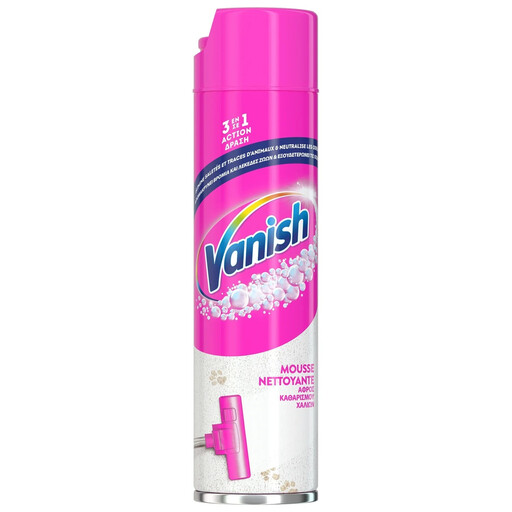
Why this choice suits this profile: this spray is designed for carpets, rugs, and upholstery fabrics, for both routine maintenance and occasional stains.
Test on a hidden area, ventilate the room, and observe the restrictions regarding wool, silk, and leather.
600 ml format, spray application, and use indicated on carpets, rugs, and upholstery fabrics.
Find an updated selection of products to compare formats, uses, and application instructions.
A product containing surfactants or a formula described as suitable for oil, butter, sauces, and make-up can work for this type of soiling. The laundry stain remover must be used according to the label instructions, after testing on a discreet area.
Some products indicate use from 20 °C, particularly several powders and gels based on oxygen agents. However, check the dosage and instructions for the product you choose: a low temperature does not compensate for a dwell time that is too short or an old stain.
The best-before date or batch information is on the packaging. Store the product closed, away from moisture and heat. A powder that has absorbed moisture or a spray with a blocked nozzle should be checked before any use.