
Livraison le jour même ou le lendemain

Qualité garantie

Débloquez vos offres de bienvenue: Livraison GRATUITE | Jusqu'à -80 % | 30 jours d'essai gratuits à JoyPlus
Téléchargez l'application
A splash of sauce, a spill of wine, a sweat mark or a make-up smudge – not every stain should be treated the same way. Yet many households choose their stain remover based on promises like "fast action" or "effective from the first wash". The result? Disappointment when the product isn't suited to the fabric, the wash temperature or the type of stain.
So before you buy a fabric stain remover, it's worth looking at a few concrete details: the format, which fibres it's compatible with, how to apply it, and any precautions you need to take. Here are the key points to consider so you don't end up with the wrong product.
A stain-removing spray or gel is applied directly to the area you want to treat, before washing. A stain-removing powder can usually be added to the drum or the detergent drawer, depending on the manufacturer's instructions.
Choosing a product just because it claims to be highly concentrated isn't much use if you're mainly after a solution for several family washes. On the other hand, a large tub of powder won't necessarily be practical for tackling a single stain on a shirt.
Products containing active oxygen aren't always suitable for wool, silk, leather or clothes that need dry cleaning. Even if a stain remover promises to protect colours, always check the garment's care label and test it on an inconspicuous area.
The phrase "colours and whites" doesn't mean the product is compatible with all fibres. Delicate garments need a stain remover for wool and silk that's specifically designed for the purpose.
Leaving a stain remover on for several hours can damage certain fibres or alter a colour. Pre-treatment products should be used for the time stated on the packaging. VANISH Oxi Action gel, for example, recommends a maximum dwell time of five minutes before washing, while some powders can be used for soaking, with times that vary depending on whether the laundry is white or coloured.
For a family, compare the weight or volume of the product with how often you'll use it. A 480 g size may be enough for occasional use, while a 1.445 kg or 2.7 kg container will be better for frequent washes.
Formulas based on oxygen-based bleaching agents or active oxygen are common for treating oxidisable stains and white laundry. Some products also combine enzymes and surfactants to target several types of soiling.
For rust, deodorant or sweat stains, a specialised product will often be more effective than a general-purpose stain remover. The DR BECKMANN product shown below contains an anti-oxidation complex and is applied directly to the affected area.
Several products claim to be effective from 20 °C or 30 °C, which suits standard low-temperature cycles. This doesn't mean you can ignore the recommended dosage and programme, though.
To reduce the risk of colour loss, always test the product on a hidden area. Never mix different stain removers, and avoid exposing pre-treated fabric to a heat source or direct sunlight before rinsing.
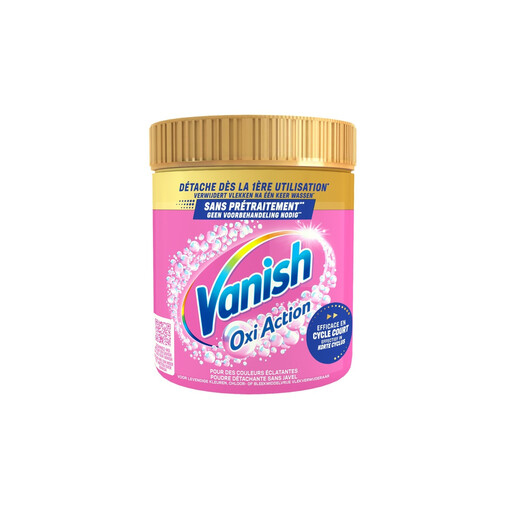
Why this choice suits this profile: Its compact size lets you handle everyday washes – in the machine, as a soak or as a pre-treatment – without investing in a large container.
The product information states it can be used from 20 °C and has an anti-fade action. A patch test on colours is still recommended, though.
480 g size, active oxygen-based powder, suitable for machine use or pre-treatment.
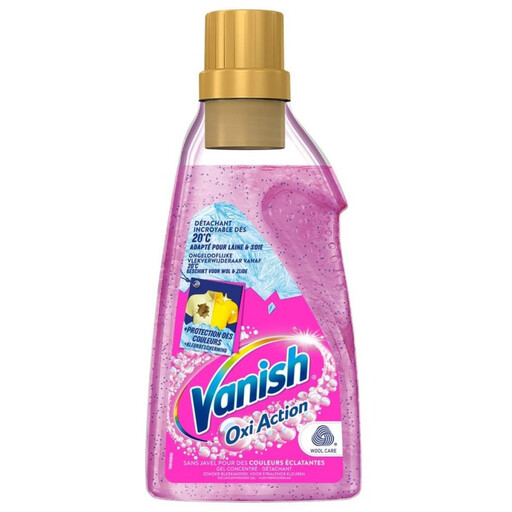
Why this choice suits this profile: This large format combines targeted application thanks to its rubbing nozzle with claimed suitability for wool and silk, subject to the care label instructions.
It distinguishes between local treatment and machine washing, and reminds you to follow the garment's care label, which reduces the risk of misuse.
1.5 l, oxygen-based bleaching agents, claimed colour protection and applicator cap.
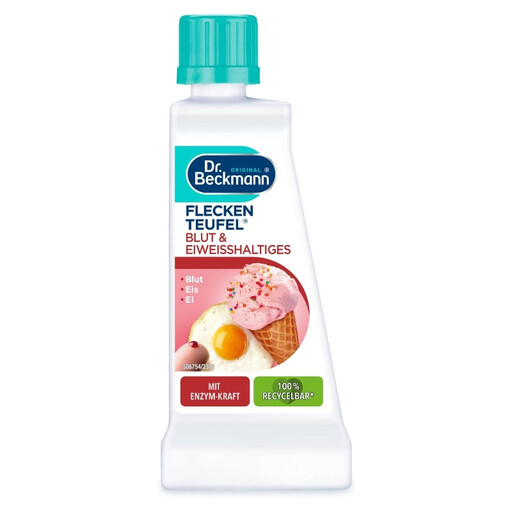
Why this choice suits this profile: Its small bottle targets rust, deodorant and sweat marks, rather than treating a whole wash load.
It stops you buying a large volume when you only need to tackle a specific, occasional stain.
Anti-oxidation complex, 50 ml size, claimed compatibility with colours and fabrics, except carpets and leather.
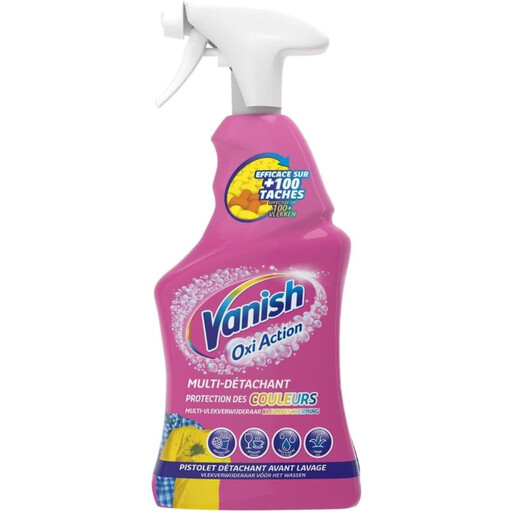
Why this choice suits this profile: The spray makes pre-treating everyday or set-in stains simple before a standard wash.
The product information states a dwell time of one to two minutes and excludes wool, silk and leather.
750 ml bottle, direct application, claimed suitability for colours and white laundry.
We've put together a complete, real-time updated selection of products that meet these demanding criteria and comply with European safety regulations.
Products intended for laundry should not be applied to skin, household surfaces or fabrics not mentioned in their instructions.
Yes, some powders and gels claim to be effective from 20 °C or 30 °C. However, the temperature must still be compatible with the garment and the programme you've selected. A hotter cycle isn't always necessary, but you must stick to the dosage and action time.
The shelf life depends on the product and the information on the packaging. Keep the powder in its original container, tightly sealed, away from moisture, heat and direct light. A product that has absorbed moisture may be harder to measure out.
A product designed to whiten laundry or for white washing may work, especially if it contains oxygen-based bleaching agents. However, it shouldn't be used on wool, silk or coloured fabrics if the instructions exclude them. Also check whether the product is intended for machine washing or only for soaking and pre-treatment.