
Livraison le jour même ou le lendemain

Qualité garantie

Débloquez vos offres de bienvenue: Livraison GRATUITE | Jusqu'à -80 % | 30 jours d'essai gratuits à JoyPlus
Téléchargez l'application
A stain from sauce, wine, grease or makeup doesn't always need the same treatment. Yet many products are chosen based on a simple promise of "power", without checking their compatibility with the fabric or how to use them. The result? An ill-suited product, colours that fade, or a bottle that ends up at the back of the cupboard.
Here are the main pitfalls to avoid before buying a stain remover, along with a selection of products suited to different household needs.
A powerful stain remover isn't necessarily suitable for all fabrics. A powder containing oxygen-based bleaching agents may work well on white laundry or colourfast fabrics, but is not recommended for wool, silk, leather or certain treated materials.
So take the "all stains" claim with a pinch of salt. Always check the exclusions listed on the product label, as well as the garment's care instructions.
A pre-wash stain remover in spray form lets you quickly treat a specific area. Stain-removing powder is better suited to machine use or soaking, while gel works well for targeted treatment of small areas.
Choosing a large format when you only have a few items to treat can lead to waste. Conversely, a small bottle may prove impractical for a family running several washes each week.
An excessively long dwell time doesn't necessarily improve the result and can weaken certain fibres. Even when a product is marketed as fast-acting, always use it according to the instructions. Also avoid letting a pre-treated fabric dry before washing, unless the manufacturer advises otherwise.
However, the ingredients alone don't guarantee the same result on all fabrics. The nature of the stain, how old it is, and the wash temperature also play a role in cleaning effectiveness.
For a stain remover for whites and colours, check that the manufacturer explicitly states compatibility with coloured fabrics. Always test on an inconspicuous area, especially with dark or delicate garments.
Wool and silk require extra care. Some gels are advertised as compatible with these fibres, while many sprays and powders exclude them. As for garments labelled "dry clean only", they should not be treated like ordinary machine-washable laundry.
Some powders and gels are claimed to be effective at 20 °C, which can suit short cycles and everyday washing. Other products recommend use from 30 °C. Always follow the dosage recommended on the packaging: using more doesn't guarantee a better result.
With a powder, check whether a measuring scoop is included. For a spray or gel, also look at the recommended dwell time and whether gentle rubbing is needed.
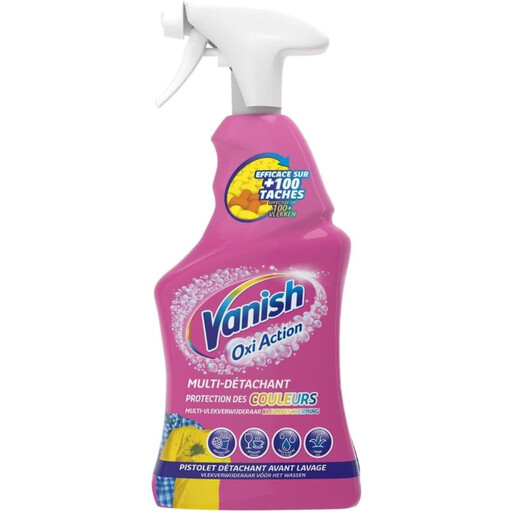
Why this choice makes sense: This 750 ml spray applies directly to the stained area and is used before washing, on both everyday and stubborn stains. A simple solution to start with, without having to stock up on different formats.
Its targeted format limits application to the stained fabric. However, the product sheet states it should not be used on wool, silk or leather.
Precise application, a 750 ml bottle and a claimed dwell time of 1 to 2 minutes before washing.
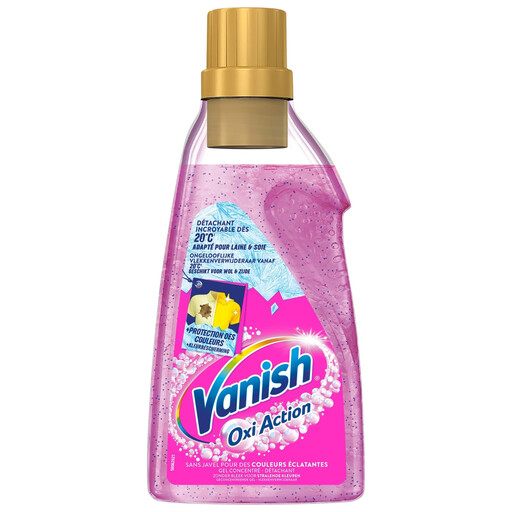
Why this choice makes sense: This 1.5 litre gel is aimed at those looking for a versatile format. The product sheet states it can be used on wool and silk, provided you follow the instructions.
The gel makes dosing and targeted application easy. It is still essential to follow the garment's care label and the manufacturer's safety precautions.
An oxygen-based bleaching formula, claimed action from 20 °C and a cap with a rubbing nozzle.
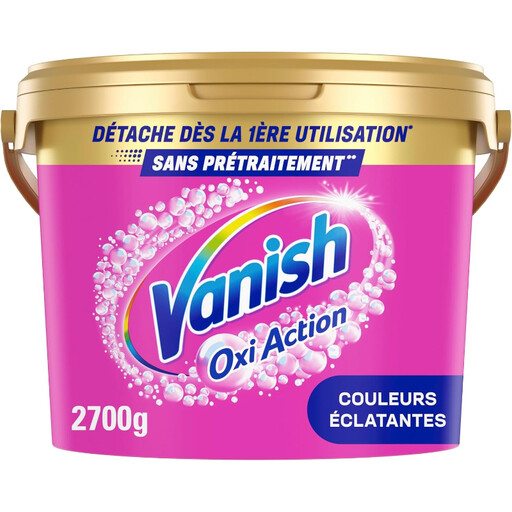
Why this choice makes sense: At 2.7 kg, this pack is designed for households that regularly treat large amounts of laundry and want a powder that can be used in the machine, for soaking or as a pre-treatment.
The product sheet details the uses and notably excludes wool, silk, leather and textiles requiring dry cleaning.
A 2.7 kg format, claimed use from 20 °C and the option to make a paste for treating localised stains.
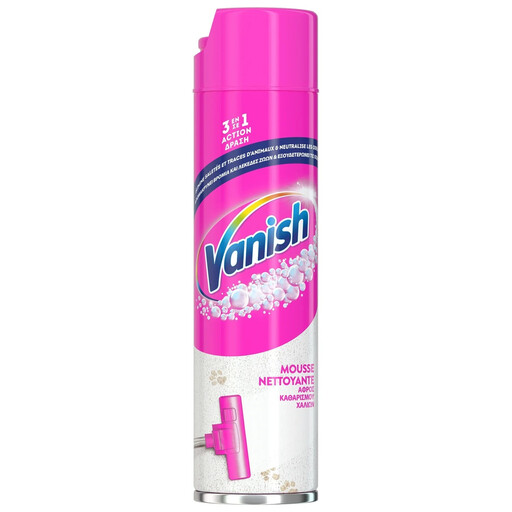
Why this choice makes sense: This 600 ml spray is designed for carpets, rugs and upholstery fabrics, whether for everyday care or treating a specific area.
Its formula is intended for upholstery textiles: no need to routinely repurpose a laundry stain remover for a sofa or carpet.
Targeted spraying, claimed action against odours and use indicated on carpets, rugs and upholstery fabrics.
We've selected a comprehensive list, updated in real time, of products that meet these demanding criteria as well as European safety standards.
Products bearing hazard pictograms must be kept out of reach of children, in line with the precautions stated on the packaging. Avoid contact with eyes and wear gloves if the instructions recommend it.
Some products are claimed to be effective from 20 °C, particularly certain powders and gels. That doesn't mean all stains will disappear in every situation. Follow the dosage, the chosen programme and the instructions on the packaging.
The shelf life depends on the specific product. Check the date, batch number and recommendations on the packaging. Store the product sealed, in a cool, dry place away from direct light. A powder that has absorbed moisture or a spray with a blocked nozzle should be checked before use.
Spray stain remover is suitable for quick, targeted application. Stain remover gel lets you dose the product precisely, especially on fibres permitted by the manufacturer. Stain remover powder is practical for frequent machine washes, soaking and large amounts of laundry. The right choice depends mainly on your fabrics, the type of stains and how often you wash.