
Livraison le jour même ou le lendemain

Qualité garantie

Débloquez vos offres de bienvenue: Livraison GRATUITE | Jusqu'à -80 % | 30 jours d'essai gratuits à JoyPlus
Téléchargez l'application
A coffee stain on a shirt, a splash of grease on a child’s clothing, or a stubborn odour on a carpet – these aren’t all treated the same way. Yet many products are sold as all-purpose, when their effectiveness really depends on the type of fibre, the nature of the stain, and the format of the stain remover.
The selection from the Joybuy Product Recommendation Officer is based on concrete criteria: manufacturer’s instructions, compatible surfaces, recommended temperature, format, and any precautions to follow.
A stain remover for laundry may be suitable for clothes and household linen, but not necessarily for carpets, rugs, or upholstery fabrics. Conversely, a product designed for carpets and rugs may require good ventilation and a longer drying time.
Always check which surfaces are authorised. Wool, silk, leather, suede, and textiles that require dry cleaning are often excluded from recommendations.
A formula may cover several types of soiling without being equally effective on a greasy, enzymatic, or oxidisable stain. Coffee, wine, and red berries don’t react the same way as oil, butter, or make-up.
For stubborn stains, it’s better to choose a product based on the main soiling rather than relying on a simple promise of versatility.
Even when a stain remover is described as suitable for colours and whites, it’s worth testing it on an inconspicuous area first. How well a dye holds depends on the fabric, its age, and any treatments it has received.
Also read the hazard pictograms, wear gloves if the label recommends it, and always keep the product out of reach of children.
A product that works at low temperatures can be useful for short cycles and textiles washed at 20 or 30 °C. However, the temperature stated on the packaging never replaces reading the garment’s care label.
Some VANISH products claim to be effective from 20 °C, while the GENIE Professional powder shown below indicates effectiveness from 30 °C. These details come from the product sheets: follow them, as well as the recommended dosage.
Formulas based on oxygen-based bleaching agents are not the same as chlorine-based products. Several products in this selection are described as chlorine-free, but that doesn’t mean they are suitable for all surfaces.
Never mix several cleaning products together. Follow the dosage, the dwell time, and the manufacturer’s ventilation instructions. On coloured fabric, always do a colourfastness test on a hidden area.
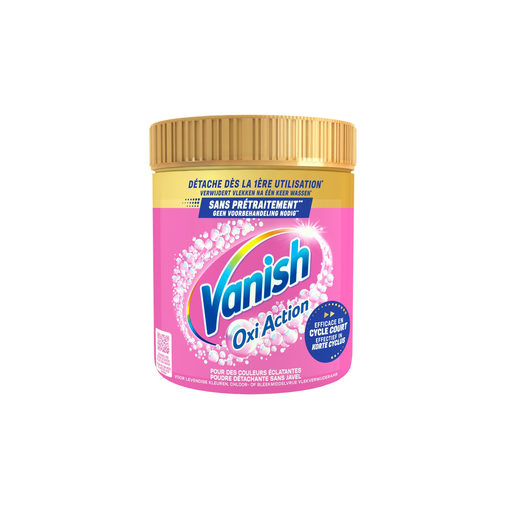
Why this choice suits this profile: This format is ideal for everyday laundry care, with a powder to add to the wash and effectiveness claimed from 20 °C.
The product sheet specifies excluded surfaces, including wool, silk, and leather. This helps avoid using it too broadly.
960 g format, chlorine-free formula, and dosage designed for machine washing.
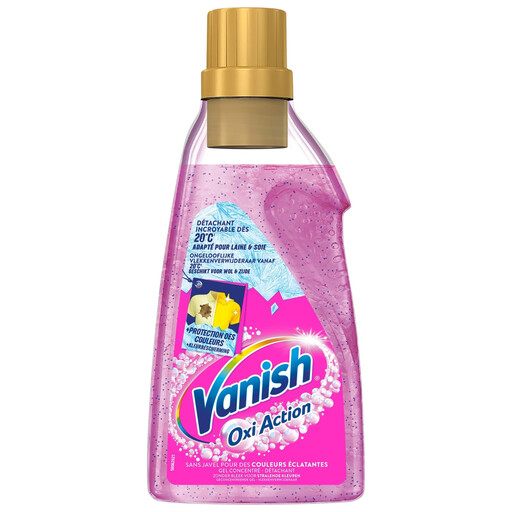
Why this choice suits this profile: This gel is described as compatible with delicate fabrics such as wool and silk, provided their care labels are followed.
This product distinguishes its use from powders not intended for wool or silk, and allows for controlled application.
Concentrated gel in a 1.5 L bottle, chlorine-free, with a dosing and applicator tip.
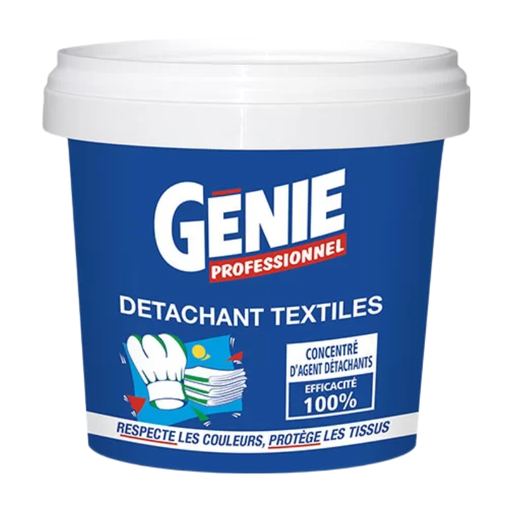
Why this choice suits this profile: This 1 kg powder is designed for professional use. Its formula combines active oxygen, enzymes, and surfactants according to the type of stain.
The instructions distinguish between oxidisable, enzymatic, and greasy stains, rather than presenting a supposedly universal formula.
Phosphate-free formula, effective from 30 °C, and supplied in a 1 kg pack.
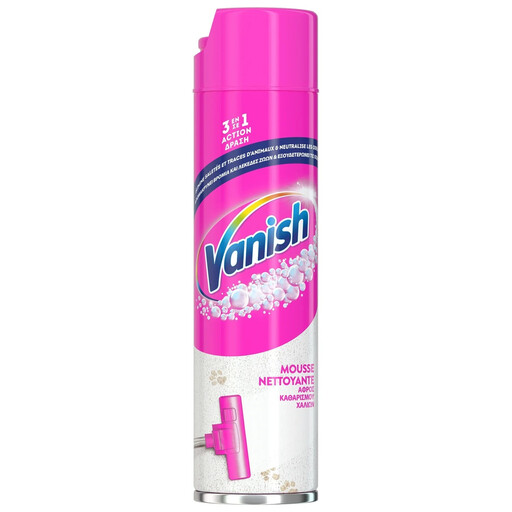
Why this choice suits this profile: This spray is designed for carpets, rugs, and upholstery fabrics, as well as for spot stain removal.
Its dedicated use for textile surfaces prevents accidentally using a laundry stain remover on a more absorbent material.
600 ml spray format, designed for spot cleaning and odour neutralisation according to the product sheet.
For a grease stain, a product targeted at oil and sauces will often be more effective than a general-purpose powder. For coffee, wine, or red berries, choose a formula that mentions oxidisable stains.
Choose a product whose packaging clearly states it can be used at 20 or 30 °C. The dosage and wash cycle are still crucial. A product designed for low temperatures doesn’t mean you can skip checking its compatibility with the fabric.
It depends on the date stated on the packaging and the storage conditions. Keep the powder or liquid in its original container, tightly sealed, in a dry place away from heat and out of reach of children.
If the texture, smell, or appearance of the product changes, check the label before using it.
Not necessarily. Only use a stain remover whose product sheet clearly states the intended surface. Do a discreet test on coloured textiles and avoid excluded materials, particularly wool, silk, leather, and surfaces that require professional cleaning.