Parents looking for an evening milky drink
Their priority is a milky drink for a 9–12-month-old baby, rather than a dairy snack served with a spoon. Ameli’s guidance on second-stage formula remains important until the first birthday.


If you’re looking for a milky drink for a baby under one, don’t choose a Petit-Suisse as a substitute for infant milk: Ameli recommends at least 500 ml of second-stage formula a day until the first birthday. Petit-Suisse is a dairy snack eaten with a spoon. For this choice, Manger Bouger recommends plain, unflavoured options and advises against 0%, skimmed or semi-skimmed products for children under 3. The words “stage 3” alone don’t establish whether a Petit-Suisse is suitable as a warm drink: check what the product is and how it should be used.
Their priority is a milky drink for a 9–12-month-old baby, rather than a dairy snack served with a spoon. Ameli’s guidance on second-stage formula remains important until the first birthday.
They want to include Petit-Suisse in their child’s weaning diet. Manger Bouger’s guidance distinguishes plain, unflavoured dairy products from 0%, skimmed or semi-skimmed options, which aren’t suitable for children under 3.
They adapt spoon-fed foods to their child’s abilities, rather than assuming that “stage 3” alone means the texture is suitable. Ameli describes how textures progress during this period.
For the evening, first decide whether you’re looking for infant milk to drink or a dairy snack to eat with a spoon. Then check the Petit-Suisse ingredients and how well your child manages its texture.
| Criterion | What to check | Who is this for? |
|---|---|---|
| Evening milk feed | Distinguish drinkable infant milk from Petit-Suisse eaten with a spoon. Before the age of one, bear in mind Ameli’s recommendation of at least 500 ml of second-stage formula a day. | If I’m looking for something for my baby to drink in the evening, a fresh cheese doesn’t meet that need in the same way as infant milk. Around 50% of consumers put this distinction first. |
| Choosing a dairy snack | Read the product description, ingredients and allergen information. For a child under 3, follow Manger Bouger’s guidance on plain products and 0%, skimmed or semi-skimmed options. | When offering Petit-Suisse by spoon, I want to know exactly what’s in it rather than rely on the brand name. This is the priority for around 33% of consumers. |
| Texture | Observe your child’s abilities and check the product guidance, without treating “stage 3” as a guarantee that it’s suitable. | As meal textures change, I prefer to consider what my child can already manage. Getting the texture right comes first for around 17% of consumers. |
Petit-Suisse is a fresh cheese eaten with a spoon. For a baby under one, Ameli still recommends at least 500 ml of second-stage formula a day.
Decide whether you’re looking for a milky drink or a food to serve by spoon; don’t automatically count Petit-Suisse as equivalent to infant milk.
Manger Bouger says that 0%, skimmed and semi-skimmed products aren’t suitable for children under 3. Fat content also varies between different Petit-Suisse products.
Check the ingredients and fat content for the specific product rather than making assumptions based on the brand.
On its own, this wording doesn’t tell you what texture a Petit-Suisse has or confirm that it can be used as a warm drink. Ameli describes how foods progress from purées to small pieces, depending on a child’s age and abilities.
Use the product description and instructions, along with your child’s eating abilities, rather than relying on this wording alone.
Carrefour product listings for Gervais, Danone and Carrefour Classic’ products list milk among their ingredients or allergens. Check the composition of the specific product you buy.
Read the label, paying particular attention to the milk allergen and information about pasteurised ingredients. If your child has a known milk allergy, seek medical advice before offering it.
Carrefour product listings make it possible to compare the composition and fat content of these plain Petit-Suisse products as sold. These details relate to the specific products mentioned, not every product from each brand.
Carrefour’s listing for plain Gervais Petit-Suisse gives a pack size of 12 × 60 g and a fat content of 9.5% in the finished product.
Carrefour’s listing for plain Danone Petit-Suisse gives a pack size of 12 × 60 g and a fat content of 3.4% in the finished product.
Carrefour’s listing for plain Carrefour Classic’ Petit-Suisse gives a pack size of 12 × 60 g and a fat content of 10.4% in the finished product.
This follow-on milk is an option if you’re looking for drinkable infant milk for a baby under one. It isn’t a Petit-Suisse to serve by the spoonful. If you’re considering serving it warm, check the product preparation instructions.
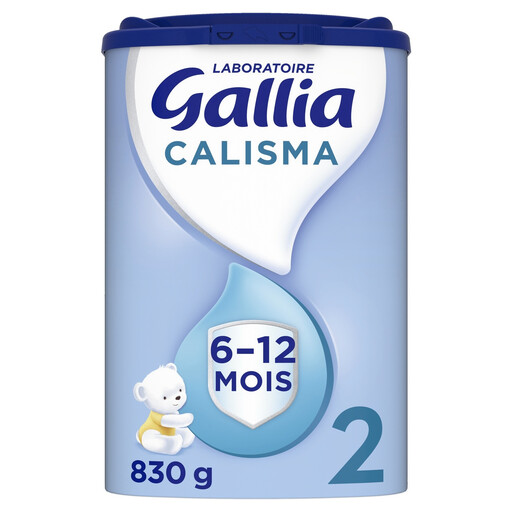 Image unavailable
Worth considering if you’re looking for drinkable infant milk rather than Petit-Suisse to eat with a spoon. This powdered follow-on milk is suitable from 6 months and comes in an 830 g pack. Follow the product preparation instructions; the product information says it should be used under the supervision of a qualified health professional.
No. Don’t automatically consider it equivalent to infant milk. Ameli recommends at least 500 ml of second-stage formula a day until the first birthday; Petit-Suisse is a dairy product served by the spoonful.
When including Petit-Suisse among the dairy products offered during weaning, Manger Bouger recommends plain, unflavoured options. Check the product description and ingredients list for the one you choose.
No. According to Manger Bouger, 0%, skimmed and semi-skimmed products aren’t suitable for children under 3. Check the fat content of the specific product before choosing.
Check the product description, ingredients, fat content and allergens in particular. Carrefour listings for Gervais, Danone and Carrefour Classic’ products mention pasteurised ingredients and the presence of milk. Always check the label of the product you’re thinking of buying.