
Livraison le jour même ou le lendemain

Qualité garantie

Débloquez vos offres de bienvenue: Livraison GRATUITE | Jusqu'à -80 % | 30 jours d'essai gratuits à JoyPlus
Téléchargez l'application
Is clutter taking over and your living space shrinking? The first instinct is often the same: investing in a set of stackable storage boxes. But that impulse buy can quickly turn into a nightmare, with warping lids, plastic that cracks at the first impact, and a stack of boxes that wobbles dangerously at the slightest touch.
As a Product Specialist at Joybuy, my mission is to guide you through the jungle of options to ensure you make a truly worthwhile purchase. Before you commit, let's review the three classic pitfalls that can turn a good idea into an expensive headache.
To avoid these pitfalls, you just need to focus on a few technical details that make all the difference.
Forget the marketing promises. A quick analysis of a few objective points will guarantee a durable, regret-free purchase.
It all starts here. Polypropylene (PP) is the material of choice for any plastic storage box with a lid worthy of the name. It is both flexible enough to absorb impacts and rigid enough to resist warping.
But the material isn't everything: thickness is crucial. Aim for a wall at least 2.5 mm thick, ideally reinforced with structural ribs. This is the hallmark of a design built to last and support weight. For a reliable stackable storage bin, this is non-negotiable.
An effective locking system is essential. Prioritise lids that clip securely on all four sides. Not only do they protect the contents, but they also create a stable platform for the box stacked on top.
Also, examine the base of the box: a textured surface or small anti-slip pads may seem trivial, but they prevent the entire stack from sliding. This is an essential extra safety feature if you plan on stacking them in a column.
The ideal size obviously depends on what you plan to store. A set of 4 storage boxes of the same size ensures perfect stacking. For duvets, tools, or archives, a large-volume plastic storage trunk will be more suitable.
Then there's the dilemma: a transparent storage box or an opaque one? Transparency is unbeatable for identifying contents at a glance. Opaque, on the other hand, protects light-sensitive items and provides a cleaner, more harmonious visual effect.
To see how these criteria translate in practice, here are a few models that each meet a specific need.
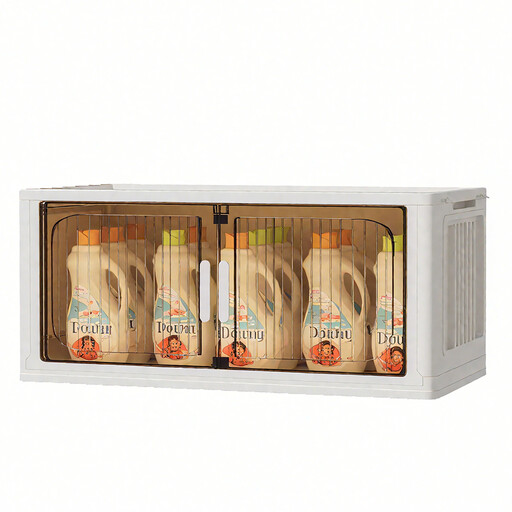
Its strong suit: Perfect for those whose needs change (students, renters...). Its foldable design allows it to be stored flat when not in use—a real bonus in small apartments.
Its cabinet-like structure eliminates the problem of unstable stacking. Each compartment is independent and supports a load of 15 to 25 kg, a guarantee of robustness far superior to conventional boxes.
Its foldable design for optimal space-saving and its front-access doors, which mean you don't have to unstack everything to retrieve an item from the bottom box.

Its strong suit: The ideal candidate for garage or cellar storage. Its large volume and robust structure are designed to safely store tools, gardening equipment, or Christmas decorations.
This model checks all the boxes: a PP plastic body thickened to 2.5 mm, reinforcing ribs for rigidity, a secure clip-on lid, and a base designed for flawless stacking.
Its reinforced structure and large volume are engineered to support heavy loads and withstand long-term storage conditions (humidity, temperature changes).
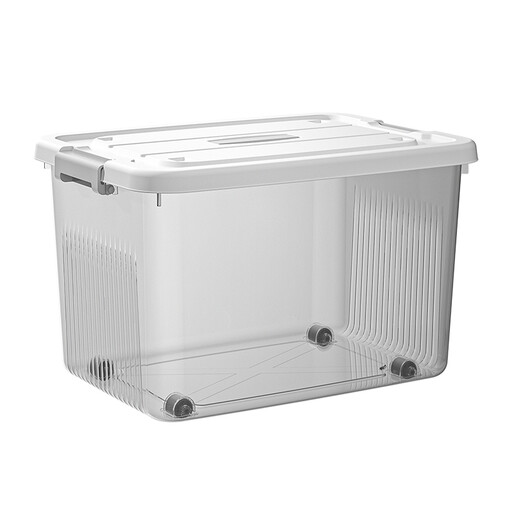
Its strong suit: A versatile, all-purpose size, perfect for off-season clothing, children's toys, important documents, or for optimising a wardrobe. The transparent version is a real plus for everyday use.
It shares the robust design of its larger sibling (2.5 mm PP plastic, secure lid), ensuring excellent durability and stable stacking, even with frequent handling.
Its versatile format and transparent option make it easy to identify contents at a glance. Everyday organisation just got a whole lot simpler.
Explore our complete selection of products that meet our quality criteria and current safety standards.
It all depends on the quality of the plastic and how it is used. A quality model made of thick polypropylene (PP), stored away from direct sunlight and extreme temperatures, can last for over ten years. Conversely, a low-end box made of brittle plastic will barely last a year if it is heavily loaded or frequently handled.
The golden rule: always place the heaviest boxes at the bottom. Ensure each lid is securely clipped on and that the floor is perfectly level. Never exceed the maximum load capacity indicated by the manufacturer, and make sure the boxes nest securely. For the tallest stacks, the safest practice is to place them against a wall.