
Livraison le jour même ou le lendemain

Qualité garantie

Débloquez vos offres de bienvenue: Livraison GRATUITE | Jusqu'à -80 % | 30 jours d'essai gratuits à JoyPlus
Téléchargez l'application
Is clutter piling up and you're looking for a simple solution to optimize your space? The stackable plastic storage box is the perfect solution. However, a poor choice can quickly turn this practical purchase into a pile of unusable plastic. Before you buy, you need to know how to spot the design flaws that make a product ineffective in practice.
As the Head of Product Recommendations at Joybuy, my role is to help you cut through the noise and find the solutions that are truly right for you. Let's review the common pitfalls and the essential criteria for a smart purchase.
An attractive price can hide weaknesses that only become apparent with use. Here are the three most common problems that ruin the durability and usefulness of your storage boxes.
To avoid these disappointments, focus on a few key technical points. These are the true indicators of the quality and longevity of a plastic storage crate with a lid.
The type of plastic is a primary indicator. Polypropylene (PP) is often preferred for large boxes because it offers excellent impact resistance and a degree of flexibility. For heavy-duty strength, look for models with:
A reliable stacking system is non-negotiable. Look closely at the lid and the base of the box:
The choice between a transparent storage box and an opaque model depends on its use:
Our advice: opt for a set of storage boxes. This will guarantee perfect stacking compatibility and a consistent aesthetic.
Rather than an endless list, here are a few models that meet distinct user profiles, all selected according to the quality criteria we've just discussed.
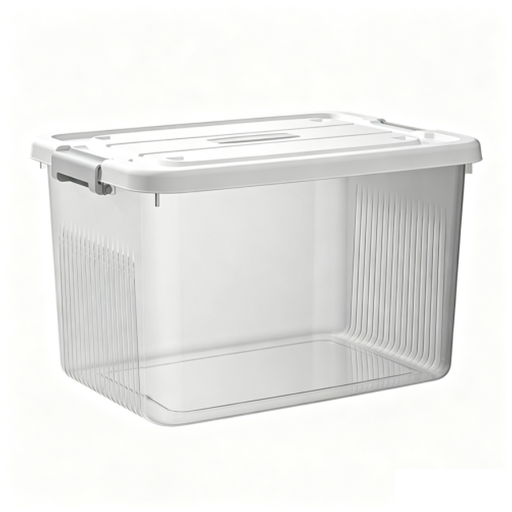
Why we chose it: This set is the ultimate robust solution for storing bulky items or medium loads (seasonal clothing, tools, archives). It is ideal for the garage, basement, or attic.
Its structure is designed for durability: thick 2.5 mm walls, reinforcing ribs, and a non-slip bottom. The lid interlocks perfectly for stable stacking, which prevents the risk of warping and sliding.
Excellent robustness and a design optimized for stacking. Its integrated handles make it easy to carry, even when fully loaded.
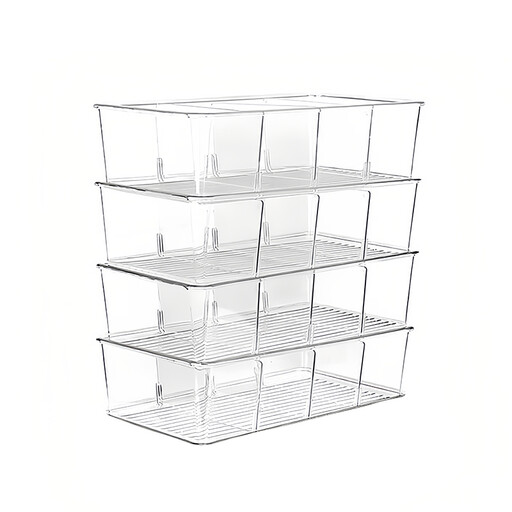
Why we chose it: Perfect for organizing small everyday items: tea bags, coffee pods, makeup, or office supplies. Its transparent and compartmentalized design puts an end to chaos in drawers and on shelves.
It meets a specific need that large boxes ignore. The rigid and perfectly transparent PET material allows for immediate visual identification. No more emptying everything out to find one small item!
Pinpoint organization thanks to its compartments. Its format is designed to slide easily into kitchen drawers or bathroom cabinets.
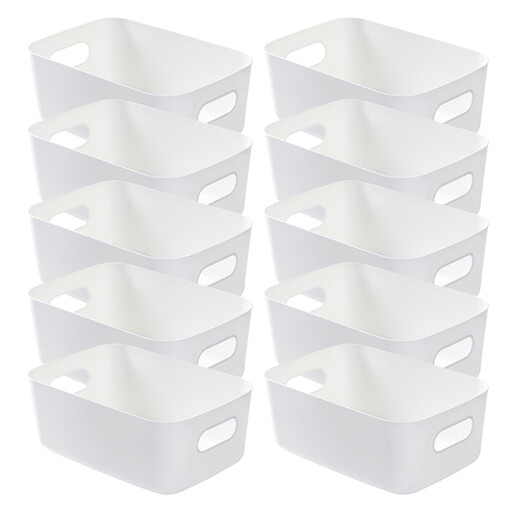
Why we chose it: For those who want to organize everyday items in living spaces (kitchen, bathroom, office) without sacrificing style. The clean design and lid create a storage system that is as functional as it is aesthetic.
This set avoids the trap of messy and unsightly "catch-all" storage. Sold in a pack of 10, it allows you to create a visually coherent system. The lid protects from dust and allows for stable stacking on a shelf or in a cabinet.
Versatility and harmony. This set allows you to unify storage across multiple rooms for a consistently clean and organized look.
For more specific needs, like organizing your drawers, discover our complete selection of products that meet our strictest quality criteria.
Polypropylene (PP) is a flexible and highly impact-resistant plastic, making it ideal for large, stackable storage boxes intended for the garage or basement. Polyethylene terephthalate (PET), the same plastic used for water bottles, is more rigid and offers crystal-clear clarity. It is often used for smaller boxes, such as food or office organizers, where visibility is paramount.
Safe stacking depends on three points:
No. Only boxes labeled "food-safe" or "BPA-free" (Bisphenol A) are designed to hold food. For storing clothes or objects, this certification is not necessary. If in doubt for kitchen use, always check the product specifications.