
Livraison le jour même ou le lendemain

Qualité garantie

Débloquez vos offres de bienvenue: Livraison GRATUITE | Jusqu'à -80 % | 30 jours d'essai gratuits à JoyPlus
Téléchargez l'application
A cluttered hallway, dusty trainers, or a pair you can never find at the back of a cupboard: stackable shoe boxes solve a real problem – provided you choose a model that suits your shoes and the space you have. Flattering photos don’t tell the whole story. Some boxes are too small, lack stability when stacked, or become a nuisance to open day after day.
Here are the criteria to check before you buy, along with a selection of solutions tailored to different needs in the UK.
A box that boasts generous dimensions can lose several centimetres due to the thickness of the walls, the door frame, or the assembly system. High-top shoes, bulky trainers, or a size 45 pair may then struggle to fit properly.
Measure the length, width, and – most importantly – the height of your largest pair. Allow a small margin to avoid crushing your shoes, and check the internal dimensions whenever they are available.
Clear shoe boxes let you spot a pair quickly, but a flimsy front panel, a door that’s hard to open, or fragile connectors can soon make storage a chore. For everyday use, transparency must go hand in hand with simple front access.
A separate door is generally more convenient than a box you have to pull out of the stack every time.
Ventilated shoe boxes help air circulate, but they don’t let you off the hook when it comes to drying your shoes after wear. Always store a clean, dry pair – especially after a rainy day or a workout. Ventilation is neither a health promise nor a guarantee against mould.
For efficient trainer storage, compare the dimensions of each compartment with those of your bulkiest pairs. The JOYFURNOS model measures 33.3 × 23.1 × 14.3 cm per box. This height suits many low-profile shoes, but ankle boots and thick-soled styles need checking beforehand.
A pack of 18 shoe boxes can quickly take up a lot of space. Before ordering, measure the width available in your hallway, dressing room, or wardrobe, then check the total height of the stack. A structure that’s too tall may become unstable or hard to reach.
Polypropylene, or PP, is a lightweight, common material for household storage boxes. The door frame may be made from a different plastic, such as polystyrene, to keep the front panel rigid and clearly visible. Examine the quality of the panels, hinges, and connection points carefully.
To stack boxes safely:
Information about materials, warnings, and the responsible person within the European Union should appear on the product page or its packaging. If in doubt, consult these details before placing your order.
A clear front panel cuts down the time you spend hunting for a pair. To keep your storage clean, dust the panels regularly with a soft, slightly damp cloth. Avoid abrasive products, which can scratch the plastic.
Ventilation openings are useful in a closed wardrobe, but let your shoes cool down and dry before placing them in their box. For collectors, the absence of direct light and dust can also help preserve the appearance of your shoes, though it doesn’t guarantee long-term conservation.
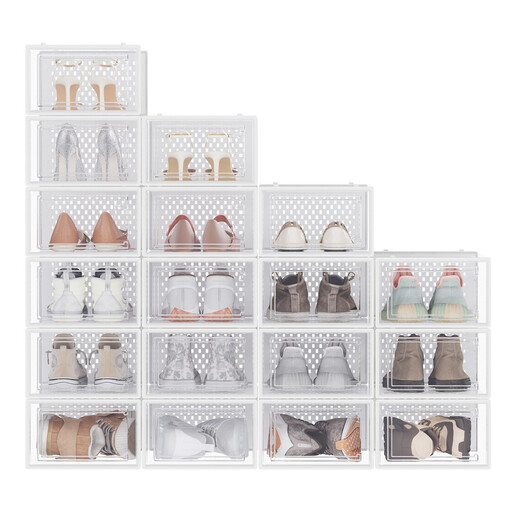
Why this choice suits this profile: This pack provides 18 clear compartments to gradually organise a hallway, dressing room, or family wardrobe without juggling multiple product references.
The dimensions of each box are clearly stated, and the clear front panel means you don’t have to pull stacked boxes out to identify a pair. Still, measure your shoes before buying.
18 boxes, reportedly simple assembly, stackable design, and built-in ventilation openings.
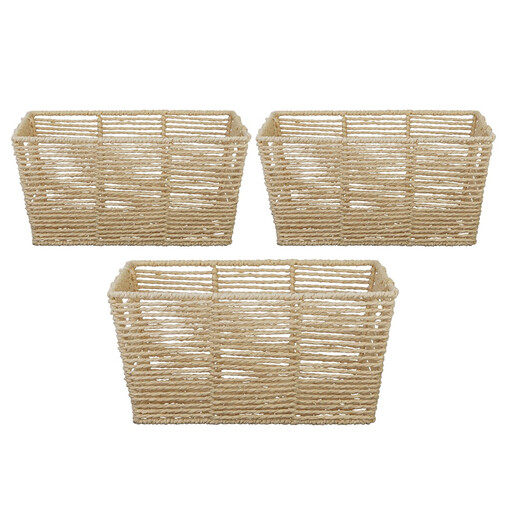
Why this choice suits this profile: These baskets blend into a well-kept décor for storing accessories, slippers, or cleaning products near your shoes.
Its metal frame and basket format prevent you from mistaking decorative storage for an airtight box. It doesn’t replace a clear box for displaying a collection.
Woven paper on a metal frame, three baskets, and maintenance by dry dusting only.
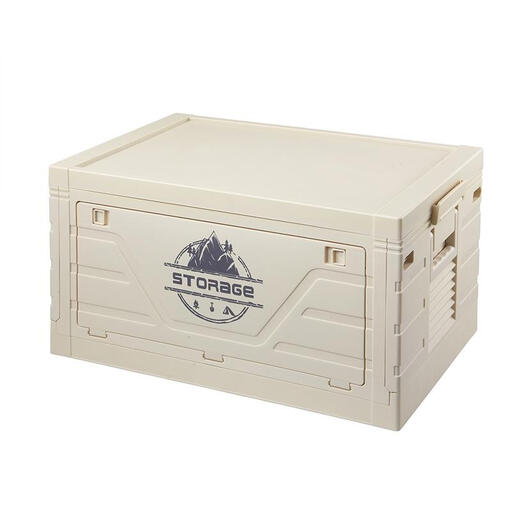
Why this choice suits this profile: This chest is better suited for storing hiking boots, wellies, or seasonal accessories in a garage, cellar, or car boot.
Its closed format is more suited to transporting and storing bulky gear than to quickly identifying a trainer collection.
PP, dimensions of 55 × 37 × 30.5 cm, side handles, and a flat lid. No assembly required.
We’ve put together a complete, real-time updated selection of products that meet these strict criteria and European safety regulations.
For long-lasting installation, assemble the boxes on the floor before stacking them. Place the heaviest pairs on the lower levels and limit the height of the stack. In a narrow hallway, a shorter but wider structure can make access easier for children and reduce the risk of toppling.
Before storing a pair, remove any mud and grit, let the soles dry, and avoid closing a damp shoe straight away. A soft cloth is usually enough to clean the plastic panels. Also check the doors after a few weeks of use, especially if the boxes are opened several times a day.
Measure your largest pair, including the sole and heel height. Then compare these measurements with the internal space stated by the manufacturer. External dimensions alone aren’t enough to confirm compatibility.
It’s best to avoid very tall stacks. Stability depends on the floor, the weight of the shoes, the quality of the connections, and the total height. Placing the stack against a wall, with the heaviest boxes at the bottom, is generally safer.
A closed door limits dust exposure, but it doesn’t replace regular cleaning. To preserve your shoes, store them perfectly dry, keep them out of direct sunlight, and monitor airflow if the model has ventilation openings.