
Livraison le jour même ou le lendemain

Qualité garantie

Débloquez vos offres de bienvenue: Livraison GRATUITE | Jusqu'à -80 % | 30 jours d'essai gratuits à JoyPlus
Téléchargez l'application
A good fluorescent highlighter should make the essentials stand out without turning the page into an unreadable rainbow. Yet some purchases quickly disappoint: colours that are too garish, a tip that flattens, ink that bleeds through the paper, or a format that’s awkward to carry. To avoid unpleasant surprises, it’s better to compare the actual features rather than relying solely on the number of colours advertised.
A pack of 24 or 30 markers might seem particularly good value, but not all shades are necessarily useful day to day. For revision, four to six well-distinct colours are often enough. Multicoloured highlighters make real sense if you use a proper colour-coding system to differentiate definitions, dates, formulas or references.
A heavily loaded ink can bleed through the thin pages of a notebook or book. Conversely, a shade that’s too pale may lack contrast on photocopies. Generally transparent, a water-based ink makes layering easier and keeps text readable. However, the result also depends on the paper’s weight and texture.
A cap that’s not put back on properly, a tip left exposed on a desk, or storage near a radiator can all speed up drying out. Anti-dry-out technology extends flexibility during short breaks, but it doesn’t replace the need to recap the marker after each session.
The shape of the tip determines the product’s versatility. A chisel-tip highlighter typically lets you switch from a broad stroke to cover a sentence to a fine stroke for underlining a word or drawing a border.
Depending on the range, the advertised widths include:
For highlighters for students, a stable tip and two line widths are often more useful than a highly saturated colour. Fans of lettering or bullet journal highlighters will also appreciate the ability to vary pressure and outlines.
Choose the palette according to your use:
A pastel highlighter is particularly suitable for pages that are already busy, as it draws attention without obscuring the text. To keep a consistent colour code, also check that the shades are sufficiently different from one another.
Several STABILO models claim a capacity of up to 375 metres of highlighting per marker. This is a theoretical capacity, which can vary depending on the pressure applied, the type of paper and the line width used.
Here are the elements to compare:
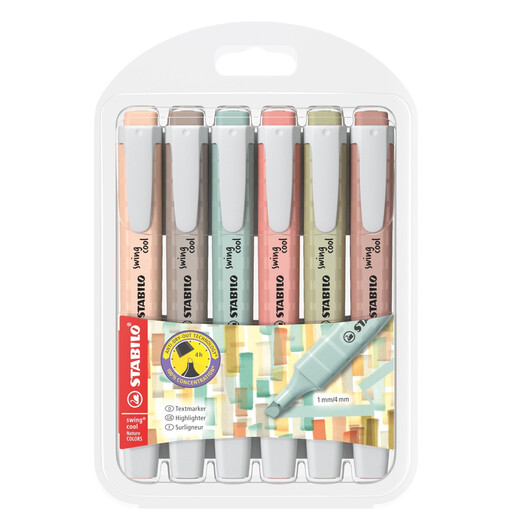
Why this choice suits this profile: its slim format slips easily into a school pencil case, a college bag or a student’s kit. The six nature-inspired shades let you set up a first colour code without buying multiple packs.
The chisel tip offers 1 and 4 mm strokes, while the water-based ink means you’re not limited to overly specialised uses.
Clip for notebook or folder, six colours, compact format and anti-dry-out protection claimed for up to 4 hours with the cap off.
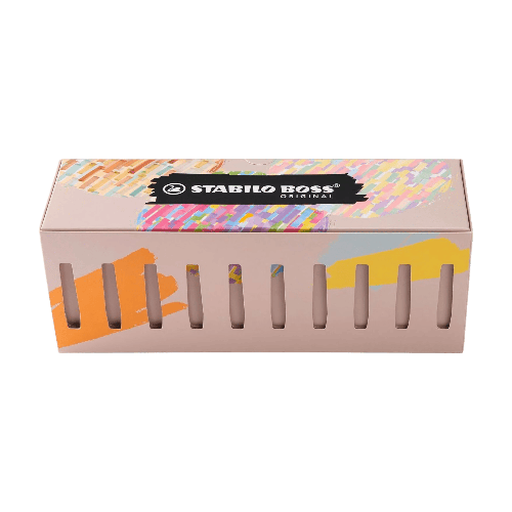
Why this choice suits this profile: this display stand will find its place in a shared office, with a teacher, or with anyone who wants to distinguish many types of information using an extensive palette.
The desk storage prevents markers from scattering, while the chisel tip keeps two line widths for every colour.
30 shades, desk display stand, low-odour water-based ink according to the product sheet, and refillable fluorescent models.
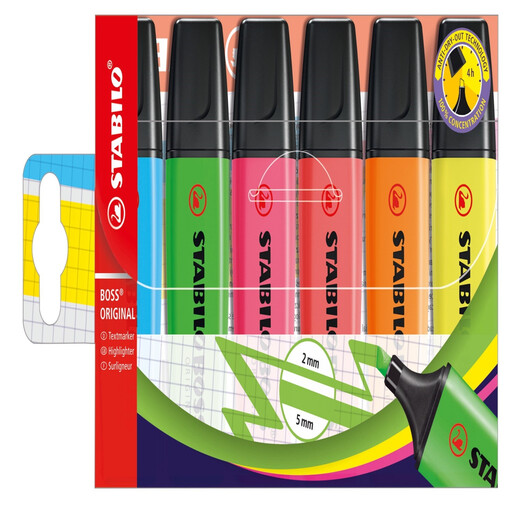
Why this choice suits this profile: regular users, professionals and planning enthusiasts benefit from a portable format, an effective colour selection and, for the relevant models, a refill option.
The case protects the markers during transport, and the claimed capacity of 375 metres lets you compare their lifespan more concretely.
Two line widths of 2 and 5 mm, transparent water-based ink, anti-dry-out protection claimed for up to 4 hours, and STABILO BOSS refills for certain fluorescent shades.
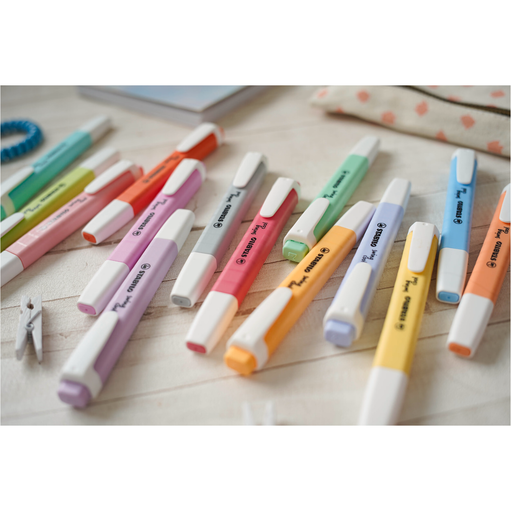
Why this choice suits this profile: the 14 pastel shades and the storage case make it easy to decorate diaries, do lettering and organise pages visually.
The slim format and clip keep bulk to a minimum, while the two line widths mean you don’t need to buy a different marker for every detail.
14 pastel shades, chisel tip of 1 and 4 mm, protective case and water-based ink suitable for creative annotations.
We’ve put together a comprehensive, real-time updated selection of products that meet these demanding criteria and comply with European safety regulations.
Several references claim resistance to drying out for up to 4 hours with the cap off. This indication doesn’t replace a few simple precautions: always recap the marker after use and store it away from heat and direct sunlight.
It all depends on the paper, its thickness and the amount of ink applied. To limit the risk of bleed-through, test the colour on a less visible page, avoid going over the same spot several times, and choose a transparent water-based ink for thin notebooks.
Certain references, notably the STABILO BOSS ORIGINAL fluorescent models, are advertised as refillable with STABILO BOSS refills. Check the exact compatibility of the model before buying: this option doesn’t necessarily apply to all colours or all ranges.