Who are these formats for?

People who prepare snacks before training

You top crêpes, pancakes, fruit or toast before heading out and want to control how much you serve. Crêpes de France describes the 500 ml 1883 Maison Routin squeeze bottle as having a resealable nozzle. That cap alone doesn’t establish whether it’s leakproof in transit.

People who want to take a set portion with them

You’d rather take the amount you need for a snack than carry a large container. A small jar of spread can be used to prepare your portion, which you can then put in a sealed food container if you’re carrying it separately.

People comparing ingredients and allergens

You check the label on the format you’re buying before choosing a sauce or spread. The DGCCRF distinguishes the information required on prepacked food, including ingredients, allergens and nutritional values, from Nutri-Score, which is voluntary in France.

What should you look for?

Chocolate and hazelnut squeeze sauce

Choose it for: topping several snacks before you head out; 1883 Maison Routin also promotes its sauce for desserts and drinks.

Bear in mind: the 500 ml bottle isn’t a ready-to-pack individual portion.

Spread in a jar

Choose it for: topping a snack in advance or measuring out an amount to take with you.

Bear in mind: you’ll need a utensil to scoop it out, then a separate food container if you’re taking the portion with you.

Criteria What to check Who is it for?
Serving before you leave Whether it has a pouring nozzle and resealable cap; storage instructions for the product you choose. If I’m topping several snacks before heading out, I want to control how much I add without handling the product repeatedly. Around 38% of consumers prioritise this need for preparation.
A portion to take with you The net quantity and how securely the food container you use to carry the portion closes. For a single snack, I’d rather take the amount I need than bring a large jar or bottle. Around 31% of consumers share this priority.
Reading the label Ingredients, allergens and sugars per 100 g; the amount actually used per portion. Before buying, I want to compare recipes and check the allergens listed on the format I’ve chosen. Around 31% of consumers put this information at the top of their list of criteria.

Things not to assume

  • Assuming ‘squeeze’ means leakproof

    Crêpes de France says the 1883 Maison Routin bottle has a nozzle with a resealable cap. This description doesn’t prove that it will withstand being jostled around in a sports bag.

    Use the nozzle to prepare your snack before you leave. If you’re taking the topping separately, check that the food container you choose closes securely.

  • Confusing a topping sauce with a portable portion

    1883 Maison Routin markets its chocolate and hazelnut sauce for drinks and desserts. The 500 ml format is suited to repeated use, but it isn’t an individual portion.

    If you’re only taking one snack with you, work out how much you need and how you’ll carry it before comparing formats.

  • Relying on Nutri-Score alone

    According to the DGCCRF, Nutri-Score is voluntary in France. If it isn’t shown, you still need to read the nutritional information, ingredients and allergens for prepacked food.

    Compare the ‘of which sugars’ figure per 100 g, estimate how much you’ll add to your snack, and check the allergen information on the packaging you buy.

Brands to compare

1883 Maison Routin

The brand presents its chocolate and hazelnut sauce as a topping for desserts and drinks. Crêpes de France sells it in a 500 ml squeeze bottle.

  • The retailer says it has a pouring nozzle with a resealable cap, making it handy for serving sauce while you prepare food.
  • This description doesn’t tell you whether the bottle is leakproof in a sports bag.

Nutella

The hazelnut and cocoa spread is available in formats including a 220 g jar listed on Joybuy.

  • The Joybuy listing for the 220 g jar states that it contains 56.3 g of sugars per 100 g and lists hazelnuts, milk and soya as allergens.
  • This information applies to the 220 g format. Check the label on the product and format you buy. A jar doesn’t dispense spread through a nozzle.

Carrefour Classic'

Carrefour France offers Carrefour Classic' hazelnut spreads in 400 g, 750 g and 1 kg jars.

  • These sizes give you several quantities to compare, depending on how many snacks you’re preparing.
  • A jar’s size tells you nothing about how securely it closes in transit or about the ingredients in another format in the range.

Joybuy products for preparing or portioning

These Nutella jars are suited to preparing a snack or choosing an amount to take with you; they don’t dispense spread through a nozzle. If you’re carrying a portion separately, check that the container you use closes securely.
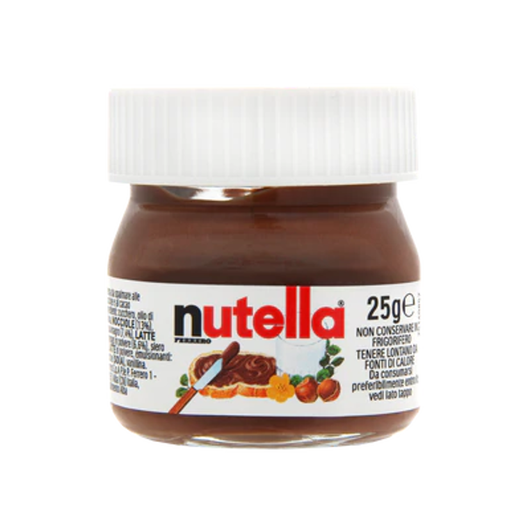
Nutella chocolate and hazelnut spread 25 g

Nutella chocolate and hazelnut spread 25 g

The 25 g jar lets you choose a set amount for a snack to take with you; it isn’t a squeeze bottle.

Before putting it in a bag, check that it closes securely, as well as the ingredients, allergens and nutritional values listed for this format.

View on Joybuy
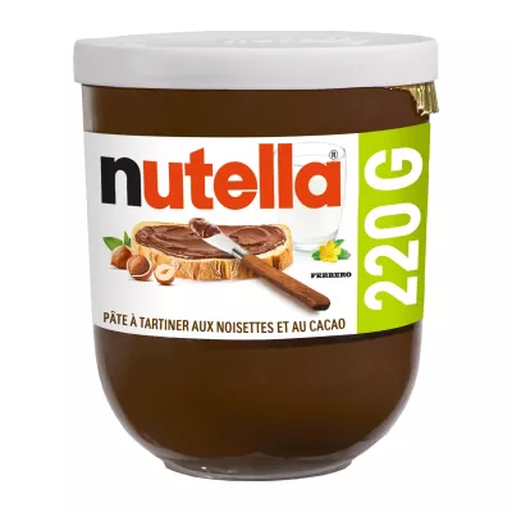
Nutella hazelnut and cocoa spread 220 g

Nutella hazelnut and cocoa spread 220 g

This jar is suitable for preparing a snack before you leave. If you only want to take the topping with you, put the portion in a sealed food container.

The Joybuy listing for the 220 g format states that it contains 56.3 g of sugars per 100 g and lists hazelnuts, milk and soya as allergens, with a ‘may contain’ warning for peanuts and almonds. Check the label on the jar you buy.

View on Joybuy

Frequently asked questions

Is Nutri-Score compulsory on spread sold in France?

No. According to the DGCCRF, displaying Nutri-Score is voluntary in France. For prepacked food, read the nutritional information, ingredients list and allergen information, whether or not the logo is shown.

Which allergens should you check in a chocolate and hazelnut spread?

Check the allergens highlighted in the ingredients list for the specific product. The Joybuy listing for Nutella 220 g lists hazelnuts, milk and soya, and says it may contain peanuts and almonds. This list doesn’t apply to every recipe or format.

How do you compare the sugars in two products for topping a snack?

Compare the ‘of which sugars’ figure per 100 g on both labels, then consider how much you’ll use. A figure per 100 g and an amount per portion aren’t the same thing.

Does the French tax on sugary drinks apply to spread?

The fact that a spread contains sugar isn’t enough to make it subject to this levy. The Bulletin officiel des finances publiques describes a levy that applies to non-alcoholic drinks and certain juices, subject to conditions specific to those products. When choosing a spread, treat sugar content as nutritional information to consider.