
Livraison le jour même ou le lendemain

Qualité garantie

Débloquez vos offres de bienvenue: Livraison GRATUITE | Jusqu'à -80 % | 30 jours d'essai gratuits à JoyPlus
Téléchargez l'application
A squared notebook is just as useful for taking notes as it is for organising calculations, sketching diagrams or following a lesson. But not all models are created equal when it comes to how you'll use them. A format that's too small makes tables tricky, a flimsy binding gets in the way of writing, and paper that's too thin can let ink show through on the other side.
Before you order, it's worth looking beyond the cover colour or the simple page count. Here are the criteria to consider, along with a selection suited to different types of users.
A small-square notebook, with a 5 × 5 mm grid, is ideal for tables, calculations, diagrams and precise sketches. Séyès ruling – often called "large squares" – serves a completely different purpose: it's designed for French school handwriting, with its horizontal lines, line spacing and vertical margin.
Choosing a fine grid for a child who is learning to write can quickly make page layout more difficult. Conversely, a large-square Séyès notebook lacks the flexibility an architect, engineer or anyone wanting to draw shapes and graphs needs.
The page count alone isn't enough to judge a notebook's true capacity. Some manufacturers count sheets, while others count printed pages. So a model with 80 sheets generally offers 160 usable pages. A quick look at the product description is essential to avoid any confusion.
Micro-perforation also changes how you use the notebook. It lets you tear out a page cleanly, but part of your content can end up disappearing as you remove pages over time. For keeping notes long-term, a glued or stitched binding, or even a hard cover, will often give you more peace of mind.
Paper of 70 to 80 g/m² is generally fine for ballpoint pens and pencils. At 90 g/m², thicker paper feels more pleasant under the hand and is better suited to dense writing, drawing or certain fountain pens. The result does depend on the ink used, though: it's best to test the effect on a page before reaching for a marker.
The cover and spine also deserve your attention. A lightweight, soft cover slips easily into a bag. A hard cover offers more protection for the pages, especially when you're on the move. As for a reinforced cardboard back, it lets you write without a table – a real bonus on public transport or in meetings.
An A4 squared notebook, or one close to A4 size, takes up more space but offers a generous surface for annotations. For travelling light, an A5 or A7 grid notebook will be much easier to carry.
The 5 × 5 mm grid provides a regular framework, particularly useful for calculations, plans and diagrams. Large Séyès squares guide handwriting more closely and match the notebooks used in primary school, secondary school and sixth form.
For creative use, also look at the colour of the squares: grey, purple or multi-coloured. A subtle shade lets your content stand out better, while a grid that's too prominent can become distracting in a drawing.
A spiral-bound grid notebook opens flat easily and can be held in one hand. It's well suited to notes taken on the go, even if the spiral takes up a little room in a folder and can catch on certain objects.
Stapled notebooks are generally thin and easy to store. Glued and micro-perforated models are aimed at those who like being able to tear out their pages. Finally, a stitched binding or one designed to open fully to 180° gives you a stable surface for writing on both pages.

Why this choice suits this profile: This pack of four A7 notebooks is ideal for lists, reminders and quick lecture notes. Their small size lets you separate subjects or keep one notebook in several different bags.
This pack lets you get used to a small grid without investing in a large notebook. The spiral at the top makes quick note-taking easy.
A7 format, four notebooks, 50 sheets per notebook and a soft cover available in several colours.
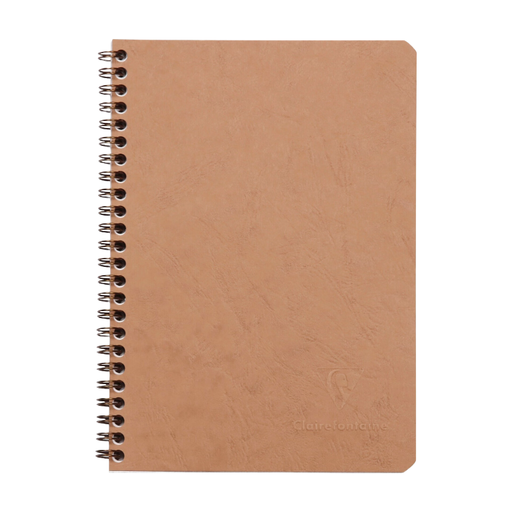
Why this choice suits this profile: This A5 notebook is aimed at those looking for a durable cover and a flat-opening design for writing, drawing or keeping a work journal.
The flat opening reduces the annoyance of a centre crease. The 5 × 5 mm grid is particularly well suited to structured notes and sketches.
100 pages, Vélin Velouté 90 g/m² paper, tinted cardboard cover and made in France.
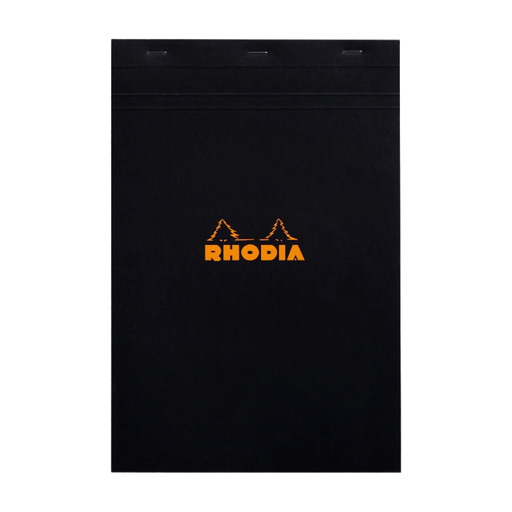
Why this choice suits this profile: Its 21 × 31.8 cm format and purple 5 × 5 mm grid offer a generous surface for plans, tables and technical diagrams.
The cardboard back improves stability, while the micro-perforated sheets let you cleanly remove a diagram or project page.
80 sheets, PEFC-certified 80 g/m² paper, 5 × 5 mm grid and extra-large format.
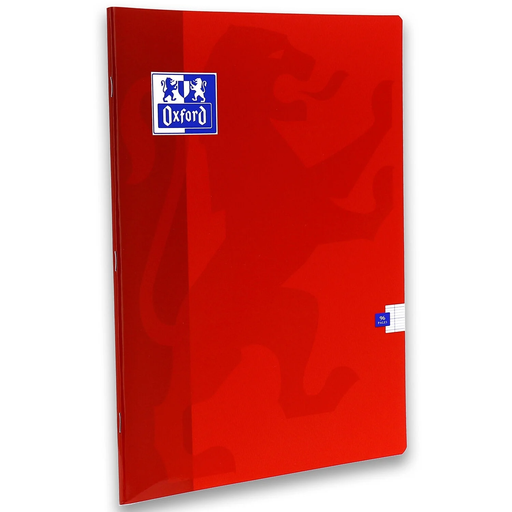
Why this choice suits this profile: Its 24 × 32 cm format and Séyès ruling are perfectly suited to exercises, homework and structured note-taking in the French school system.
The Séyès ruling stops you accidentally picking a small-square notebook for school writing. The cardboard cover and stapled binding are easy to store.
96 pages, Optik Paper, laminated red cover and two-colour Séyès ruling according to the product description.
We've put together a comprehensive, real-time updated selection of products that meet these exacting criteria and European safety standards.
A grid notebook is made up of lines that form regular squares, often 5 × 5 mm. It's suitable for diagrams, calculations and tables. The Séyès notebook has a ruling specially designed for French school handwriting, with line spacing and a margin.
Paper of 90 g/m² generally offers a thicker, more pleasant surface than 70 or 80 g/m² paper. The result does depend on the ink and nib size, though. Test it on a page before committing to heavy use.
Keep it away from damp and avoid squashing it under heavy objects. In a bag you use every day, a rigid or polypropylene cover will protect the pages better. If the notebook is micro-perforated, tear out the sheets along the perforated line to reduce the risk of tearing.