For a snack that can be eaten without bread or utensils, choose an individually wrapped filled wafer. If you need a spread for breakfast or a buffet, look for individual tubs of spread instead: the two formats serve different purposes. Before ordering a bulk pack, check the weight and number of units, as well as the ingredients and allergens for the exact product.
Who are these formats for?
Buyers looking for ready-to-eat snacks
If you want a snack you can eat without bread or utensils, a filled wafer is a good fit. Nutella France describes B-ready as an individually wrapped wafer; it is not a portion of spread to put on something else.
Buffet and accommodation managers
If each guest needs their own portion to spread, look for tubs that actually contain spread. Check the recipe, allergens and supplier details before ordering several packs.
Buyers who pay attention to ingredients
When comparing products for several people, check the ingredients, allergens and nutritional information per 100 g and per portion. The number of pieces alone won’t tell you what each one contains.
What should you check before placing a bulk order?
Individually wrapped filled wafer
Choose this: when the portion needs to be eaten as it is, without anything to spread it on.
Bear in mind: the wafer is part of the product, so it can’t be used as spread.
Individual tub of spread
Choose this: when you need a portion of spread to serve with bread or something else, particularly at breakfast.
Bear in mind: you’ll need something to spread it on, and should check the exact product before placing a bulk order.
Once you’ve decided how you’ll use the product, compare the pack sizes, then check the ingredients for each one. A jar may also be suitable if you don’t need individual portions, but it will require a different serving arrangement.
| What to consider |
What to check |
Who it’s for |
| Ready-to-eat format |
Read the product name and distinguish between a filled wafer and a tub of spread. |
When I want a snack without bread or cutlery, I want to eat my portion straight away; around 28% of consumers would make this their priority. |
| Quantity to serve |
Check the number of pieces, their weight and the total weight of the pack; these figures are not interchangeable. |
When organising distribution from a large pack, I want to know how many portions I can serve and avoid opening units unnecessarily. This would be the main concern for around 22% of consumers. |
| Ingredients and allergens |
Compare the ingredients, allergens and sugars per 100 g and per portion for the exact product. |
If several people will be eating from the pack, I want to be able to check what each product contains before offering it; around 28% of consumers would put this check first. |
| Spread to put on something |
Make sure the unit contains spread, then check its weight and what you’ll need to serve it with. |
At breakfast or on a buffet, I want to serve spread, not an already-filled biscuit. Around 22% of consumers would put this need ahead of the others. |
Common mix-ups to avoid
-
Mistaking a filled wafer for a portion of spread
A B-ready wafer is eaten as it is, while a tub lets you spread its contents. A pack of wafers won’t meet the need for spread at a buffet.
Sort products by how they’ll be used — ready to eat or ready to spread — before comparing pack sizes.
-
Assuming the Nutri-Score label is compulsory
According to Santé publique France, displaying the Nutri-Score is voluntary. Its presence doesn’t replace checking the ingredients, allergens and nutritional values.
If it appears on the packaging, use it as additional information when comparing products in the same category, and check the nutrition declaration too.
-
Looking only at the number of pieces
Ten 22 g wafers, 15 g tubs and a jar don’t provide the same amount per serving or the same way of serving the product.
Note the weight per unit and the total weight, then check that each portion is right for the way you plan to serve it.
-
Ordering tubs without confirming exactly what they are
One tub offer we looked at included conflicting brand details. The name used in a product description isn’t enough to identify the recipe you’ll receive.
Before placing a bulk order, compare the product name, packaging photos, ingredients list and product details supplied by the seller.
Brands to consider by format
These products suit different uses: a ready-to-eat filled wafer on one hand, and spreads in jars on the other. Check the pack format of the product you choose rather than assuming a brand offers individual portions.
Nutella
Nutella France describes B-ready as a filled wafer that’s individually wrapped. It’s suitable for handing out as a snack, not for serving as a spread.
- For the 22 g B-ready format described by Nutella France and Carrefour, each piece is individually wrapped.
- This product contains hazelnuts, milk, wheat, barley and soya, among other ingredients. Check the information on the exact packaging before handing it out.
Nos Régions ont du Talent
The spread listed by E.Leclerc comes in a 400 g jar for serving, rather than as an individual wafer.
- The E.Leclerc product listing states that this product contains 35% hazelnuts and 8% cocoa.
- The jar doesn’t provide separate portions, so plan how you’ll serve it and check availability with the relevant store.
Rigoni di Asiago
The range listed by Auchan includes organic Nocciolata cocoa and hazelnut spread, made without palm oil and sold in a jar. It’s an option when individual portions aren’t needed.
- The range includes several jar sizes.
- If you’re planning portions, check the weight and product information for your chosen item; a jar isn’t an individual tub.
Bonne Maman
Auchan lists Bonne Maman hazelnut and cocoa spread, made without palm oil, in 360 g and 580 g jars.
- These two jar sizes let you choose an amount to suit how much you need to serve.
- Check the product listing and the jar packaging for ingredients and allergens; these aren’t individual portions.
Filled wafers available on Joybuy
These Nutella B-ready products are ready-to-eat filled snacks. If you need spread to put on something, look for a pack specifically described as individual portions of spread.
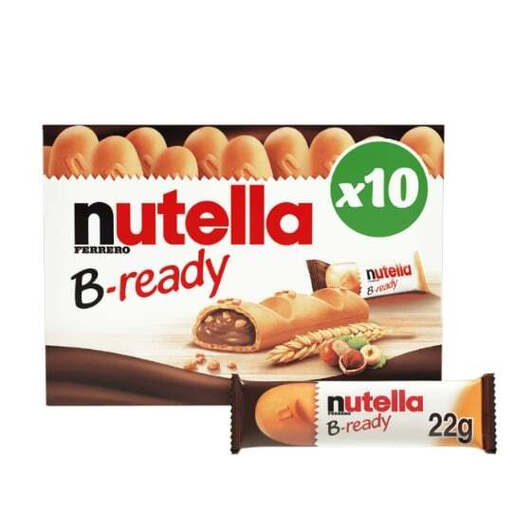 Image unavailable
Nutella B-ready, pack of 10, 220 g
For handing out filled wafers that can be eaten as they are, with nothing to spread them on.
Pack of 10 pieces weighing 22 g each, 220 g in total. Nutella France describes B-ready as individually wrapped.
This wafer isn’t a substitute for a tub of spread. Check the ingredients and allergen information on the packaging of the pack you choose.
View on Joybuy
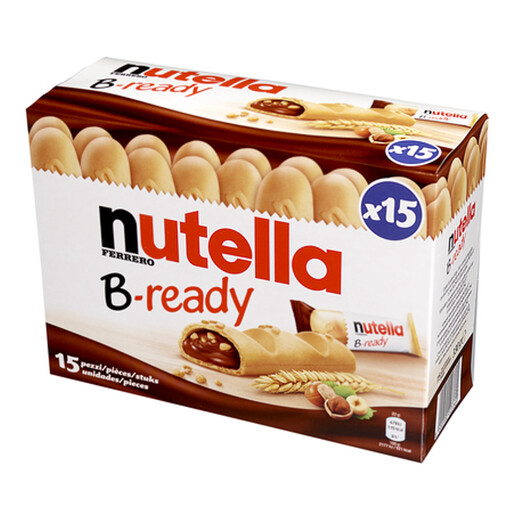 Image unavailable
Nutella B-ready, filled biscuits, 330 g
For a ready-to-eat filled snack, rather than serving as a spread.
330 g pack. Before handing out the contents, check the number of biscuits and the weight of each piece on the product you order.
Also check the ingredients list and allergen information on the exact packaging.
View on Joybuy
Frequently asked questions
Does the soda tax apply to spread?
No. Solid spread isn’t covered by this levy. The French rules published by Légifrance apply to drinks and liquid preparations for drinks; you should still check the sugar information for the product you choose.
Is the Nutri-Score compulsory on spread sold in France?
No. According to Santé publique France, displaying the Nutri-Score is voluntary. It adds to the nutritional information but doesn’t replace the ingredients list or nutrition declaration. If it appears, compare products in the same category.
Which allergens should you check before handing out a pack?
Read the allergen information and any ‘may contain’ warnings on the packaging of the exact product. The 22 g B-ready described by Nutella France and Carrefour contains hazelnuts, milk, wheat, barley and soya, among other ingredients; this shouldn’t be assumed to apply to all wafers or spreads.
How should you plan storage for a bulk purchase?
Follow the storage instructions and best-before date shown for each product. Before ordering several packs, check that the pack format and the time you have available will allow you to distribute them in line with the instructions on the packaging.


