What should you compare?
First decide whether the spread will stay in a shared cupboard or whether everyone will take their own portion. Then check the exact product: a jar’s weight alone tells you nothing about its ingredients or how long it can be used for after opening.
Large shared jar
Worth considering: for regular team breaks, with a clean utensil available.
Bear in mind: once opened, the jar needs to be managed as a shared item, following the instructions for that specific product.
Individual portions
Worth considering: if sharing portions between colleagues or packing a lunchbox matters more than keeping a shared supply.
Bear in mind: individual units can mean more packaging; a snack pack with an accompaniment is not the same as several identical jars.
| What to consider |
What to check |
Who is it for? |
| Shared supply |
Net weight and instructions after opening; Auchan’s product page for the 750 g Jardin Bio étic jar recommends using it within a month, preferably. |
When breaks are frequent at the office, I want a jar that suits how quickly the team will get through it. Around 40% of consumers put keeping the shared supply going first. |
| Individual portions |
Number of units and exactly what’s included: a jar of spread or a snack pack with other foods. |
When packing my lunchbox, I’d rather take an individual portion than use the shared jar; this is the top priority for around 30% of consumers. |
| Ingredients |
Sugars and fat per 100 g, the ingredients list and allergen information for the product you choose. |
If colleagues have dietary requirements, I need to check the ingredients before adding anything to the shared supply. This comes first for around 20% of consumers. |
| Packaging |
Number of containers to open and how much the team can use once they’re opened. |
I want to limit the number of containers without opening a large jar that might go unused; around 10% of consumers prioritise this balance. |
Spread jars on Joybuy
These products are jars of spread to consider for an office supply, not multipacks of small jars. The 400 g white chocolate option offers a different flavour from the Nutella jars.
 Image unavailable
Nutella hazelnut and cocoa spread, 1 kg jar
A jar to consider if the shared supply is used regularly and you can organise sharing with a clean utensil.
The jar contains 1 kg of spread, with no individual portions. The information for this product lists 56,3 g of sugars per 100 g and mentions hazelnuts, milk and soya. Check the allergens on the packaging you buy.
View on Joybuy
 Image unavailable
Nutella chocolate and hazelnut spread, 3 kg
This large jar could suit a team that uses spread frequently, provided you can manage it properly once opened.
The 3 kg format is neither a multipack of jars nor an individual portion. The information for this product lists 56,3 g of sugars per 100 g and mentions hazelnuts, milk and soya. Check the allergens on the packaging you buy.
View on Joybuy
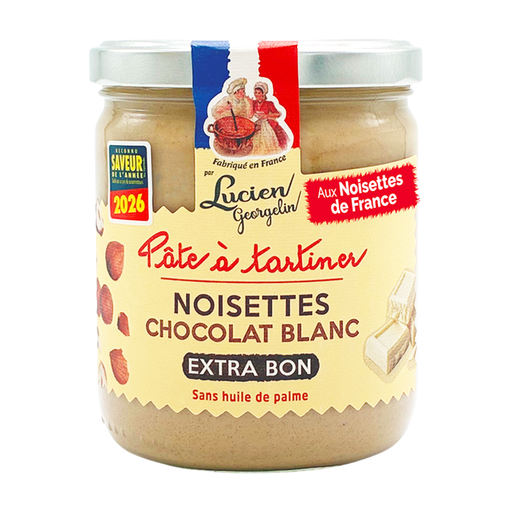 Image unavailable
Lucien Georgelin Lot-et-Garonne, hazelnut and white chocolate, 400 g
This 400 g jar is a smaller option for a shared supply if your team specifically wants a white chocolate recipe rather than a cocoa and hazelnut spread.
The information for this product lists 57 g of sugars per 100 g, hazelnuts and milk, and possible traces of other nuts. Check these warnings on the packaging you buy.
View on Joybuy
 Image unavailable
Nutella spread, 750 g jar
This jar could provide a 750 g shared supply rather than individual portions.
The information for this product lists 57,5 g of sugars per 100 g and mentions hazelnuts and milk. Check the full label and instructions for use after opening before making it available at the office.
View on Joybuy
Frequently asked questions
What should I check before putting a large jar in the office cupboard?
Above all, check that your team can use it in line with the instructions for the product you’ve chosen. Auchan’s product page for the 750 g Jardin Bio étic jar recommends not storing it in the fridge and using it within a month, preferably, once opened. Don’t automatically apply these instructions to another jar.
Does a ‘lactose-free’ or ‘gluten-free’ label mean a product is free from all allergens?
No. These labels don’t cover every substance that may cause a problem. Auchan’s product page for a Jardin Bio étic recipe described as lactose-free and gluten-free warns that it may contain traces of milk proteins, soya and other nuts. Check the information on the product you actually buy.
Does a jar sold in France have to display Nutri-Score?
No. The French Ministry of the Economy says that displaying Nutri-Score is optional. To compare prepacked spreads, check their nutrition information, which the DGCCRF says should be presented per 100 g, as well as their ingredients lists.
Does the ‘soda tax’ apply to spread?
No. The contribution described in the Official Bulletin of Public Finances applies to the first delivery in France of non-alcoholic drinks containing added sugars, not jars of spread. To compare the sugars in these products, check their nutrition information per 100 g instead.


