What should you look at first?
First decide whether you want spread to put on toast or a ready-made snack. Then check the weight of each item and its label to compare products that don’t serve exactly the same purpose.
| Factor |
What to check |
Who is it for? |
| Amount per item |
Check the weight of each item and the number of items in the pack; “mini” doesn’t refer to a fixed quantity. |
Whether I’m choosing something for toast or a snack, I want to know how much is in each item before I buy; around 45% of consumers prioritise a measurable portion. |
| Convenience when you’re out |
Check whether the product is ready to eat and whether it already includes a wafer, biscuit or breadsticks. |
When I have my coffee away from home, I’d rather not have to prepare toast; around 33% of consumers prioritise a portable snack. |
| Ingredients and allergens |
Compare the nutritional information per 100 g, then check the serving size, sugars and allergens shown on the label. |
Even for a small item, I want to check the ingredients before buying; around 22% of consumers put this check first. |
Spread and individual snacks on Joybuy
These products suit two different ways to enjoy something with your morning coffee: a portion of spread to put on toast, or an individually wrapped wafer that’s ready to eat. Choose based on whether you want to portion out the spread separately or take a ready-made snack with you.
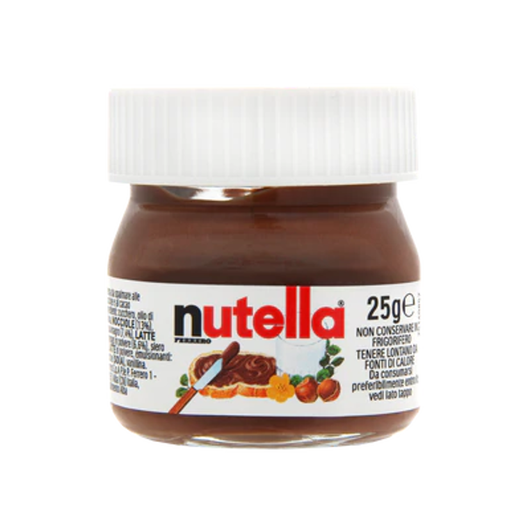 Image unavailable
Nutella hazelnut and cocoa spread, 25 g
Worth considering if you’d rather spread a pre-portioned amount than eat a wafer. This product is listed in a 25 g format; check that the pack suits how you plan to use it, then read the label for ingredients, allergens and nutritional information.
View on Joybuy
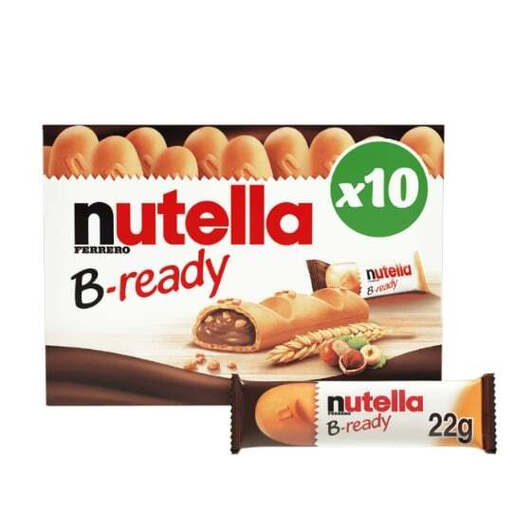 Image unavailable
Nutella B-ready T10, 220 g
If you want something to enjoy with your coffee when you’re out, without having to prepare toast, this product contains filled wafers in 22 g portions. You can’t portion out the filling separately; check the label if hazelnuts, milk, soya, wheat or barley are relevant to you.
View on Joybuy
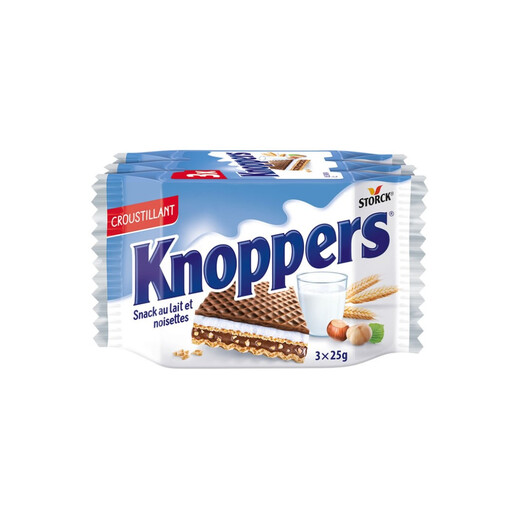 Image unavailable
Knoppers Milk & Hazelnut, 3 × 25 g
For a ready-made snack to enjoy with your coffee, this pack contains three 25 g portions. These are filled wafers, not spread to put on toast; check the label if you need to avoid ingredients such as milk, hazelnuts, wheat, soya or peanuts.
View on Joybuy
Frequently asked questions
Is Nutri-Score compulsory on these products in France?
No. According to the DGCCRF, displaying Nutri-Score is voluntary in France, while nutrition labelling is compulsory for pre-packed foods. So, if the logo isn’t shown, you should still check the product’s nutritional information.
How can I compare two small formats if one doesn’t show Nutri-Score?
First compare products intended for the same purpose, then check their nutritional information per 100 g and the amount you plan to eat. If shown, Nutri-Score gives you an extra point of reference; it doesn’t replace checking the serving size and allergens.
What should I check if certain allergens are relevant to me?
Read the label for the exact product. Under the labelling rules outlined by the DGCCRF, allergenic ingredients must be listed and highlighted. Some of the wafers and biscuits mentioned here list ingredients such as hazelnuts, milk, soya or cereals containing gluten; also check for any “may contain” warnings.
Is choosing a smaller item enough on its own?
No. Weight tells you the set amount, not what’s in the product: a 15 g biscuit, a 22 g wafer and a 52 g portion with breadsticks are different products. When choosing something to enjoy with your coffee, think about how you plan to use it, then compare the nutritional information per 100 g and per portion eaten.


