For portioning your spread
If you’re already bringing bread or a pastry, a 15 g portion pot lets you control how much spread you add. It doesn’t determine how much bread or pastry you have with it.


To control how much spread you have with your coffee, choose a 15 g portion pot. If you want something you can eat without toast or cutlery, Nutella & Go and filled biscuits meet a different need: they provide a complete snack or a bite to eat, rather than spread on its own. Nutri-Score is voluntary in France, so whether or not it appears on the pack, compare the nutritional information for similar products, the portion you plan to eat and the allergens.
If you’re already bringing bread or a pastry, a 15 g portion pot lets you control how much spread you add. It doesn’t determine how much bread or pastry you have with it.
At work or on the go, a ready-to-eat snack means you don’t need to spread anything. Nutella & Go pairs spread with breadsticks, while filled biscuits can be eaten one at a time.
If nutritional values or allergens influence your choice, check the exact format you’re buying. The DGCCRF states that Nutri-Score is voluntary in France and that nutrition information must be provided for most prepacked foods, subject to certain exemptions.
Choose this if: you want to control how much spread you put on your toast; the Nutella portion pot listed by Coffee-Webstore contains 15 g.
Bear in mind: you’ll need something to spread it on, and the listed pack contains 120 portion pots.
Choose this if: you want a ready-to-eat snack; Nutella France describes a 52 g pack containing spread and breadsticks.
Bear in mind: the pack portions a complete snack, not a 15 g serving of spread on its own.
Choose this if: you’d rather count out the biscuits you have, without needing bread or cutlery.
Bear in mind: a filled biscuit isn’t a portion of spread to put on toast; also check how many biscuits are in each pack.
| What matters to you | What to check | Who is it for? |
|---|---|---|
| Portioning the spread | The amount of spread in each unit, and whether it’s spread on its own or part of a snack. | If I’m already making toast, I want to know how much spread I’m putting on it. Around 40% of consumers put controlling the amount of spread they have first. |
| Eating without preparation | The weight of the complete unit and whether it includes breadsticks or a biscuit. | Without a knife or anything to spread it on during a short break, I’m looking for something ready to eat. Convenience is the top priority for around 30% of consumers. |
| Reading the label | Nutritional values per 100 g and per portion eaten, as well as the allergens in the format you choose. | Before choosing a snack, I need to compare its nutritional information and check the ingredients. Around 30% of consumers prioritise reading the label. |
A 15 g portion pot contains spread on its own. The 52 g Nutella & Go pack described by Nutella France also includes breadsticks, so the two weights don’t refer to the same thing.
Decide whether you want to portion the spread you put on toast or have a complete snack, then check the nutritional values for the portion you’ll eat.
According to the DGCCRF and Santé publique France, displaying Nutri-Score is voluntary in France. The absence of the logo alone doesn’t tell you what a product contains.
Compare the nutritional information per 100 g for products in the same category, then take into account the portion you’ll eat.
The 15 g Nutella portion pots listed by Coffee-Webstore are sold in a carton of 120, so this pack size is worth distinguishing from a purchase of just a few portions.
Check how many units are included before choosing this format for occasional use.
Ingredients depend on the product: you can’t assume that a pot of spread, a snack with breadsticks and a filled biscuit all contain the same things.
Check the ingredients list and allergens shown on the packaging of the product you’re actually buying.
The range mentioned here includes spread, Nutella & Go with breadsticks and Nutella Biscuits. These formats don’t portion the same food.
The retailer lists Nutella & Go in a twin pack of 52 g units, which is different from a portion of spread on its own.
The retailer also lists Nutella & Go in a twin pack of 52 g units.
These two ready-to-eat formats are ideal for a break without having to prepare toast: an individually wrapped wafer bar and a snack with breadsticks. Neither is a substitute for a portion pot designed to help you measure out spread for toast.
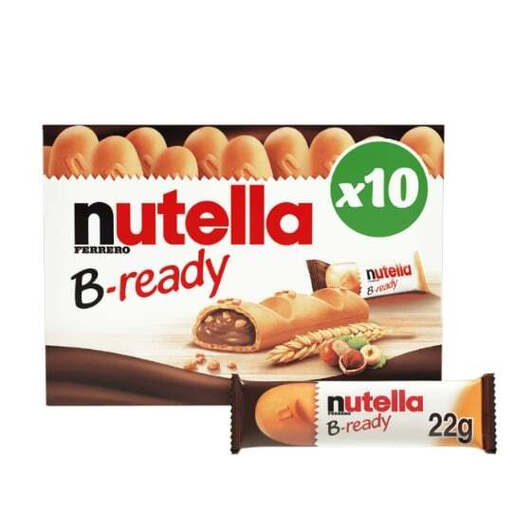 Image unavailable
For a break without cutlery, this pack contains ten individually wrapped 22 g wafer bars with a filling. You can choose to have one bar, but it isn’t a portion of spread to put on toast. The product listing highlights hazelnuts, milk, soya, wheat and barley. Check the label if any of these ingredients are relevant to you.
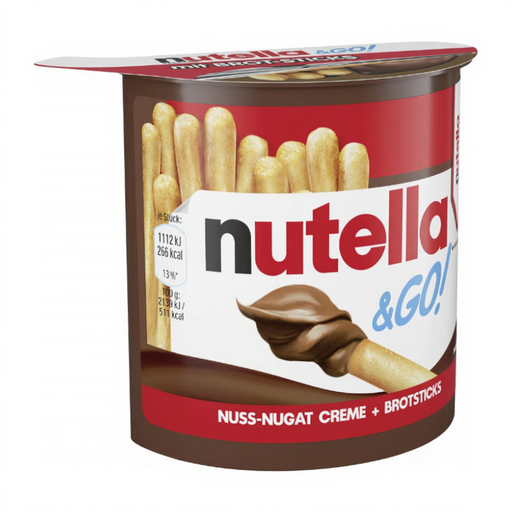 Image unavailable
For a snack without a knife or toast, this 52 g pack combines spread and breadsticks. Its weight refers to the whole product, not just the spread. Check the ingredients, allergens and nutritional information on the packaging of this variant before comparing it with another portion.
No. The DGCCRF and Santé publique France state that Nutri-Score is voluntary. Nutrition information, however, is compulsory for most prepacked foods, subject to certain exemptions.
First compare the nutritional information per 100 g for products in the same category, then look at the portion you plan to eat. Carrefour says Nutri-Score isn’t provided for Nutella & Go; the absence of the logo doesn’t mean you can skip reading the label.
No. Nutella France describes Nutella & Go as a 52 g pack containing 39 g of spread and 13 g of breadsticks. A 15 g portion pot measures the amount of spread on its own.
Check the allergens for the exact product you’re buying. Information for Nutella & Go highlights hazelnuts, milk, soya and cereals containing gluten; the Joybuy listing for the 52 g unit also mentions eggs. Check the packaging for the ingredients and allergen information that applies to your unit.