Organisers handing out portions
For a jumble sale, a charity sale or several lunch boxes, you’ll want individual portions that people can take away rather than a jar to share.


For a jumble sale, choose individually separable portions if everyone needs to take one away, or a shared jar if the spread will be served in one place. A ready-to-eat individual snack meets a different need from a jar of spread. Before choosing, check the number of units, how much you need and whether the product’s recipe is suitable for the people you’re serving.
For a jumble sale, a charity sale or several lunch boxes, you’ll want individual portions that people can take away rather than a jar to share.
If the same recipe will be served to several people in one place, you can choose a jar size to suit the amount you need and how you plan to serve it.
If sugar, ingredients or dietary restrictions matter, check the details for each product you plan to hand out, including allergen and ‘may contain’ statements.
First decide whether the spread will be handed out, taken away or served from a shared jar. Then compare the quantity and recipe of the exact product you’re considering.
| What to consider | What to check | Who is it for? |
|---|---|---|
| Quantity to hand out | Number of units, weight per unit and total net weight of the multipack. | I want to make sure there’s enough spread without using more containers than necessary; around 36% of consumers put the amount they can hand out at the heart of their choice. |
| Portions to take away | Whether the units can actually be separated and what the product is: spread or a ready-to-eat snack. | If I’m filling lunch boxes or giving one item to each person, I need a format that’s easy to hand out; around 29% of consumers would make convenience their priority. |
| Recipe and allergens | Sugar per 100 g, ingredients and allergen or ‘may contain’ statements for the product you choose. | If several people will receive the product, I need to make sure the recipe suits their dietary restrictions; around 21% of consumers would prioritise the ingredients. |
| Shared jar | A jar size suited to the amount you expect to use and a way to serve it without sharing utensils inappropriately. | At a stall where the same recipe is served on site, I’d rather manage one jar; this way of sharing would be the main requirement for around 14% of consumers. |
The Directorate-General for Competition, Consumer Affairs and Fraud Control describes the rules under consideration in the context of non-alcoholic soft drinks. This does not mean that a spread should be treated as a drink covered by those rules.
To compare recipes, look instead at the sugar per 100 g and the ingredients list.
The French Ministry of Health says that the cited European regulations do not make this graphic label mandatory. If a Nutri-Score is shown, it won’t tell you about allergens on its own.
Check it if it appears on the recipe you’ve chosen, then read the nutritional information, ingredients and allergen statements.
These claims don’t replace checking the allergen information. Nutella France specifically says that Nutella Plant-Based may contain milk and is not suitable for people allergic to milk proteins.
Before handing anything out, check the label of each exact product and the dietary restrictions of the people concerned.
Nutella France offers its hazelnut and cocoa spread in several jar sizes, as well as Nutella & Go for an on-the-go snack.
Carrefour’s range includes hazelnut spread in different jar sizes, including 400 g, 750 g and 1 kg.
Carrefour lists a 400 g Poulain chocolate and hazelnut spread labelled ‘no palm oil’.
The Jardin Bio étic products listed by Carrefour offer a choice of distinct hazelnut and chocolate spread recipes.
These products cover both serving from a shared jar and taking away individual portions. Nutella B-ready is a filled wafer that’s ready to eat, not a jar of spread, so check that this difference suits the way you plan to hand it out.
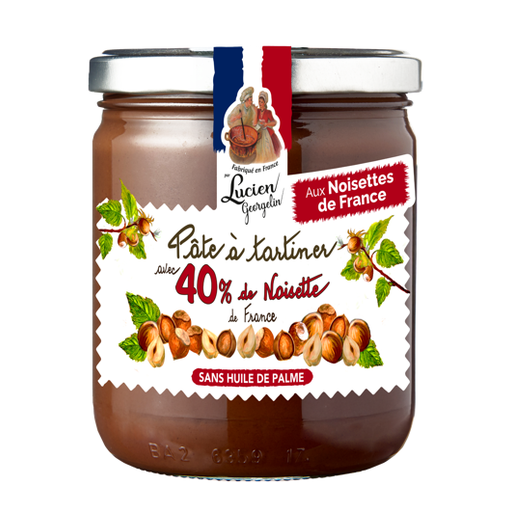 Image unavailable
This jar is suited to serving for everyone to share, rather than handing a portion to each person.
The product name lists 40% hazelnuts. Check the allergens on the label before offering it to attendees.
 Image unavailable
The 1 kg jar is suited to sharing on site, but it doesn’t provide separate portions.
Nutella France lists 56.3 g of sugar per 100 g for its classic spread. Check the ingredients and allergens on the jar you plan to serve.
 Image unavailable
This format could suit a shared serving point if you expect to need 3 kg of spread.
It won’t replace individual portions to take away: plan how you’ll serve the product and check that the recipe is suitable for the people concerned.
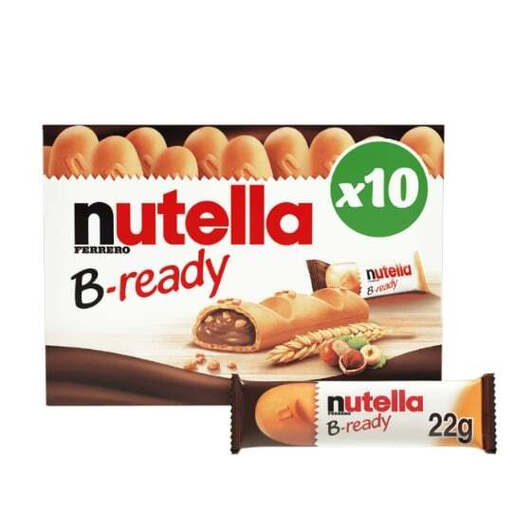 Image unavailable
This filled wafer could work as a snack to take away, but it isn’t a portion of spread to put on bread.
Check the pack size and ingredients list before choosing it for lunch boxes.
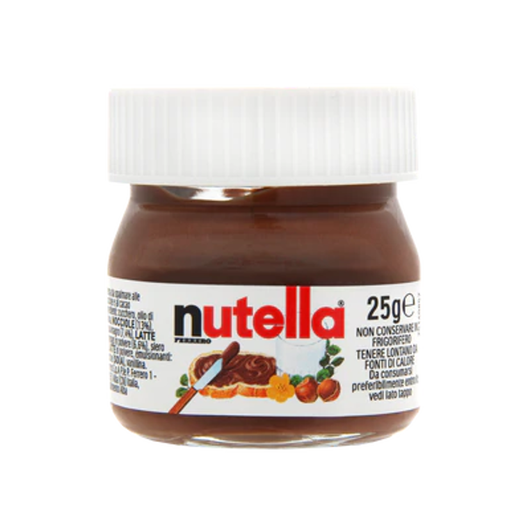 Image unavailable
The 25 g portion is suited to individual use on the go rather than serving from a shared jar.
Before ordering portions for several people, check how many are in the pack and read the ingredients and allergen information on the exact packaging.
Choose individually separable portions if everyone needs to take one away. For serving in one place, choose a shared jar size to suit the amount you expect to use. Check the number of units and total weight of a multipack before comparing it with a jar.
No. The French Ministry of Health says that the cited European regulations do not make this graphic label mandatory. If it appears on the recipe you’ve chosen, you can use it as a guide, but it doesn’t replace checking the nutritional information and allergens.
Read the ingredients, allergens and ‘may contain’ statements for the exact product, then check that the packaging works for the way you plan to hand it out. A ‘vegan’ claim isn’t enough to guarantee there’s no milk: according to Nutella France, Nutella Plant-Based may contain milk and isn’t suitable for people allergic to milk proteins.
Don’t use the ‘soda tax’ to compare spreads. The Directorate-General for Competition, Consumer Affairs and Fraud Control describes the rules under consideration for non-alcoholic soft drinks. To compare spreads, check their sugar per 100 g and their ingredients instead.