Households stocking the cupboard
If spread often features at breakfast or teatime, the jar size should suit how much you usually eat. A larger jar could mean fewer trips to restock, as long as you’ll use it.


When stocking your cupboard, choose a quantity that suits how much you usually eat rather than automatically reaching for the biggest jar. Next, check the recipe and allergens for the product you’ve chosen, then compare the nutritional values per 100 g. In France, the Nutri-Score can provide extra information when displayed, but its use is optional, according to the Ministry of the Economy.
If spread often features at breakfast or teatime, the jar size should suit how much you usually eat. A larger jar could mean fewer trips to restock, as long as you’ll use it.
Ingredient lists, allergens and nutritional information help you compare recipes. For example, Auchan says its Pasta Cao spread contains hazelnuts and milk.
A plant-based description doesn’t mean you can skip checking the ingredients and allergens on the exact jar. Carrefour’s Nutella Plant-Based product is a cocoa and hazelnut spread; its product information doesn’t include a Nutri-Score.
For a cupboard stock-up, start by working out how much you’ll use, then look at the recipe in the jar you’re considering. The sizes listed by Carrefour, Auchan and ALDI show that there’s more than one option when buying for the cupboard.
| Criterion | What to check | Who is it for? |
|---|---|---|
| How much you use | Compare the jar’s weight with how much you usually eat and the space you have available. | If I don’t eat much spread, I’d rather choose a jar I can finish than stock up on too much. Around 42% of consumers would make how much they’ll actually use their top priority. |
| How often you restock | Compare the sizes shown on the jars and follow their storage instructions. | If I eat it regularly for breakfast or at teatime, I want to avoid replacing the jar too often. The need to restock would be the main consideration for around 33% of consumers. |
| Ingredients and allergens | Read the ingredients and allergen information on the exact jar, along with the nutritional values per 100 g. | If a particular recipe or allergen affects my choice, I check the label before choosing a size. Around 25% of consumers would put this suitability first. |
For the relevant prepacked foods, the DGCCRF states that nutritional information is given per 100 g or 100 ml, making it easier to compare products. The Ministry of the Economy explains that Nutri-Score is an optional, additional label. If the logo isn’t shown, you should still check the nutritional information.
In France, the Ministry of the Economy explains that use of this logo is optional. Its absence alone doesn’t tell you what’s in a spread.
Check the nutritional information per 100 g and the ingredient list. Use the Nutri-Score as extra information when it appears on the product.
A large jar can work well if you eat spread frequently, but it takes up more space and could remain open for a long time if you only eat it occasionally.
Estimate how much your household usually uses and check the storage instructions for the product you choose.
A spread being palm-oil-free doesn’t tell you about its allergens: Auchan lists hazelnuts and milk in its Pasta Cao 750 g.
First check the ingredients and allergens on the exact jar, then consider the recipe features that matter to you.
These products illustrate different sizes and recipes to compare. Their features don’t automatically apply to other products from the same brand.
Carrefour’s range includes a 1 kg jar of Classic' hazelnut spread.
The range includes a large-format hazelnut and cocoa spread, as well as a Plant-Based product featured by Carrefour.
Auchan describes its 750 g cocoa and hazelnut spread as palm-oil-free.
ALDI offers TARTICHOC® hazelnut spread in a 750 g jar.
These jars let you compare different sizes for stocking the cupboard, as well as hazelnut recipes and palm-oil-free options. First choose according to how you plan to use it, then check the label on the product you’ve selected.
 Image unavailable
This 1 kg jar is worth considering if you eat spread regularly and the quantity suits your household.
The description mentions hazelnuts, milk and soya. Check the allergens on the exact jar’s label.
 Image unavailable
The 750 g jar is worth considering if you want to stock up without choosing the larger 1 kg size.
The description states that it contains 13% hazelnuts and lists hazelnuts and milk as allergens. Check these details on the jar you receive.
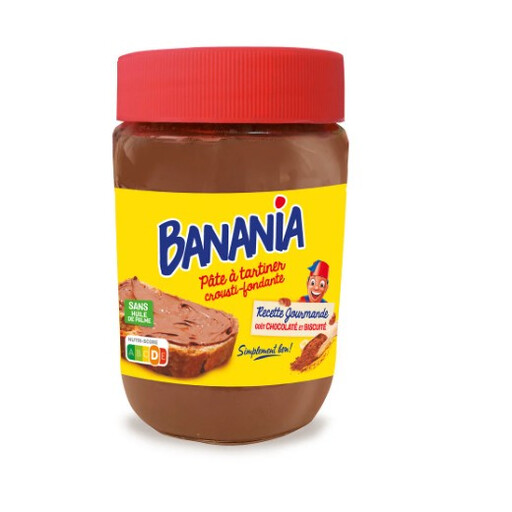 Image unavailable
This 750 g product may suit you if you prefer a recipe described as palm-oil-free.
The description mentions rapeseed and sunflower oils, as well as milk and possible traces of nuts and gluten. Check the label if these allergens are relevant to you.
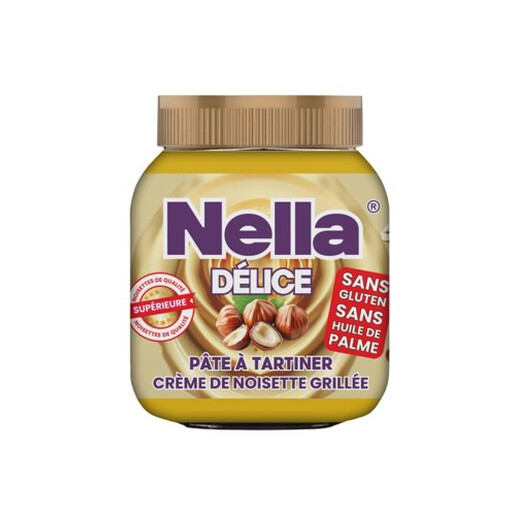 Image unavailable
The 320 g jar offers a smaller quantity if you only eat spread occasionally.
The description states that it contains 25% roasted hazelnuts and mentions hazelnuts, whey and milk. Check the exact jar’s label for allergen information.
 Image unavailable
The 3 kg size is best suited to very frequent use and a suitable storage space; it could be cumbersome if you only eat spread occasionally.
The description lists hazelnuts, milk and soya. Check the allergens and storage instructions on the container.
No. According to the Ministry of the Economy, its use is optional. However, nutritional information is required for the relevant prepacked foods, subject to regulatory exceptions; the DGCCRF states that it is given per 100 g or 100 ml.
No. A large size is most suitable if you eat spread regularly and have enough space for it. If you eat it less often, choose a jar size that matches your habits rather than basing your decision on the size of the jar alone.
Read the ingredient list and allergen information on the exact jar before choosing it. Recipes aren’t interchangeable: Auchan lists hazelnuts and milk in its Pasta Cao, while the descriptions of the Nutella products featured here mention hazelnuts, milk or soya, depending on the product.
Follow the instructions on the product you’ve bought. For example, Auchan says to store its organic spread in a cool, dry place before opening. Don’t assume the same instructions apply to every recipe.