Households that regularly buy spread for snack time
If you use spread often, the weight of the jar matters just as much as its ingredients. Choose a size that matches how much you actually use.


For regular snack times, choose a jar size that suits how much you use, then compare the sugar content per 100 g and the ingredients rather than relying on the brand name alone. If you’re looking for a plant-based recipe or need to avoid an allergen, check the exact jar: a plant-based spread may still carry a warning that it could contain milk.
If you use spread often, the weight of the jar matters just as much as its ingredients. Choose a size that matches how much you actually use.
Compare the ‘of which sugars’ figure per 100 g across the recipes you’re considering. Also check the other nutritional information and the ingredients, including any sweeteners listed in the recipe.
Depending on the product, hazelnuts, milk and soya may appear in the ingredients or allergen warnings. A plant-based description doesn’t mean you can skip checking for milk warnings.
When choosing a spread for snack time, start with how much you’ll use, then check the sugars and ingredients according to your needs.
| What to consider | What to check | Who it’s for |
|---|---|---|
| Pack size | The jar’s net weight and how much your household will actually use. | For regular snack times, I want a size that suits how much my household uses. Around 45% of shoppers prioritise pack size. |
| Sugars | The ‘of which sugars’ figure per 100 g; the Nutri-Score can help with comparisons when displayed. | When comparing recipes, I want to know their sugar content rather than relying on a letter on the packaging. Around 33% of shoppers put sugar at the top of their list. |
| Ingredients and allergens | The ingredients list and any ‘may contain’ warnings on the exact variant. | If I have an allergy or follow a specific diet, I need to check the ingredients of the jar I’m buying. Around 22% of shoppers prioritise suitability for their needs. |
A large pack won’t suit the same needs as a jar for occasional snack times.
Choose a jar size based on how often your household uses spread.
According to the Ministry of Health, displaying it on prepacked foods is voluntary. It doesn’t replace the nutrition information or ingredients list.
If it’s shown, read it alongside the figures per 100 g and check allergens separately.
A recipe carrying this claim may still contain naturally occurring sugars or sweeteners.
Before comparing it with another product, check the ‘of which sugars’ figure and the ingredients list for the exact product.
Nutella says its Plant-Based variant may contain milk and is not suitable for people with a milk protein allergy.
If you have an allergy, rely on the ingredients and warnings on the exact jar, not just its plant-based description.
E.Leclerc offers an ECO+ spread in a 750 g jar.
The Nustikao product featured by E.Leclerc comes in a 1 kg jar.
ALDI describes TARTICHOC® as a hazelnut spread in a 750 g jar.
Nutella offers a classic recipe and a Plant-Based variant. Choose according to the recipe and pack size you’re looking for.
Dukanella is a 220 g Dukan spread featured by Auchan.
These jars include several Nutella sizes, a Banania spread and the Nutella Plant-Based variant for snack time. To choose between them, compare the quantity, recipe and label on each product with your needs.
 Image unavailable
For regular snack times, check that this size suits how much you use and read the ingredients on the exact jar.
 Image unavailable
This jar is worth considering if you’re looking for a 750 g size for snack time. Check its ingredients and allergens on the packaging.
 Image unavailable
This large size is designed for higher-volume use. Make sure it suits your needs before choosing it for snack time.
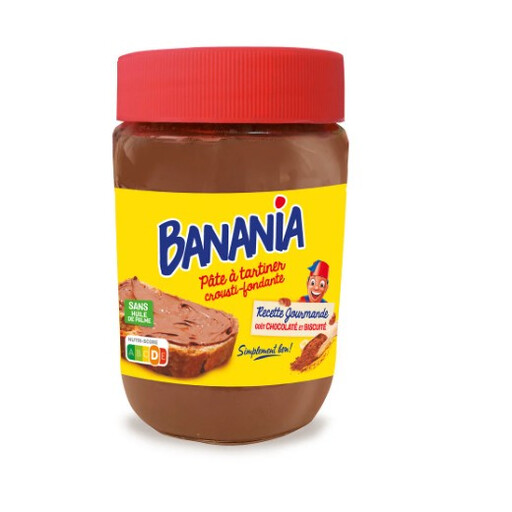 Image unavailable
If you’d like to try something different for snack time, check the recipe for this Banania variant before comparing it with a classic chocolate and hazelnut spread.
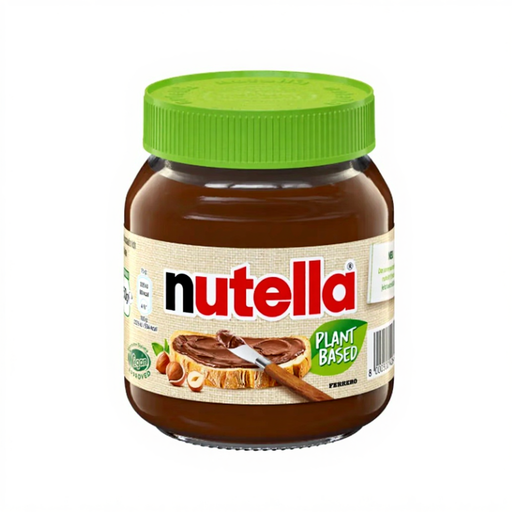 Image unavailable
This variant is an option if you prefer a plant-based recipe. Nutella says Plant-Based contains 45.4 g of sugars per 100 g and may contain milk; it is not suitable for people with a milk protein allergy.
No. The scope of the measures on drinks described by the Directorate-General for Competition Policy, Consumer Affairs and Fraud Control does not include spreads. When choosing a jar, focus instead on its size, ingredients and nutritional information.
No. According to the Ministry of Health, displaying the Nutri-Score on prepacked foods is voluntary. The nutrition declaration required for prepacked foods, as described by the European Union, lets you compare sugar content per 100 g, even when no letter is shown.
Start by comparing the ‘of which sugars’ figure per 100 g on the jars you’re considering. Read it alongside the energy value, other nutritional information and the amount you plan to serve. Don’t assume a recipe is right for everyone based on a single figure.
Not necessarily. Nutella says Plant-Based may contain milk and is not suitable for people with a milk protein allergy. Check the ingredients and any ‘may contain’ warnings on each jar before choosing.