Who is this choice for?

Parents who make sandwiches without utensils

If you fill the sandwich at home before heading out, a squeeze bottle could be a good option if you want to apply the spread directly. Check the cap and how the product dispenses before choosing this format.

Parents comparing nutritional information

To compare spreads, check the sugars and fat per 100 g, then consider the amount actually served. Nutri-Score can also help you compare like-for-like products when it is shown.

Families managing a food allergy

Allergens vary by recipe: the products reviewed mention hazelnuts and milk, and some may contain traces of other tree nuts or peanuts. Check the label on the product you buy and follow the arrangements agreed with the school, particularly if an individual healthcare plan is in place.

What should you check before buying?

Spread in a squeeze bottle

Worth considering: if you want to fill a sandwich at home without reaching for a spoon or knife. Le Delas lists Lucien Georgelin chocolate and hazelnut spread in a 550 g squeeze bottle.

Check: the closure, texture and how much comes out of the bottle. Don’t assume this format will automatically prevent waste.

Spread in a jar

Worth considering: if you’d like to compare different recipes before making a sandwich. Carrefour’s listings include products sold in jars.

Bear in mind: you’ll need a utensil to serve it, and should pay attention to the amount you actually spread.

What to consider What to check Who it matters to
Dispensing and closure Check that a bottle contains a spread, not a topping sauce, then look at its cap. I make the sandwich before we leave and want to apply the spread without a utensil. Around 31% of consumers would make ease of serving their top priority.
Allergens Read the ingredients and precautionary allergen information for the exact product, and take into account the arrangements made with the school. If there’s an allergy, check the recipe before choosing the packaging. Around 25% of consumers would put suitability for their dietary needs first.
Nutritional information Compare sugars per 100 g and the amount served; check the Nutri-Score if it appears on comparable products. I want to know how much sugar is in the spread used for each sandwich. Around 31% of consumers would prioritise checking nutritional information.
Format and availability Choose an amount that suits how you’ll use it, and check what packaging is available when you shop. If spread is only used occasionally, I’d prefer a format that suits this and is easy to find. Around 13% of consumers would put these considerations at the top of their list.

Common misconceptions to avoid

  • Assuming that ‘organic’ or ‘palm oil-free’ means low in sugars

    These claims describe other aspects of the recipe. The Auchan product listings reviewed show 52 g of sugars per 100 g for the Nestlé Dessert spread and 55 g per 100 g for the Auchan Bio product.

    Compare the ‘of which sugars’ figure per 100 g, then relate it to the amount you actually spread. Use Nutri-Score only when it is displayed, and compare like-for-like products.

  • Assuming that all spreads contain gluten, or that none of them do

    Ingredients vary by product. The Auchan listings reviewed declare hazelnuts and milk, as well as possible traces of some other allergens; they don’t allow you to make generalisations about the whole category.

    Read the ingredients and precautionary allergen information on the pack you receive. If the pupil’s diet is covered by an individual healthcare plan, follow the arrangements agreed with the school.

  • Confusing squeeze-bottle spread with a topping sauce

    A squeezy bottle may contain a chocolate and hazelnut sauce intended for drizzling, rather than a spread for bread. The product name and stated use matter more than the shape of the bottle alone.

    Check the product name, directions for use and nutritional information before choosing it for a sandwich.

  • Assuming that spread is subject to the tax on sugary drinks

    In the version dated 1 September 2026, Article 1613 ter of the General Tax Code published by Légifrance applies to drinks and liquid preparations for drinks, not to spread.

    When choosing a spread, focus on its ingredients, allergens and the sugars listed in the nutritional information.

Brands to compare

Lucien Georgelin

Le Delas lists Lucien Georgelin chocolate and hazelnut spread in a 550 g squeeze bottle. It’s worth looking at if packaging is your main consideration.

  • The retailer’s listing describes this recipe as free from palm oil and hydrogenated oils.
  • Check the ingredients, allergens, sugars and closure on the product you choose.

Nutella

Nutella is among the hazelnut and cocoa spreads in jars featured in the Carrefour listings reviewed.

  • A jar lets you compare this format with other recipes in the same aisle.
  • A product in a jar won’t suit you if you want to dispense the spread straight from a bottle.

Nestlé Dessert

The Nestlé Dessert chocolate and hazelnut spread listed by Auchan is a jar option for comparing ingredient and nutrition information.

  • Its listing says the recipe is palm oil-free and contains 52 g of sugars per 100 g.
  • The listing mentions hazelnuts and milk, as well as possible traces of peanuts and other tree nuts.

Auchan Bio

The Auchan Bio cocoa and hazelnut spread reviewed is another jar option. Compare its label rather than relying on the ‘organic’ claim alone.

  • Auchan’s listing describes it as an organic recipe, free from palm oil and containing 13% hazelnuts.
  • It also lists 55 g of sugars per 100 g and possible traces of other tree nuts.

ECO+

E.Leclerc lists ECO+ spread in a 750 g jar. It’s worth considering if this size suits your household.

  • The stated weight makes it easy to compare this jar with other sizes.
  • Check the product listing or packaging to choose based on the ingredients and allergens.

Joybuy products for preparing a lunchbox

These two Nutella products aren’t squeeze bottles: one is listed as 25 g, while the other is a 1 kg jar. They offer different ways to plan how much spread to use when preparing food at home.
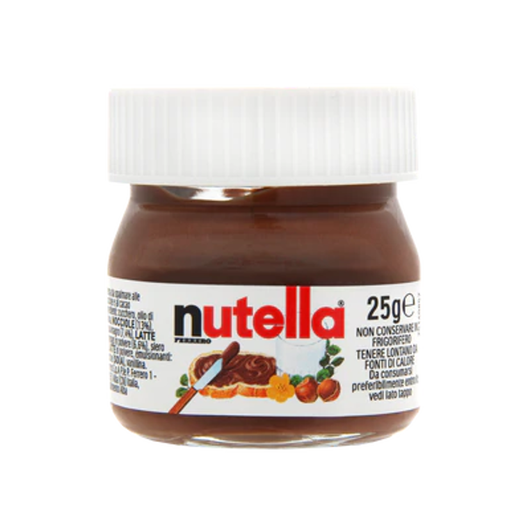
Nutella hazelnut and chocolate spread, 25 g

Nutella hazelnut and chocolate spread, 25 g

If you’d like to plan for a 25 g serving when preparing a lunchbox, check the allergens, sugars and storage instructions for this product on the packaging.

View on Joybuy

Nutella hazelnut and cocoa spread, 1 kg jar

Nutella hazelnut and cocoa spread, 1 kg jar

This 1 kg jar may suit you if you regularly make sandwiches at home, as long as you use a utensil to serve the amount you want. Check the sugars per 100 g and allergens on the packaging before buying.

View on Joybuy

Frequently asked questions

Is a squeeze bottle always more convenient for a lunchbox?

It can save you reaching for a utensil when you make the sandwich at home, but how useful it is depends on the cap and how much spread it dispenses. Also check that it contains a spread, not a topping sauce.

Does a spread have to display a Nutri-Score?

No. In France, displaying Nutri-Score is voluntary, as the Ministry of Agriculture and Santé publique France explain. If it appears, compare it across similar products; either way, check the nutritional information for the product you choose.

Can you assume that chocolate spread contains gluten?

No. Allergens vary by recipe. Read the ingredients and precautionary allergen information for the exact product, rather than assuming gluten is present or absent based on the product category alone.

How should you choose a spread if a secondary school pupil has a food allergy?

Choose based on the allergens listed on the packaging and the guidance that applies to the pupil, rather than the container format. The Ministry of National Education says an individual healthcare plan may include dietary adaptations. If there is one in place, follow the arrangements agreed with the school.

Should you put the bottle or jar in the lunchbox?

You can make the sandwich at home and put it in a suitable lunchbox, without taking the spread container with you. Follow the closure and storage instructions for the product you’re using.