Organisers of small foodie events
Whether you’re serving crêpes, waffles or brunch, or planning several breakfasts, you want enough to go round without opening more jars than necessary.


For an event, start by choosing an amount you can realistically use. A 750 g to 1 kg jar means fewer containers to open, but a smaller size may be a better fit if the recipe matters more than the quantity. Then compare the ingredients, allergens and nutritional values per 100 g. Organic labelling or the absence of palm oil doesn’t replace these checks.
Whether you’re serving crêpes, waffles or brunch, or planning several breakfasts, you want enough to go round without opening more jars than necessary.
You may prefer a smaller jar if its features match your criteria, such as an organic recipe, fair trade credentials or a stated hazelnut percentage.
Before serving guests, check the allergens in the exact product and, if needed, compare its sugar and fat content per 100 g.
For an event or regular family use, start with how much you’ll need to serve, then check the recipe and your guests’ requirements. These needs don’t always point to the same size.
| Criterion | What to check | Who is it for? |
|---|---|---|
| Quantity and storage | Net weight and instructions for after opening, based on the number of guests and how you plan to use it. | If I’m serving several people, I want enough product without opening a string of small jars or keeping an unused surplus. Volume would be the top priority for around 42% of the consumers concerned. |
| Recipe criteria | Claims on the exact product, such as organic, fair trade, no palm oil or a stated hazelnut percentage. | I’d rather choose a recipe based on specific features, even if that means getting a 400 g jar for my event. Around 33% of the consumers concerned would prioritise these recipe criteria. |
| Allergens and nutrition | Ingredients, may contain statements and nutritional values per 100 g on the label of the product you buy. | Before serving my guests, I need to know whether the recipe meets their requirements and be able to compare its nutritional values. This would be the first consideration for around 25% of the consumers concerned. |
The French Ministry of the Economy describes this levy as applying to sugary drinks, not spreads.
To compare two jars, check their sugar and other nutritional values per 100 g instead.
According to Santé publique France, displaying the Nutri-Score is voluntary. So, if the logo is missing, you can’t draw conclusions about the product’s ingredients.
If it appears on the packaging, use it as extra information when comparing products in the same category. Either way, read the ingredients and nutritional information.
Net weight can make serving easier, but the recommended time to use a product after opening varies by product. For example, Auchan recommends using its 750 g Jardin Bio Étic jar within a month.
Estimate how much you’ll serve and how you’ll use the rest, then check the instructions for the jar you choose.
An organic spread or one made without palm oil may still contain allergens. Auchan’s product page for Nocciolata 400 g lists milk and soya, for example.
Check allergens, sugars and fats separately. Don’t assume you know this information from a single claim on the front of the pack.
A well-known cocoa and hazelnut spread, available in a 1 kg jar among other sizes. Worth considering if the amount you’re serving calls for a larger format.
Its 750 g jar combines a family-sized format with recipe and sourcing credentials specified by Auchan.
Auchan’s listing for the 400 g organic jar gives you another recipe to consider when you don’t need a large format.
The 400 g cocoa and hazelnut spread listed by Carrefour is better suited to comparing recipes than finding one large jar.
The 750 g and 1 kg jars give you two sizes to compare in this range.
These jars cover two options for this kind of purchase: choosing a large container for serving, or looking at a 400 g jar when quantity is less important. Match the weight to how you plan to use it, and check the label of the exact product before serving guests.
 Image unavailable
This 1 kg jar may be a good choice if you need a larger amount. Carrefour’s and Joybuy’s product pages for this item state that it contains 13% hazelnuts and 56.3 g of sugars per 100 g. The recipe contains milk and soya.
 Image unavailable
The 3 kg container is designed for serving large quantities, provided you have a plan for using it after opening. Check the ingredients, allergens and storage instructions on the exact jar.
 Image unavailable
The 750 g jar is smaller than the 1 kg format, making it suitable for family use or serving a small group. Before serving it to guests, read the full allergen and may contain information on the label.
 Image unavailable
This 400 g organic spread lets you prioritise a particular recipe feature if you don’t need a large jar. For an event, work out how much you’ll need and check the allergens on the label.
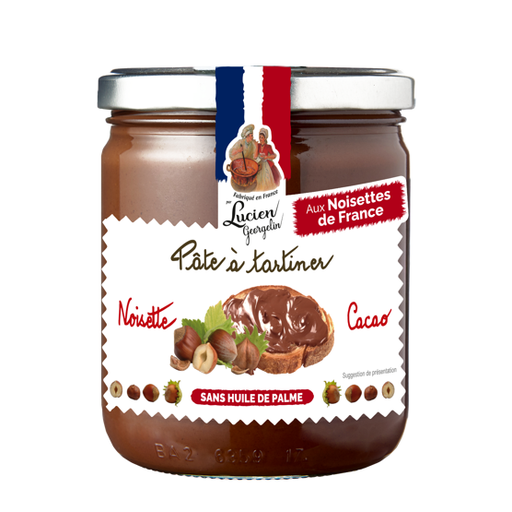 Image unavailable
This 400 g jar is a good option for comparing recipes when volume isn’t your main priority. If you’re serving a group, work out how many jars you’ll need and check the product’s allergen information.
No, not under the levy on sugary drinks described by the French Ministry of the Economy. To compare spreads, look at their nutritional information per 100 g instead.
No. According to Santé publique France, displaying it is voluntary. If it appears, it can help you interpret the ingredients and nutritional information, but it isn’t enough on its own to help you choose a recipe.
Read the ingredients list and may contain statements on the jar you’re going to serve. The recipes mentioned here may contain hazelnuts, milk or soya, among other allergens. Don’t assume a product is suitable based on the brand name alone.
Follow the instructions for the product you’ve bought rather than assuming the same rule applies to every jar. Joybuy’s product page for Nutella 1 kg says not to refrigerate it, while Auchan’s listing for Jardin Bio Étic 750 g recommends using it within a month of opening.