
Livraison le jour même ou le lendemain

Qualité garantie

Débloquez vos offres de bienvenue: Livraison GRATUITE | Jusqu'à -80 % | 30 jours d'essai gratuits à JoyPlus
Téléchargez l'application
A coffee stain on the brand-new sofa, paw prints on the carpet, or car seats that have lost their lustre?? Faced with these everyday mishaps, buying a spray-extraction cleaner quickly becomes the obvious solution. This appliance, also known as a shampooer or spot cleaner, promises to bring all your textiles back to life. The problem?: the market is flooded with models making tempting promises, and disappointment is often the result.
As the Head of Product Recommendations at Joybuy, my mission is to help you see things more clearly. Let's forget the marketing jargon and focus on the essentials to ensure your purchase is a lasting investment, not a source of regret. Here are the most common pitfalls and, more importantly, how to avoid them.
Before diving into features, it's crucial to understand the design flaws that can turn a promising purchase into a device that ends up gathering dust in a closet.
To avoid these pitfalls, focus on a few objective technical specifications. They are your guarantee of a practical device and truly visible results.
As we've seen, suction power is THE decisive criterion. For effective home use, your machine should have a suction power of at least 12 kPa. Below that, drying will take forever. Models that reach 15 or 18 kPa deliver very serious performance, allowing them to extract the maximum amount of water and dirt, and reducing drying time to just a few hours. The water flow rate, meanwhile, indicates the amount of solution sprayed. You need to find the right balance to dissolve dirt without soaking the fabric.
A removable dual-tank system is non-negotiable. As for capacity, it all depends on your needs?:
The practicality of a fabric cleaner also depends on its overall ergonomics. The length of the hose (1.5?m minimum) and the power cord (at least 3?m) is crucial for your freedom of movement. Finally, don't overlook the accessories?: a wide brush is ideal for a carpet cleaner, while a narrower tool will be perfect for the corners of an armchair or for treating a stain on a rug with precision.
Keeping these criteria in mind, here is a selection of models that meet specific needs without falling into marketing traps.
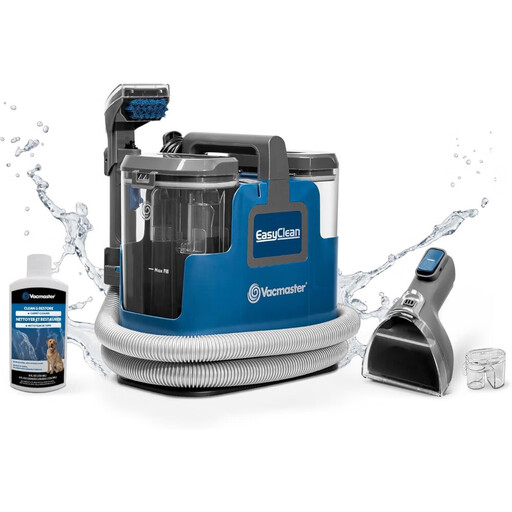
Why it stands out : Ideal for apartment living and for handling small daily accidents (spilled drinks, food stains...). Its compact size makes it easy to store and grab in a flash.
It checks the essential box of a dual-tank system (1.6 L for clean water / 0.95 L for dirty water), which prevents mixing and repeated emptying. At 3.4 kg and with a handle, it's truly portable.
An excellent compromise between compactness, tank capacity, and ease of use for targeted clean-ups.

Why it stands out : When you have children or pets, tough stains are a daily reality. This type of user needs high suction power for deep cleaning and express drying, so the sofa or carpet can be used again quickly.
It tackles the "power on paper" pitfall head-on. With an advertised suction of 17 kPa, it plays in the league of high-performance machines, capable of truly extracting water and embedded dirt.
Its high suction power guarantees a deep clean and record-fast drying time, a non-negotiable feature for intensive family use.
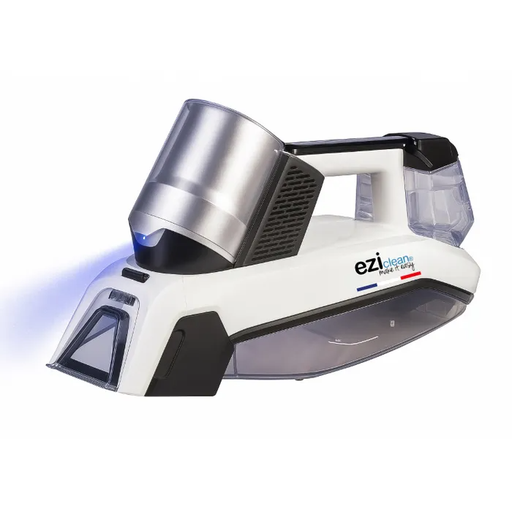
Why it stands out : To clean car seats and mats, freedom of movement is king. A cordless device is the only solution to easily reach every corner of the cabin without getting tangled in a cord or searching for an outlet.
It shatters the concept of "deceptive portability." Completely cordless and battery-powered, it offers absolute manoeuvrability, whereas corded models with their short cables are a real nightmare for car care.
Its battery-powered design offers unparalleled freedom of movement, making it perfect for cleaning vehicles, caravans, or any area far from a power outlet.
We have put together a complete and up-to-date selection of products that meet our demanding selection criteria and current safety standards.
The two terms are often used interchangeably, especially for compact devices. Technically, a spray-extraction cleaner sprays a mixture of water and detergent before vacuuming it up almost instantly. The term shampooer sometimes refers to larger machines designed for large carpeted areas, often equipped with rotating brushes. In practice, most spot cleaners sold today operate on the spray-extraction principle.
Yes, and it's crucial. Manufacturers offer low-foaming cleaning solutions specially formulated for their machines. Using a standard household detergent can create excessive foam, which could damage the motor and leave sticky residue on your fabrics. Always refer to your device's user manual.
Drying time depends on three factors?: your machine's suction power, the room's ventilation, and the ambient temperature. With a high-performance model (over 15?kPa), the fabric will only be damp to the touch and will dry completely in 2 to 6 hours. Properly ventilating the room or car cabin will significantly speed up the process.