
Livraison le jour même ou le lendemain

Qualité garantie

Débloquez vos offres de bienvenue: Livraison GRATUITE | Jusqu'à -80 % | 30 jours d'essai gratuits à JoyPlus
Téléchargez l'application
As a consumer, you have the right to expect products that deliver on their promises: high-performance, durable, and suited for real-world use. The audio device market is saturated with marketing claims, yet few products truly meet the diverse needs of an active lifestyle. Between workouts, business trips, and travel, finding a single, versatile device is often a challenge. This article aims to shed light on the essential criteria for choosing sports translator earbuds and to present a selection of models that stand out for their practical features.
To make an informed choice, it's best to focus on a few objective technical specifications, looking beyond the marketing hype.
The Ingress Protection, or IP, rating is an international standard that defines a device's level of resistance to water and dust. For sports use, this is a non-negotiable feature.
Battery life is crucial, but it must be considered from two angles: the earbuds' standalone battery and the additional power provided by the charging case. For athletes, the ability to listen to music without carrying a smartphone is a major advantage. This is where a built-in MP3 player with internal storage makes all the difference, especially for MP3 swimming earbuds, as Bluetooth does not work underwater.
The earbud design directly impacts comfort and safety. Open-ear earbuds, such as bone conduction headphones, leave the ear canal unobstructed. This allows you to remain aware of your surroundings—a key safety feature for runners and cyclists in urban environments. Regarding the instant voice translator function, it's important to check how it works: most models require an internet connection and a dedicated app on your smartphone to access their language databases.
Here are a few options that meet different specific needs, whether for travel, intense sports, or daily use.

Why we recommend it This model stands out with its charging case featuring a colour touchscreen, which serves as a control interface for music, calls, and especially translation. It's an all-in-one solution designed as travel earbuds, making it easy to communicate in multiple languages without constantly handling your phone.
Pros
Who is this product for? Frequent travellers, digital nomads, and professionals who need a reliable and practical multilingual communication tool, combined with good audio quality for entertainment and calls.
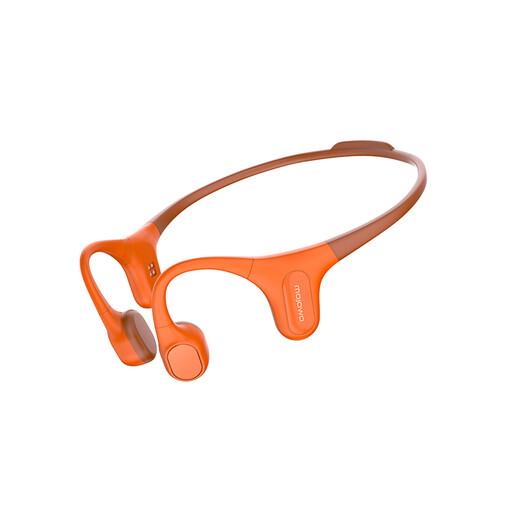
Why we recommend it The Mojawa Run Plus is a pair of bone conduction headphones that solves a very specific problem: listening to music while swimming. Thanks to its IP68 certification and built-in 32GB MP3 player, it offers complete phone-free autonomy, whether in the water or on dry land.
Pros
Who is this product for? Swimmers, triathletes, runners, and cyclists looking for a robust, safe, and completely smartphone-independent audio solution for their workouts.
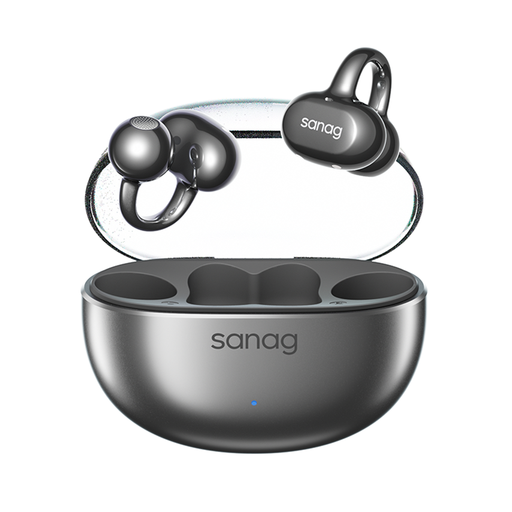
Why we recommend it The Sanag S6S Nova features an "ear clip" design that rests on the outer ear without inserting anything into the ear canal. This open-ear approach maximises comfort for extended wear and is particularly effective for call clarity, thanks to its AI noise reduction for calls.
Pros
Who is this product for? For users who prioritise long-term comfort and call quality. It's an excellent choice for remote work, daily commutes, and moderate sports activities like running or walking.
Open-ear technology isn't limited to bone conduction. Many models use directional transducers to provide an open listening experience. If awareness of your surroundings is your top priority, for either safety or comfort, other solutions are available. For those who prioritise the safety and comfort of an open design above all else, you might be interested in our selection of Open-Ear Wireless Headphones.
1. How do translator earbuds work, exactly? Most translator earbuds work in tandem with an app installed on your smartphone. The earbuds capture the other person's voice and send it to the app, which uses an internet connection (Wi-Fi or 4G/5G) to access a cloud-based translation service. The translation is then sent back to your earbuds in seconds. The accuracy and speed therefore depend on the quality of the software and your network connection.
2. Can you really swim with bone conduction headphones? Yes, provided the model is IP68 certified, like the Mojawa Run Plus. It's crucial to understand that Bluetooth does not work underwater. Therefore, you must use the built-in MP3 player after transferring your music files onto the device. Also, remember to rinse the headphones with fresh water after swimming in the sea or a chlorinated pool to preserve the charging contacts.
3. Are open-ear earbuds safer for outdoor sports? Yes, the open-ear design (whether bone conduction or ear clips) offers a significant safety advantage. By not blocking your ear canal, it allows you to remain aware of surrounding sounds like traffic, horns, or other road users. This considerably reduces the risk of accidents while cycling or running in an urban environment.