
Livraison le jour même ou le lendemain

Qualité garantie

Débloquez vos offres de bienvenue: Livraison GRATUITE | Jusqu'à -80 % | 30 jours d'essai gratuits à JoyPlus
Téléchargez l'application
Choosing a pair of sports socks isn’t just about style. An ill-fitting cut, fabric that’s too warm, or an unsuitable sole can quickly lead to discomfort, chafing and premature wear. Whether you’re a casual athlete or a regular gym-goer, a few simple criteria can help you avoid disappointing purchases.
Very thick socks don’t always fit well inside every shoe. A cushioned sole can offer real comfort during weight training or exercises that involve bearing weight, but it can also reduce the available space inside a snug pair of running shoes.
The right compromise therefore depends on your activity and the internal volume of your shoe. For running, it’s best to go for moderate thickness with good moisture wicking. For fitness or weight training, cushioned socks can provide a softer feel underfoot.
The term breathable socks doesn’t tell you enough about the composition, weave, or the model’s ability to manage sweat. A pair made largely from cotton might feel comfortable for everyday wear, but will retain more moisture during prolonged exercise.
Instead, look at the composition, the presence of synthetic fibres and the knit structure. Models described as anti-moisture socks are designed to promote sweat wicking. However, their comfort also depends on the fit and the shoe you’re wearing.
A sock that’s too big will bunch up, while one that’s too tight can compress your foot or leave a mark on your calf. The size should match your usual shoe size, referring to the brand’s size guide.
Also check for an elastic band across the midfoot, arch support, and reinforced areas at the heel or toes. These features contribute to a secure fit, without being a medical guarantee.
For running, indoor training and long sessions, look for a fabric that limits the feeling of damp feet. Synthetic fibres combined with elastane generally offer good stretch and dry quickly. For the exact composition, the product page is your best source.
The Salomon running socks Predict Crew Socks, for example, are described as being made from a blend of breathable synthetic fibres with moisture-wicking properties. Their “crew” length covers the ankle and extends partway up the calf.
Over-the-calf socks or mid-calf socks offer more coverage with basketball shoes, high-top trainers or certain outdoor activity gear. A mid-height option can also reduce direct contact between the shoe and your skin.
For everyday use, a shorter sock may be perfectly adequate. The key is to ensure the top doesn’t slip down or fold over during movement.
A terry or looped-fabric sole can improve comfort during exercises involving jumps, lateral movements or carrying weights. A ribbed band across the arch helps keep the sock in place.
The Nike Cushioned Training models, for instance, feature a thick terry-cloth sole, a ribbed band across the instep and, depending on the version, arch support. These are design features, not a guarantee of improved performance.
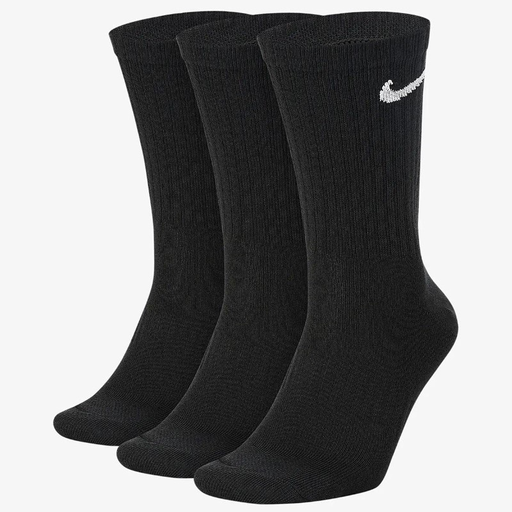
Why this choice suits this profile: This three-pack is suitable for regular training, the gym and everyday use. It allows you to rotate pairs without having to buy multiple single packs.
The product page mentions an arch support band and reinforced areas. These details help you avoid choosing a sock based on appearance alone.
Pack of 3, mid-height, blend of cotton, polyester, nylon and elastane, European sizes 34 to 50.
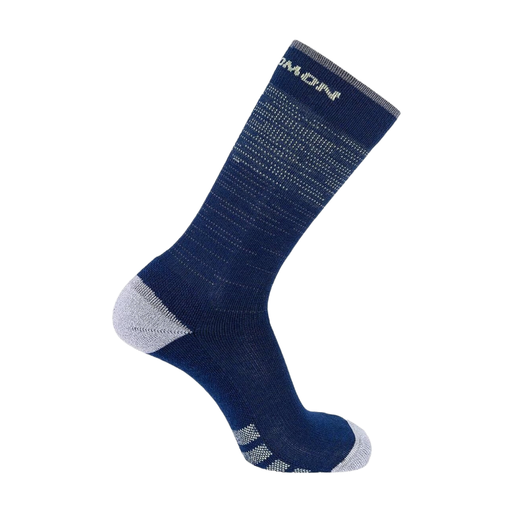
Why this choice suits this profile: This pair is aimed at runners and those looking for a dedicated sock for running sessions or outdoor activities.
Its product page specifies the crew length, unisex design and synthetic fabric described as breathable and designed to manage moisture.
Unisex model, navy colour, covering height and size indicated as 39-41.
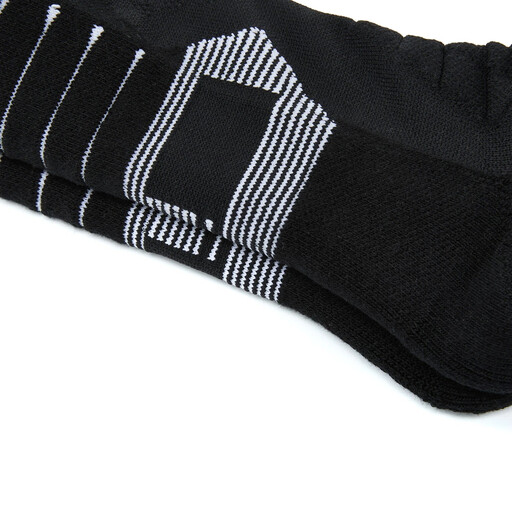
Why this choice suits this profile: Its mid-calf height and stretchy construction meet the needs of basketball players, as well as users looking for a covering sock for frequent training sessions.
The product page mentions an elasticated cuff, soft knit and a fit that wraps the foot. According to the manufacturer’s information, an antibacterial treatment has also been tested against certain bacteria and yeasts, under the test conditions specified by the brand.
Unisex model, mid-calf height, polyester-elastane blend indicated and several colours available depending on size.
We’ve put together a comprehensive, real-time updated list of products that meet these demanding selection criteria and European safety regulations.
To preserve the fabric’s properties, follow the instructions on the label. A wash at 40 °C or cold, without bleach, is suitable for many models. When the manufacturer advises against tumble drying, opt for air drying instead.
Replace a pair when the elastic no longer holds the foot properly, the fabric develops persistent creases, or the sole is noticeably thinner. Its lifespan depends on frequency of use, the type of shoe and washing conditions.
For running, choose a material that wicks moisture effectively and a cut that doesn’t bunch up. Synthetic fibres and technical blends are often the most practical for long runs. In winter, a thicker pair can work, provided it doesn’t compress your foot inside the shoe.
They can suit many users thanks to their stretch, but you must check the size chart and foot length. A stretchy construction doesn’t replace a proper fit. If you’re between two sizes, refer to the specific model’s guidance.
A multi-pack of sports socks makes it easier to rotate between training sessions and washes. A pack of three or six pairs can be practical for regular use. However, compare the composition, reinforcements, available sizes and care instructions, rather than just the number of pairs.