
Livraison le jour même ou le lendemain

Qualité garantie

Débloquez vos offres de bienvenue: Livraison GRATUITE | Jusqu'à -80 % | 30 jours d'essai gratuits à JoyPlus
Téléchargez l'application
The sports smartwatch market is a jungle, saturated with options, tech promises, and marketing jargon. With hundreds of models to choose from, it's easy to feel overwhelmed or, worse, end up with buyer's remorse. Our mission?? To cut through the noise, identify the features that truly matter, and help you avoid common marketing traps.
Before we unveil our top picks, let's break down the most common pitfalls that can turn a promising purchase into a disappointment.
To ensure you make the right choice, focus on the few criteria that truly make a difference day-to-day.
A long-battery-life smartwatch worthy of the name should last at least 5 to 7 days with active use (notifications, sleep tracking, a few workouts per week). Check the battery capacity, expressed in milliampere-hours (mAh), but more importantly, rely on user reviews and independent tests.
Bluetooth calling has also become a very convenient standard feature. It allows you to take calls directly from your wrist without pulling out your phone. Also, ensure the watch is Android and iOS compatible to guarantee seamless syncing, regardless of your smartphone.
Good sleep and SpO2 (blood oxygen saturation) tracking offers a more complete picture of your overall wellness. These sensors, combined with heart rate monitoring, help analyze the quality of your recovery. Be aware that this data provides indicators and is not a substitute for a medical diagnosis.
The number of sport modes is often just a marketing ploy. Instead of aiming for "100+ modes," check that the activities you actually do (running, cycling, walking, yoga, etc.) are supported with accurate tracking for calories, distance, and duration.
Here are a few models that cater to specific user profiles, keeping an excellent price-to-feature ratio in mind.
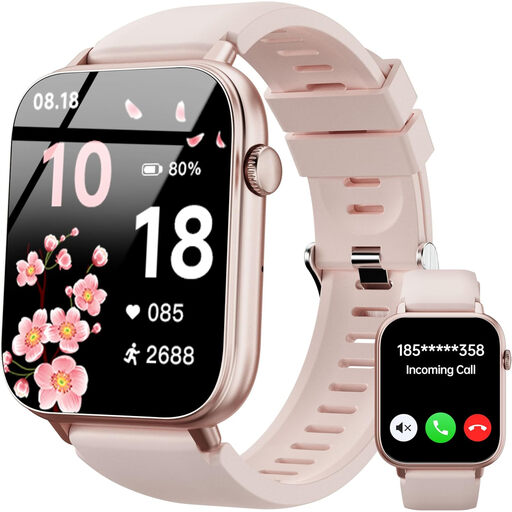
Why we recommend it : Perfect for mixed use, this smartwatch appeals to both men and women. It combines a large, readable screen, Bluetooth calling, and comprehensive health tracking, all in a clean design at a great price point. A versatile choice for sports and everyday life.
No empty promises here. Its 7 days of typical use is an honest estimate for active users, which avoids the disappointment of near-daily charging.
It includes Bluetooth calling and SpO2 tracking, features usually found on much more expensive models. The GloryFit app is known for its stability.
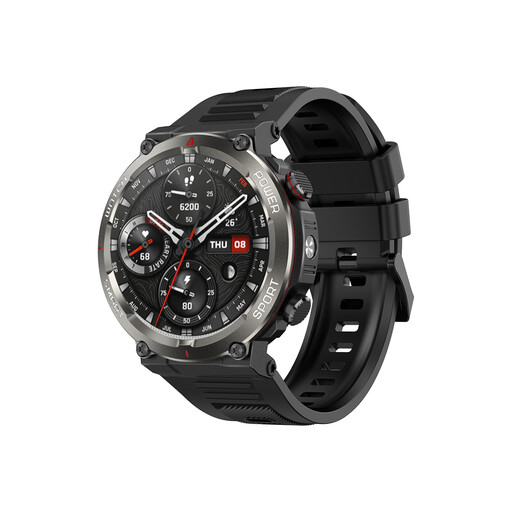
Why we recommend it : Built for those who always forget their charger. With its monster 960 mAh battery, this rugged men's smartwatch is designed for long hikes or busy weeks. Its reinforced design and utility features (flashlight, compass) make it a reliable tool for adventure.
There's no bluffing about battery life here. Its massive battery ensures several weeks of real-world use, not just standby time. It's a tangible and verifiable advantage.
Its record-breaking battery life in this price range is simply stunning. The integrated LED flashlight is a bonus that's as practical as it is rare.
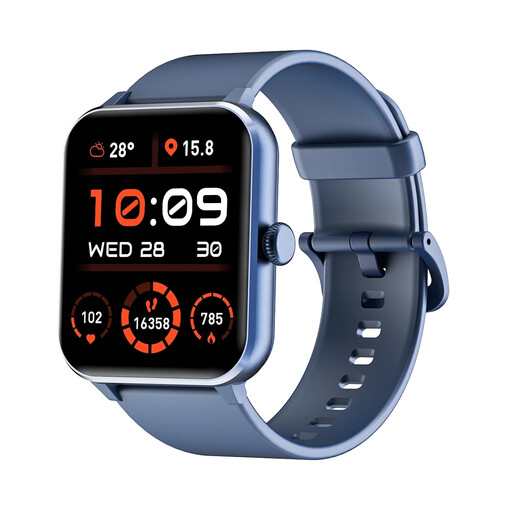
Why we recommend it : For those who want an affordable smartwatch that delivers. It focuses on the fundamentals : a large, clear screen, a solid battery life of over 20 days on standby, Bluetooth calling, and over 100 sport modes. A pragmatic, no-nonsense choice.
It focuses on the essentials and avoids the trap of clunky apps or gimmicky features. The experience is smooth and free of unpleasant surprises.
An excellent balance between a very large 1.85-inch screen, comfortable battery life, and comprehensive tracking, all at an ultra-competitive price.
Our complete and updated selection features products that meet our criteria for quality and reliability.
Yes, almost all current smartwatches are compatible with Android and iOS. However, it's wise to check the minimum required OS version for your phone (e.g., Android 6.0+ or iOS 9.0+). This information is always specified on the product page.
It all depends on your usage! For a budget-friendly smartwatch, a battery life of 5 to 10 days with mixed use (notifications on, sleep tracking, 2-3 workouts per week) is a good benchmark. Long-battery-life models can exceed 15 to 20 days under the same conditions. Be wary of figures quoted for "standby" mode, which never reflect normal use.
Modern sensors are increasingly reliable for tracking general trends, such as changes in your resting heart rate or sleep quality. However, it's worth remembering: a smartwatch is not a medical device. For any diagnosis or health concerns, consult a healthcare professional.