
Livraison le jour même ou le lendemain

Qualité garantie

Débloquez vos offres de bienvenue: Livraison GRATUITE | Jusqu'à -80 % | 30 jours d'essai gratuits à JoyPlus
Téléchargez l'application
Between whey, protein bars, instant cereals and high-protein medical nutrition products, the range available in France can quickly become difficult to compare. An attractive price does not necessarily guarantee a good balance between protein content, composition and intended use. As for the claims highlighted on the packaging, they do not always tell you how much protein you are actually consuming per serving.
Here are the main pitfalls to avoid and the criteria to consider before buying a sports nutrition and protein product.
A powder may show a high percentage per 100 g, while serving sizes vary from one brand to another. Always compare the values per serving and per 100 g. As a general guide, some whey products provide between 22.2 and 24 g of protein in a serving of around 30 g, while a protein bar generally provides 10 to 20 g.
A low-sugar bar may still contain a significant amount of polyols, fat or calories. Some polyols, such as maltitol, can also be poorly tolerated when consumed in large quantities. It is therefore essential to check the carbohydrate, sugar, polyol, fat and fibre values.
Whey is a convenient way to supplement your protein intake, but it does not automatically replace a complete meal. Conversely, a medical nutrition product or a bar designed to replace a meal addresses a very different need. If you are under medical supervision, ask a healthcare professional for advice before using a formula intended for nutritional management.
For whey, check for whey protein, in the form of isolate, concentrate or hydrolysate. Isolate is often preferred when looking for a high protein content per serving, with low carbohydrate and fat levels. Concentrate may be more suitable for everyday use.
The products available include 22 g of protein per 28 g serving for BODY & FIT Whey Perfection, 22.2 g per 30 g for INSHAPE NUTRITION Whey Choco and 24 g per 30 g for some Optimum Nutrition products. These figures allow for a much more practical comparison than marketing claims alone.
Milk is present in most whey products. Soya may also be included, particularly in the form of lecithin to aid mixing. Also check for any possible traces of gluten, eggs, peanuts or nuts.
In a protein bar, the ingredients list may include milk proteins, soya, hydrolysed collagen, fibre and sweeteners. People with allergies or sensitivities should check the label for each flavour, as the recipe may vary.
A large bag can sometimes reduce the cost per serving, but it requires suitable storage space and regular consumption. Individual sachets are convenient for the office, when travelling or at the gym, but often cost more per serving. To get a clear picture, calculate the price of one serving based on the net weight and the stated number of servings.
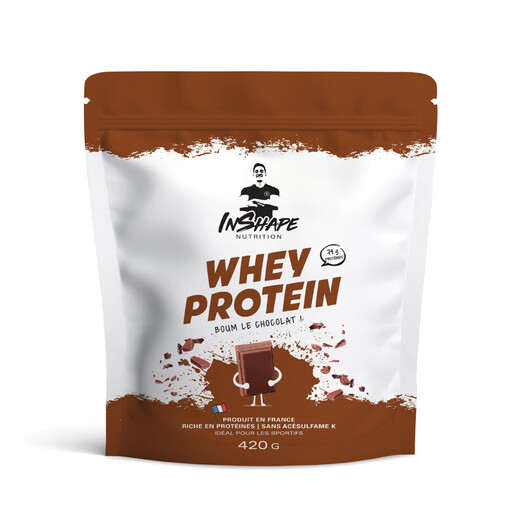
Why this choice suits this profile : At 420 g, this size is a convenient way to start using sports nutrition without immediately buying a large pack. A serving of around 30 g mixes easily with water or milk.
The label gives the values per serving : 22.2 g of protein, 2.1 g of sugars and 1.4 g of fat for around 30 g of powder.
A chocolate flavour, 22.2 g of protein per serving and quick preparation in a shaker.
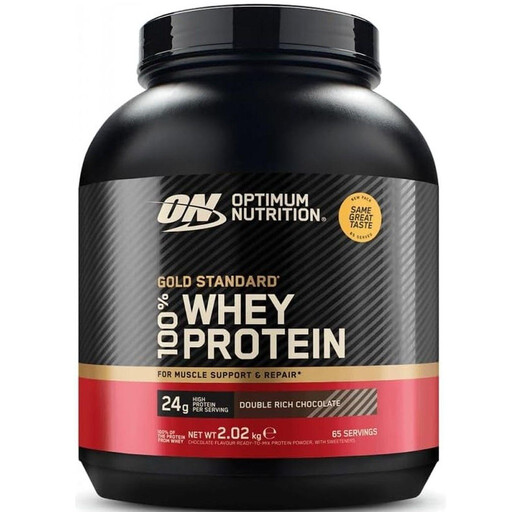
Why this choice suits this profile : The large pack is aimed at regular users who prepare several servings a week and want to avoid placing multiple orders.
The product information specifies a 30 g serving, providing 24 g of protein, 1 g of sugar and 1.4 g of fat.
A blend of whey isolate, concentrate and hydrolysate, with 24 g of protein per serving.
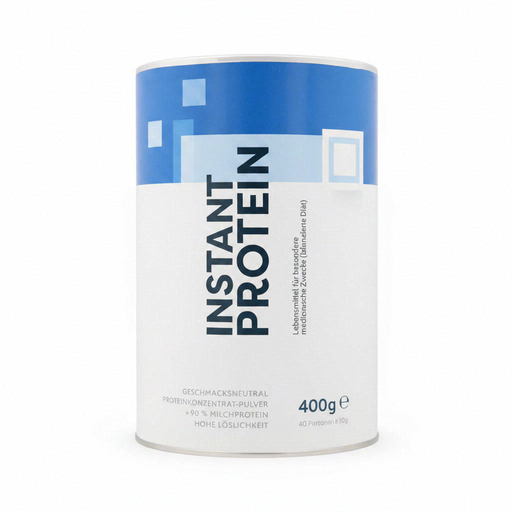
Why this choice suits this profile : This neutral-flavour powder is designed to enrich drinks or recipes, particularly when your diet needs to provide more protein.
It is not presented as a sports recovery whey : the product information classifies it as a food for special medical purposes and recommends supervised use.
The product information states that it provides 91 g of protein per 100 g and can be used in food or drinks.
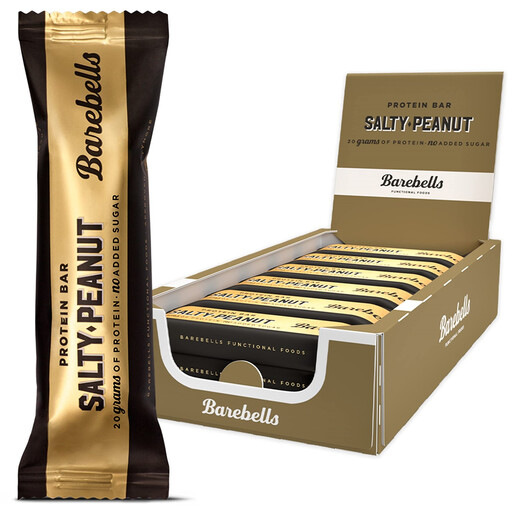
Why this choice suits this profile : Ready to eat, this bar fits easily into a gym bag, desk drawer or travel bag, with no shaker or preparation required.
The information states that each 55 g bar contains 20 g of protein, 2 g of sugar and 200 kcal : useful figures for fitting this snack into your day.
An individual format, a chocolate and peanut flavour and no preparation required.
We have selected a complete, real-time updated list of products that meet these strict criteria and European regulatory safety requirements.
The products in this selection generally provide 22 to 24 g per serving of approximately 28 to 31 g. The amount that is right for you depends on your overall diet, activity level and goals.
Not necessarily. A bar designed as a protein snack may provide a worthwhile amount of protein, but its energy and micronutrient profile may not match that of a complete meal. To replace a meal, choose a product explicitly presented as a meal replacement and follow the instructions on the label.
Store it in a dry, cool place away from light, and close the container carefully after each use. Observe the date shown on the packaging, as well as the manufacturer’s specific instructions.