
Livraison le jour même ou le lendemain

Qualité garantie

Débloquez vos offres de bienvenue: Livraison GRATUITE | Jusqu'à -80 % | 30 jours d'essai gratuits à JoyPlus
Téléchargez l'application
A scouring sponge needs to do much more than just create suds. It should absorb, lift stubborn residue and rinse cleanly, all without damaging your surfaces. Yet picking a simple pack of household sponges can quickly lead to disappointment: fibres that cling to grease, an abrasive side that is too harsh, or a sponge that loses its shape after just a few uses.
Spontex scouring sponges cover a wide range of tasks, from everyday washing-up to bathroom cleaning. Here are the key factors to consider before you buy, along with a selection tailored to different household needs.
A scratchy sponge marketed as non-scratch may be fine for certain surfaces, but that does not mean it is suitable for every finish. Non-stick pans, glossy hobs, painted surfaces and delicate materials all require extra care.
Even with a non-scratch sponge, it is wise to test it on an inconspicuous area first. The pressure you apply, mineral deposits and the condition of the coating can all affect the result.
How long a sponge lasts depends on how often you clean, the type of grime you tackle and how you look after it. A sponge used every day on greasy dishes will wear out differently from one reserved for the sink.
So look at the practical details: machine washability, the durability of the abrasive side, how easily it rinses clean, and when it should be replaced. For hygiene reasons, Spontex generally recommends replacing certain sponges roughly every two months.
A sponge that stays constantly damp can quickly develop odours and become unpleasant to use. On the other hand, an abrasive side that traps food debris soon loses its effectiveness.
After each use, rinse it thoroughly, squeeze it out without wringing it too hard, and let it dry in a well-ventilated spot. Machine washing can extend its useful life, but it does not replace the need for regular replacement.
For everyday washing-up, go for a two-sided sponge: a cellulose part for absorbing and wiping, paired with a scouring surface to tackle stuck-on residue. A kitchen and bathroom sponge can do in a pinch, but it is still better to keep sponges for washing-up separate from those used in the bathroom.
For greasy stains, a technology that helps rinse the fibres clean can make all the difference. Spontex’s Stop-Grease models are designed to reduce grease and dirt build-up in their green side.
A heavily abrasive side is ideal for saucepans, baking dishes and tough surfaces. However, it should be avoided on non-stick or delicate finishes. For a hob, a frying pan or glossy ceramic tiles, look for a sponge for delicate surfaces with soft fibres.
The “non-scratch” label should always be interpreted alongside the manufacturer’s instructions. In any case, testing on a small area first is a simple and effective precaution.
A durable sponge should hold its shape, rinse easily and dry properly. Models described as made from plant-based cellulose may combine cotton, wood pulp and flax. Some can be machine washed at 40°C, while others can handle a 70°C wash: always check the product label before putting it in the machine.
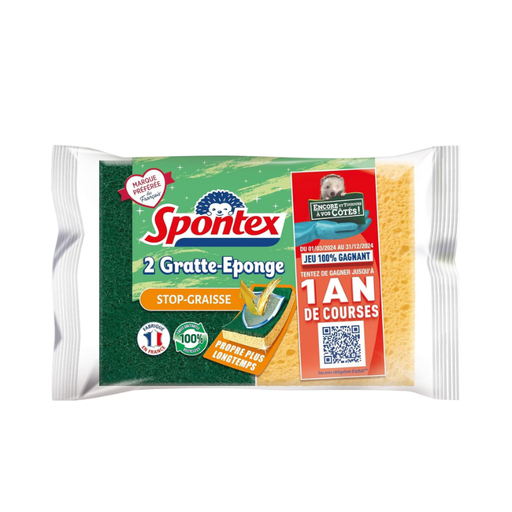
Why this choice suits this profile: This pack of two sponges offers a versatile first option for washing-up and everyday cleaning, especially when greasy residue is a common issue.
The listing mentions a Stop-Grease system designed to make rinsing the green fibres easier. However, the scouring side should not be used on delicate surfaces.
Two sponges, an absorbent plant-based side, and machine washable at 40°C.
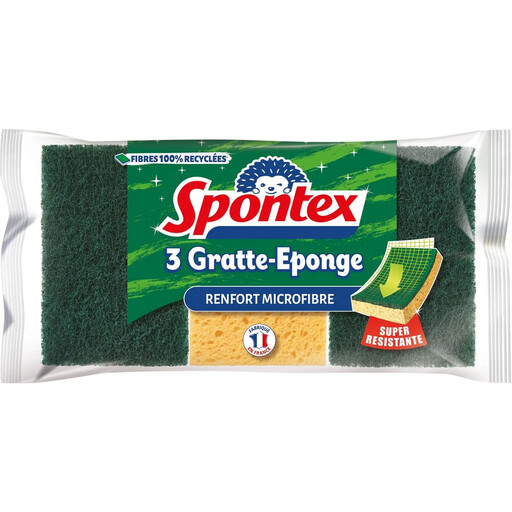
Why this choice suits this profile: Those who want to separate gentle wiping from heavy-duty scrubbing can make the most of its two textures, both in the kitchen and the bathroom.
The microfibre side is intended for more sensitive surfaces, while the scouring side tackles stubborn dirt. A test on a small area is still recommended.
Pack of three sponges, absorbent plant-based side, and machine washable at 40°C.
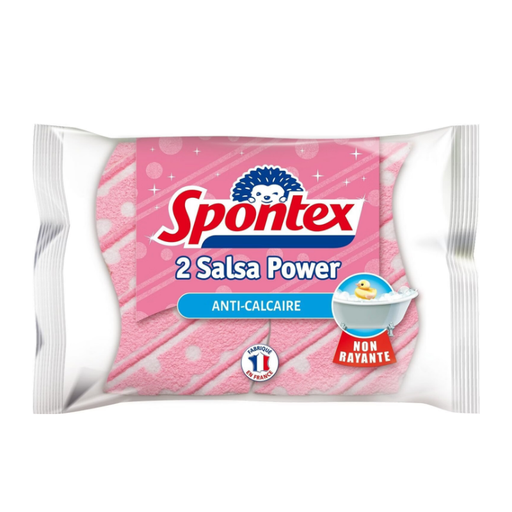
Why this choice suits this profile: Their shape is designed for taps, shower screens, basins, baths and mirrors – a format ideal for regular bathroom cleaning.
The product listing promises enhanced action against limescale, while stating it is non-scratch on bathroom surfaces. Still, test it on a discreet area first.
Access to narrow areas, two sponges per pack, and machine washable at 40°C.
We have put together a comprehensive, real-time list of products that meet these demanding selection criteria and comply with European safety regulations.
Choose a product that is explicitly labelled as non-scratch and suitable for delicate surfaces, such as the Flash range. Even then, avoid scrubbing too hard and test it first on an inconspicuous area. Models whose abrasive side is not recommended for non-stick coatings should not be used on this type of pan.
Some models are stated as machine washable at 40°C, while the long-lasting model indicates a temperature of 70°C. It all depends on the product. Always check the packaging, then let the sponge dry completely before storing it.
How long it lasts depends on usage and care. For hygiene reasons, Spontex often recommends replacing it after about two months, even if the sponge still looks usable. Heavy use, a strong smell or visible wear and tear are all signs it is time to change it sooner.