
Livraison le jour même ou le lendemain

Qualité garantie

Débloquez vos offres de bienvenue: Livraison GRATUITE | Jusqu'à -80 % | 30 jours d'essai gratuits à JoyPlus
Téléchargez l'application
A sponge might seem like a trivial purchase. Yet, between washing-up sponges, scouring models, non-scratch versions and machine-washable options, the design differences have a direct impact on comfort, lifespan and surface protection.
Spontex cleaning sponges cater to a range of needs: everyday kitchen upkeep, grease removal, bathroom cleaning or washing more delicate surfaces. To avoid any nasty surprises, it's worth looking beyond the marketing claims.
An abrasive side makes it easier to remove stubborn residue, but it isn't necessarily suitable for non-stick pans, glossy surfaces or glass. A sponge marketed as effective against tough dirt should therefore be used in line with the manufacturer's recommendations.
On a delicate surface, choose a non-scratch sponge or a soft side, and test it on an inconspicuous area first. Even a product described as soft can trap abrasive particles between its fibres and the surface being cleaned.
Claims like "long-lasting" or "reusable" don't guarantee the sponge will stay hygienic indefinitely. How often you use it, how you rinse it and how you dry it all play a crucial role. A damp sponge left in the sink can quickly develop unpleasant odours.
So, check the instructions: some machine-washable sponges can withstand a specific temperature, while others simply need to be rinsed and replaced as soon as they show signs of wear.
A sponge designed to absorb water won't necessarily have the ideal texture to tackle limescale or cooking grease. To save time, choose a model suited to your main task: a grease-fighting sponge for the washing-up, an anti-limescale option for the bathroom, or a double-sided sponge for alternating between cleaning and finishing.
Double-sided sponges typically combine an absorbent part with a scouring surface. The soft side is for applying product, wiping or absorbing water, while the scouring side tackles the toughest residue.
For plates and non-delicate pans, an abrasive surface can be useful. However, for non-stick coatings, glass or certain hobs, opt for a non-scratch side and always follow the instructions.
Vegetable cellulose, often made from fibres such as cotton, wood or flax, offers good absorbency. A super-absorbent sponge is handy for wiping down a worktop, cleaning a sink or quickly removing water around a basin.
Products containing recycled or certified fibres may also suit households looking for eco-friendly sponges. However, always check the certification and exact composition on the product page and packaging.
Some Spontex models are washable at 40°C, others up to 70°C, depending on their design. Washing can extend their useful life, but it doesn't eliminate the need for regular replacement. Rinse the sponge after each use, wring it out without twisting it excessively, and leave it to dry in a well-ventilated area.
For reusable models, also check the guidelines on fabric softener, tumble drying or dishwasher use. These details can have a direct impact on the lifespan of the fibres.
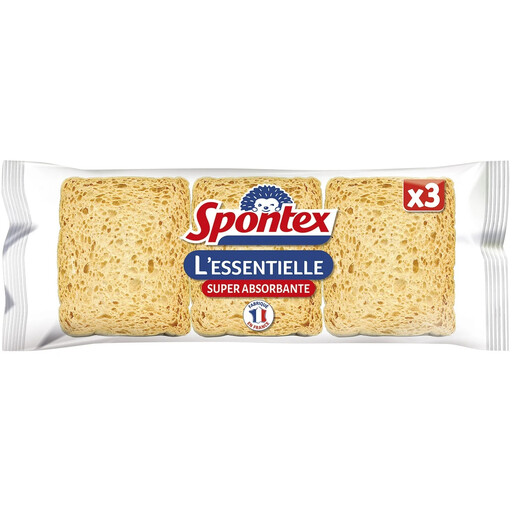
Why this choice suits this profile: this pack of three sponges covers everyday tasks in the kitchen, bathroom and other rooms around the house, without needing to buy multiple different products.
The product page states high absorbency and a texture that stays soft after several uses. However, non-stick surfaces should be avoided, as per the instructions.
Pack of 3, versatile format, manufactured in France (as stated) and absorbent part designed for everyday cleaning.
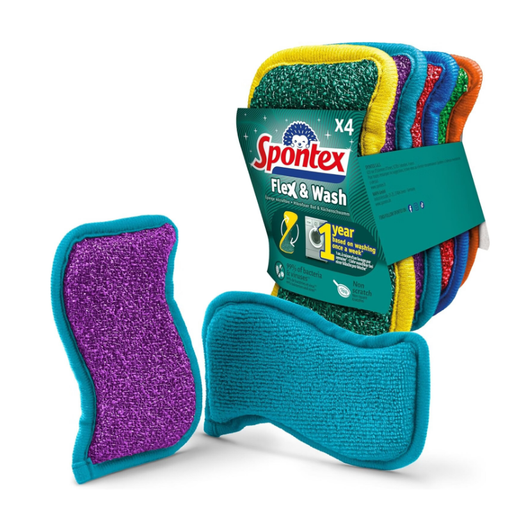
Why this choice suits this profile: its flexible S-shape and two sides make it ideal for those looking for a reusable solution for the kitchen, bathroom or car.
The product page states up to 52 wash cycles. This assumes you follow the instructions, particularly washing at 40°C and avoiding fabric softener.
Microfibre side, scouring side with recycled fibres and recyclable cardboard packaging, according to the manufacturer's information.
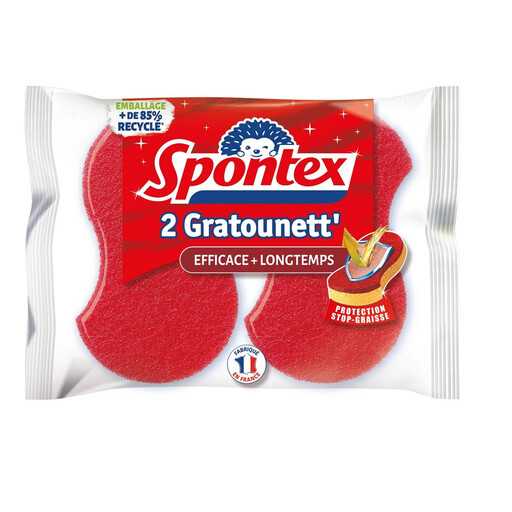
Why this choice suits this profile: this product is designed for frequent washing-up and greasy residue, particularly in households where cooking is a regular activity.
The Stop-Grease treatment is said to make rinsing the fibres easier after washing. It is still essential to rinse the sponge thoroughly and leave it to dry.
Pack of 2, absorbent part and scouring surface designed for kitchen tasks. Manufactured in France (as stated).
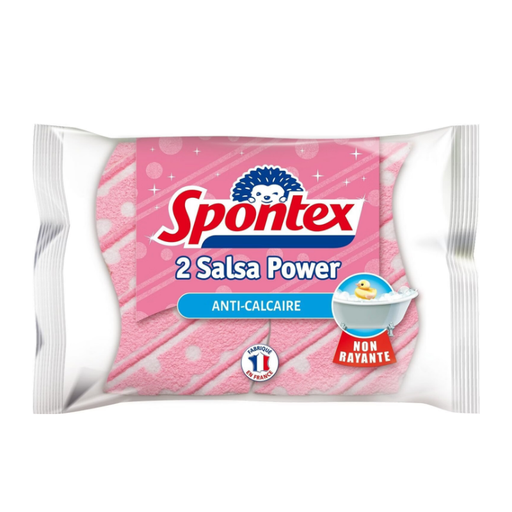
Why this choice suits this profile: its design targets taps, shower screens, basins, baths and mirrors, with a practical shape for hard-to-reach areas.
The product page states enhanced action against limescale and scratch-free use. A preliminary test is still recommended, as materials in a bathroom can vary.
Machine-washable at 40°C, vegetable-based part made from cotton, wood pulp and flax, pack of 2 sponges.
We've put together a comprehensive, real-time selection of products that meet these exacting criteria, while complying with European safety regulations.
A Stop-Grease product or a double-sided sponge with a scouring surface can handle greasy residue. Rinse it thoroughly after each use and avoid non-stick surfaces if the instructions advise against it.
Some are, but the temperature varies depending on the model: 40°C or 70°C are stated on the relevant product pages. Always check the label and don't use fabric softener if it's not recommended.
It all depends on how often you use it and how you look after it. Models advertised as washable for several dozen cycles should be replaced if their texture deteriorates, odours persist or the surface starts to come away.