
Livraison le jour même ou le lendemain

Qualité garantie

Débloquez vos offres de bienvenue: Livraison GRATUITE | Jusqu'à -80 % | 30 jours d'essai gratuits à JoyPlus
Téléchargez l'application
A washing-up sponge might seem like a trivial purchase. Yet a poor choice soon becomes obvious: fibres that hold onto grease, foam that stays damp, an abrasive side that is too harsh for delicate surfaces, or a sponge that loses its shape after just a few uses. To avoid having to replace it too often, it is worth looking beyond its colour and the number of pieces in the pack.
The Spontex anti-grease sponge is designed for those looking for an absorbent model that is easy to rinse and versatile enough for both washing-up and certain kitchen surfaces. Here are the criteria to consider before buying, along with a selection of models suited to different needs.
A non-scratch scrubbing sponge is not necessarily suitable for all materials. Even when its abrasive side is designed to minimise scratches, manufacturers generally recommend testing it on an inconspicuous area first. Delicate surfaces, non-stick pans, aluminium and glossy finishes may require a dedicated soft sponge.
A green side is still handy for tackling food residue, but it should not be used automatically on every utensil.
An absorbent sponge can hold plenty of water without effectively releasing grease. When the fibres retain oily residue, rinsing takes longer and the sponge can leave a greasy feel on your dishes.
The Stop-Grease treatment on the Spontex models featured here is designed to help grease and dirt detach more easily when rinsing the scrubbing fibres. Of course, it does not replace the need for a thorough rinse after each use.
A machine-washable sponge can make maintenance easier, but a cycle in the machine does not replace good daily habits. You should rinse it after each use, squeeze it out well and leave it to air dry. Spontex recommends replacing certain models roughly every two months, or sooner if the sponge is worn or develops a persistent odour.
For saucepans, baking dishes and robust surfaces, a scrubbing side can save time on stubborn residue. However, always check the usage instructions: the models featured here are not intended for delicate surfaces or non-stick coatings.
In a kitchen where several types of materials are used, it can be wise to keep a separate soft sponge for glasses, fragile surfaces and sensitive equipment.
The key point to look for is the sponge's ability to release debris under running water. The Stop-Grease system featured on Spontex sponges specifically targets the green fibres, so that grease and dirt are less likely to cling to them during rinsing.
In any case, use plenty of water, squeeze the sponge several times and remove any visible particles before leaving it to dry.
Some models combine an absorbent plant-based part with scrubbing fibres. The first Stop-Grease model featured uses a plant-based sponge made from cotton, wood pulp and flax. According to the product information provided, its absorbent part is manufactured in factories located in the Oise or Doubs regions of France.
Machine washing at 40°C can be a real plus for those who want to incorporate sponge care into their household routine. Always check the packaging and usage precautions before putting it in the machine.
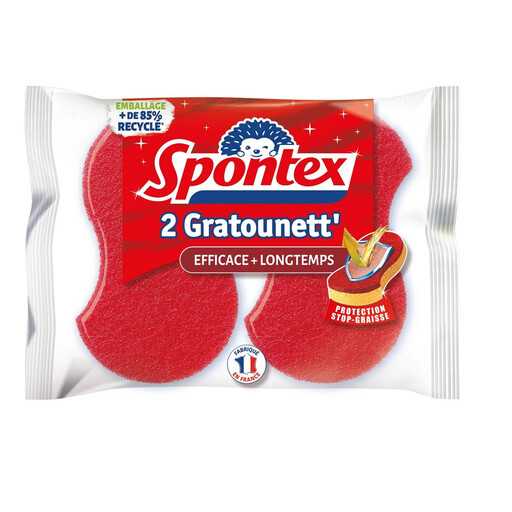
Why this choice suits this profile: This pack of two sponges is a simple first purchase for washing-up and everyday cleaning. Its size fits easily into a family kitchen.
The Stop-Grease treatment is designed to make rinsing the fibres easier after washing and to reduce the amount of residue that clings to them.
Pack of two, described as absorbent and manufactured in France.
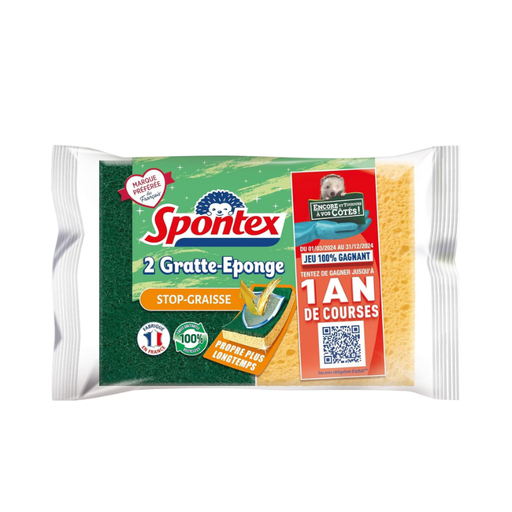
Why this choice suits this profile: This model combines an absorbent plant-based part, a scrubbing side and machine washing at 40°C. An appealing option for households that value long-lasting use.
The "non-scratch" claim should be taken with the usual precautions: the abrasive side is not suitable for delicate surfaces. Careful rinsing and washing at 40°C help to minimise residue.
Plant-based sponge made from cotton, wood pulp and flax; machine washable at 40°C; manufactured in France.
Why this choice suits this profile: Those who frequently wash pans, saucepans and kitchen surfaces will appreciate a sponge designed for greasy dirt and a variety of household tasks.
The Stop-Grease design aims to reduce dirt retention in the green fibres. It is still essential to rinse the sponge thoroughly and not to use it on delicate surfaces.
Pack of two sponges, described as durable and absorbent, suitable for everyday household cleaning.
The scrubbing side is not intended for non-stick coatings or delicate surfaces. For these materials, choose a soft sponge and check the recommendations on the packaging.
The lifespan depends on how often you use it, the type of dirt you clean and how well you care for it. For the Stop-Grease model in question, Spontex recommends around two months. However, replace the sponge sooner if it is worn or develops a persistent odour.
Rinse the sponge immediately after use, squeeze it to remove water and debris, then leave it to air dry. A machine wash at 40°C is also possible when the model allows it.