
Livraison le jour même ou le lendemain

Qualité garantie

Débloquez vos offres de bienvenue: Livraison GRATUITE | Jusqu'à -80 % | 30 jours d'essai gratuits à JoyPlus
Téléchargez l'application
A sponge that holds onto odours, an abrasive side that scratches a pan, or an eraser that dulls a glossy surface can quickly turn a small purchase into a wasted expense. In the kitchen, the bathroom, on walls or in front of a whiteboard, the right choice depends mainly on the surface, the type of dirt and how often you clean.
A non-abrasive sponge may be suitable for delicate surfaces, but this label doesn't guarantee it will be harmless on all finishes. A ceramic hob, a non-stick pan, a brushed stainless steel sink or a matt paint all react differently.
Even a stain-removing eraser, often made from melamine foam, works through micro-abrasion. This means it can dull a shiny surface or strip away part of a fragile paint finish.
A multi-pack of cleaning sponges might look like good value, but you also need to consider their design, dimensions and intended use. Ten standard sponges won't necessarily replace a washable sponge designed to dry quickly, or a scouring sponge suited to stubborn, baked-on residue.
The real cost also depends on how often you need to replace them. A sponge that's misshapen, frayed or hard to rinse should go in the bin, even if the pack isn't finished yet.
So-called antibacterial treatments and quick-drying materials don't mean you can skip rinsing and wringing out the tool. A product description might mention an antibacterial action on a particular side, but that doesn't guarantee overall hygiene for the whole house.
After each use, rinse the sponge thoroughly, remove any debris and leave it to dry in a well-ventilated spot.
A cellulose sponge absorbs liquids effectively and is good for everyday cleaning. Models that combine cellulose, foam and scouring fibres are more versatile. However, the abrasive side should be clearly identified: a standard green fibre can scratch some surfaces, while a fibre labelled as non-scratching should still be tested on the material in question.
Some synthetic foams with a variable texture, like those used in scouring sponges, change firmness depending on the water temperature. This feature can reduce the number of tools you need, but it doesn't replace following the manufacturer's recommendations.
Check the dimensions if you need to clean narrow corners or hold the tool for a long time. A sponge measuring 11 × 7 × 3 cm offers a standard grip, while a floral shape can make it easier to reach the rims of glasses and grooves.
Some models can be washed in the machine at 40 °C. That doesn't mean they last forever, though: replace them as soon as the material crumbles, loses its effectiveness or holds onto smells. Melamine erasers, on the other hand, are consumables that wear down gradually as you use them.
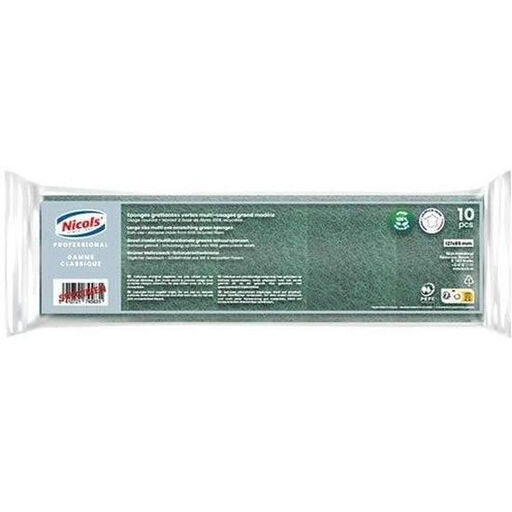
Why this choice suits this profile: This pack provides a solid foundation for stocking a kitchen, with sizes suitable for washing-up, worktops, sinks and tiles.
The separation between the soft foam and the scouring fibre makes it easy to identify which side to use. However, the green side is still not recommended for non-stick or delicate surfaces.
Pack of 10 sponges, dimensions 11 × 7 × 3 cm and a double layer of polyurethane foam and nylon fibres.
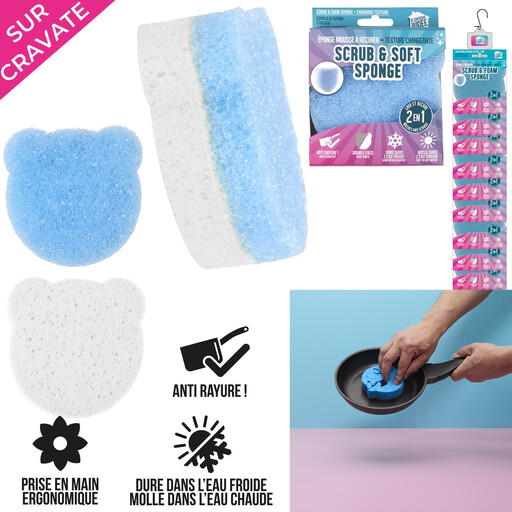
Why this choice suits this profile: Its variable-texture foam is ideal for those who want a single sponge for everyday washing-up as well as tougher residue.
Its firmness changes depending on whether the water is cold or hot, so you don't always need to reach for an abrasive fibre for everyday tasks. A test beforehand is still recommended.
High-density foam, ergonomic grip and rinsing recommended after each use.
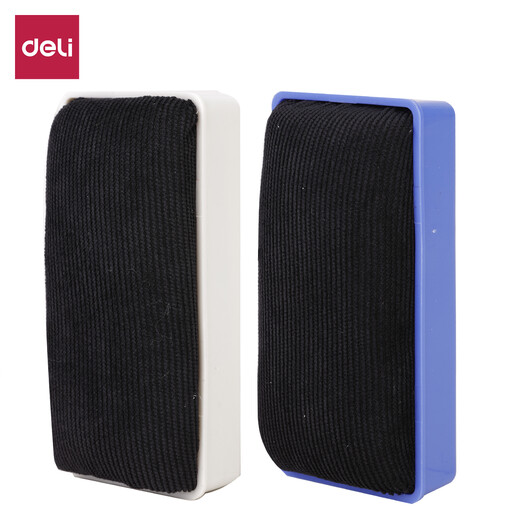
Why this choice suits this profile: It meets the needs of teachers, students and offices that regularly erase boards used with dry-erase markers.
The felt is designed for dry-erase ink, so there's no risk of confusing it with a household eraser or a tool meant for permanent markers.
Felt surface, ABS handle and can be cleaned with water and mild soap, as long as it's left to dry completely.

Why this choice suits this profile: This format is ideal for occasional jobs on pencil marks, certain wall stains or grout, with precise control over pressure.
The instructions list the surfaces to avoid, including glossy finishes, wood, stainless steel and non-stick coatings. A test on a discreet area is still essential.
Melamine foam, activated with a small amount of water and a pack of two consumable erasers.
We've put together a comprehensive, real-time updated selection of products that meet these demanding criteria, while complying with European safety regulations.
A non-abrasive sponge is generally the safest choice. The green sides of some scouring sponges are not recommended for non-stick coatings. Even with a model described as soft, test it on a small area and avoid pressing too hard.
It depends on the material and how intensively you use it. Replace it as soon as it becomes misshapen, tears, loses its effectiveness or holds onto a smell despite rinsing. Also follow the manufacturer's recommendations, whether that's washing at 40 °C or replacing it at regular intervals.
No. It can tackle certain marks on washable surfaces, but its mechanical action risks altering glossy, dark or delicate finishes. Dampen it lightly, rub without forcing and always test on an inconspicuous area first.