
Livraison le jour même ou le lendemain

Qualité garantie

Débloquez vos offres de bienvenue: Livraison GRATUITE | Jusqu'à -80 % | 30 jours d'essai gratuits à JoyPlus
Téléchargez l'application
A spiral notebook may seem simple to choose. Yet the differences between a compact A5 notebook, an A4 model, a perforated notepad or a notebook designed for drawing have a direct impact on ease of use, durability and cost over time.
Product listings sometimes highlight certain features without explaining their limitations. Before ordering, it is therefore better to check a few practical details rather than relying solely on the design or page count.
A product advertised as containing « 60 sheets » generally contains 120 pages printed on both sides. This distinction is essential when comparing two notebooks on an equivalent basis. A pack of four notebooks may also appear very generous, even though each individual notebook is relatively slim.
An A5 spiral notebook is easy to carry in a bag and is ideal for lecture notes, lists and journalling. An A4 spiral notebook provides more space for tables, diagrams and sketches, but it also takes up more room.
The position of the binding matters too. A side spiral makes it easier to write across a double-page spread, while a top-bound notebook can be more practical when taking notes standing up or with one hand.
Paper weighing 70 g/m² or 80 g/m² is generally suitable for everyday writing, but its performance varies depending on the type of ink. For drawing, repeated erasing or wet techniques, it is better to choose a suitable paper weight and design. A standard office notebook cannot automatically replace a watercolour pad or sketchbook.
Check the exact dimensions given in centimetres or millimetres. A standard A4 format measures approximately 21 × 29.7 cm, while some A4+ pads are slightly larger.
Spiral binding often allows you to fold the pages back and keep the notebook relatively flat. However, check the strength of the cover, the diameter of the spiral and how easily the pages turn. A soft cover reduces weight, while a board-backed cover provides greater stability when writing without a desk.
For sheets intended for filing, micro-perforation or four-hole punching may be more practical than permanent binding.
Lined paper makes note-taking and writing easier. Squared paper, particularly with 5 × 5 mm squares, is suitable for tables, calculations, diagrams and plans. Blank pages offer greater freedom for sketches and creative layouts.
Paper weight is a useful indicator, but it is not enough on its own. Texture, paper treatment and pen type also affect the result. For watercolour painting, look for paper explicitly described as watercolour paper, with suitable resistance to moisture.
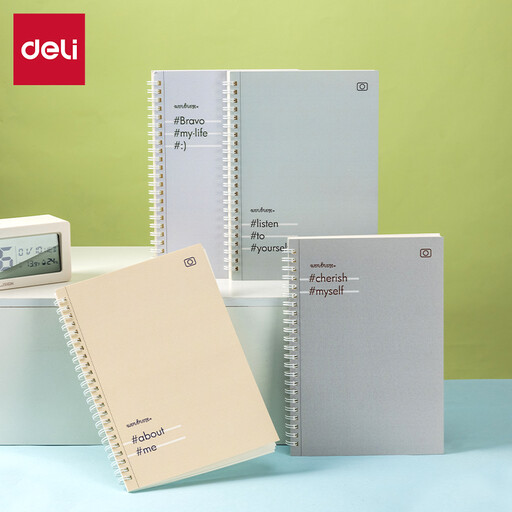
Why this choice suits this profile : The A5 format and four-pack make it easy to allocate notebooks to different subjects, projects or uses without having to buy them individually.
The listing clearly states 60 sheets, or 120 pages per notebook, as well as 70 g/m² paper. The contents of the pack are therefore easier to compare.
A5 format, spiral binding, 60 sheets per notebook and a pack of four.
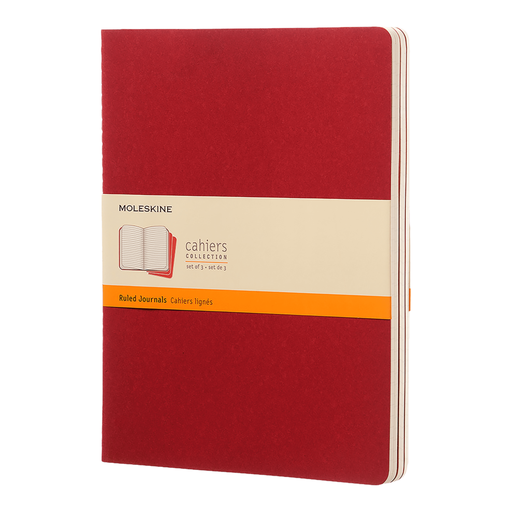
Why this choice suits this profile : This pack is designed for people looking for a polished appearance, a hard cover and practical details for personal or professional writing.
The listing specifies a hard cover, acid-free 70 g/m² ivory paper, detachable pages and a rear pocket.
Pack of three, hard cover, exposed sewn binding and a choice of ruling depending on the version offered.
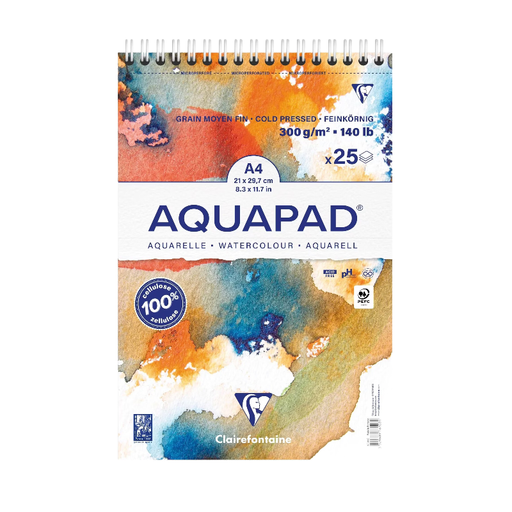
Why this choice suits this profile : Beginner artists and fans of wet techniques get a surface designed for watercolour, gouache and fluid ink.
Its 300 g/m² weight and double sizing set it apart from a standard writing notebook, which is not designed to absorb large amounts of water.
100 % cellulose paper, medium-fine grain, acid-free and described as vegan on the product listing.

Why this choice suits this profile : The small A7 format slips into a pocket or small bag, making it ideal for jotting down an errand, task or idea between appointments.
The format and sheet count are listed separately: each notebook contains 50 sheets and has a soft cover with a top spiral.
Squared paper, easy one-handed note-taking and four coordinated colours in the pack.
For lessons and meetings, an A5 spiral notebook with lined paper is still easy to carry. For longer reports, an A4+ pad with micro-perforated sheets, such as some Rhodia models, allows you to remove pages before filing them.
People who want to organise several subjects can choose a pack of notebooks. Using one model per subject helps prevent mix-ups and avoids having to carry one overly thick notebook. For a diary notebook, choose a sufficiently sturdy cover, a discreet appearance and ruling suited to your writing style.
For dry drawing, a sketchbook weighing 120 g/m², such as the Clairefontaine Cray’ON, is better suited to pencils, pastels and charcoal than lightweight writing paper. For technical diagrams, the Rhodia with 5 × 5 mm squared paper, micro-perforated sheets and four holes makes filing in a ring binder easier.
We have put together a complete, real-time updated list of products that fully meet these strict selection criteria and European safety regulations.
Yes, if you mainly take notes, prepare revision cards or use a compact bag. For subjects involving lots of tables, maps or graphs, an A4 format provides more space and avoids having to fold the sheets.
A spiral notebook can generally be opened flat and folded back on itself. A stapled notepad is often thinner and allows you to detach the sheets, especially when they are micro-perforated. The right choice therefore depends on your priority : keeping the notebook bound or regularly filing the pages.
For everyday writing, a paper weight of 70 to 80 g/m² is a reliable guide. For pencils, pastels and repeated corrections, 120 g/m² paper offers greater strength. For watercolour, check the specific description and paper weight, such as on a 300 g/m² watercolour pad. Paper should always be chosen according to the tool you are using.