Hosts looking for a simple recipe
You want to serve a sparkling drink made primarily with fruit and carbon dioxide, rather than a flavoured lemonade.


To serve sparkling fruit juice at a garden party, first distinguish juice-based drinks with carbon dioxide from fruit-flavoured lemonade. Then choose between apple and apple-pear according to the flavours you prefer, and check the sugar content per 100 ml, the alcohol statement and storage instructions after opening on each bottle. ‘No added sugars’ does not mean the drink contains no sugar.
You want to serve a sparkling drink made primarily with fruit and carbon dioxide, rather than a flavoured lemonade.
You’re planning a celebratory drink for guests who don’t drink alcohol and want to check the exact wording on the bottle.
You’re comparing organic certification, the ‘no added sugars’ claim and the amount of sugar per 100 ml, without confusing these details.
For a garden party, first check what kind of drink you plan to serve, then look at the details that matter to your guests and how much you can use once the bottles are open.
| What to check | Look for | Who is it for? |
|---|---|---|
| Type of drink | Product name and first ingredients: juice or fruit, carbonated water, carbon dioxide, flavourings or sweeteners. | If I’m telling my guests I’m serving sparkling juice, I want the recipe to match that description. Around 40% of consumers put this distinction at the top of their list. |
| Alcohol statement | The ‘alcohol-free’ statement and, if you need a specific alcohol content, the information shown on the bottle. | When guests don’t drink alcohol, I don’t want to rely on the bottle’s celebratory appearance alone. This is the top priority for around 30% of consumers. |
| Sugar and serving | Sugar per 100 ml, organic certification if desired, bottle size and storage instructions after opening. | To plan what we’ll actually serve, I compare the sugar content and how many bottles we’ll be able to finish once opened. This is the priority for around 30% of consumers. |
Flavoured lemonade and carbonated apple juice can both be fizzy, but their ingredients don’t meet the same expectations.
Read the product name and ingredients list before deciding what to tell your guests you’re serving.
Naturally occurring sugars in fruit can appear in the nutritional information even when no sugar has been added. Auchan, for example, lists 10 g of sugars per 100 ml for its Coeur de Pom' product.
Compare the ‘of which sugars’ figure per 100 ml across bottles, and make sure you have water to serve too.
A bottle that looks suitable for an aperitif doesn’t, on its own, tell you the drink’s alcohol content.
If a guest specifically asks for a 0.0% drink, check the exact statement on the product you choose rather than inferring it from general wording such as ‘alcohol-free’.
Storage instructions vary by product. For example, Auchan’s Coeur de Pom' product information says to consume within five days of opening.
Estimate how much your guests will need, check the label and open bottles as you go.
Bottles opened too early may leave you with leftovers to finish within the product’s stated timeframe.
A 75 cl bottle of fine-bubbled sparkling apple juice to consider if you’re looking for a recipe centred on apple and carbon dioxide.
75 cl sparkling drinks to consider if you’re choosing between apple and an apple-pear blend.
A 75 cl bottle of organic sparkling apple juice to consider if organic certification and a clear description as an alcohol-free drink are important to you.
A 75 cl sparkling apple juice listed in the Carrefour Traiteur catalogue.
This 750 ml sparkling drink could be one of the bottles you choose for your gathering. Check its product name, ingredients and label information before presenting it as fruit juice or as a 0.0% drink.
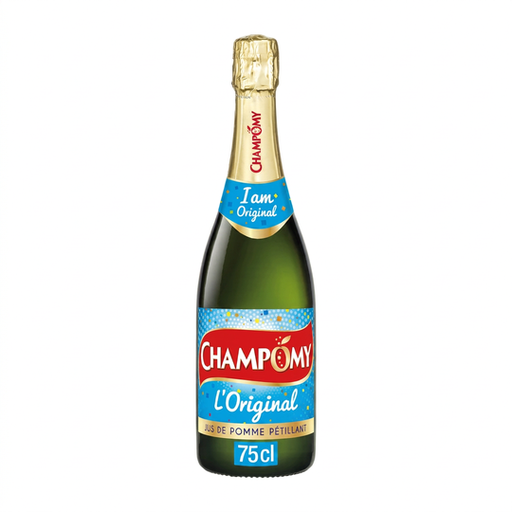 Image unavailable
When planning to serve a sparkling drink at a gathering, bear the 750 ml bottle size in mind. Check the ingredients, sugar per 100 ml and alcohol statement on the bottle.
Start with the product name, then read the ingredients in order. The DGCCRF highlights the importance of product names on juice and nectar labels. A recipe made with apple juice and carbon dioxide is not the same as lemonade whose ingredients start with carbonated water.
No. Sugars naturally present in the fruit may still be in the drink. For a practical comparison, Auchan’s product information for Coeur de Pom' lists 10 g of sugars per 100 ml. Check the ‘of which sugars’ figure for the product you choose.
Don’t assume these two statements mean exactly the same thing. If you need a 0.0% drink, check the alcohol content or precise wording on the bottle’s label for the guests concerned.
No. Follow the instructions for each product. Auchan says to consume Coeur de Pom' within five days of opening, while its product information for Thomas Le Prince apple-pear says to keep it chilled and consume it promptly.