
Livraison le jour même ou le lendemain

Qualité garantie

Débloquez vos offres de bienvenue: Livraison GRATUITE | Jusqu'à -80 % | 30 jours d'essai gratuits à JoyPlus
Téléchargez l'application
Sparkling water is just as welcome at the dinner table as it is in the office, on a picnic or at a party. But not all options are created equal, and they don’t all meet the same needs. A natural sparkling mineral water, a flavoured sparkling water and a fruity fizzy drink can have very different ingredients, bottle sizes and sugar levels.
Before you buy a pack of sparkling water, three common mistakes keep cropping up:
For a natural sparkling water, the ingredients list is usually just water and carbon dioxide, either added or naturally present. La Salvetat nature, for example, has 0 g of sugar and 0 kcal per 100 ml, with a sodium content stated as 0.0005 g per 100 ml.
Flavoured drinks deserve a closer look. BADOIT Fruit Bubbles Lemon & Touch of Lime contains naturally sparkling mineral water, 8.8 % juice from concentrate and 4.2 % sugar. In contrast, BADOIT sparkling flavoured water lemon 1 L has 0 g of sugar and 1 kcal per 100 ml, according to the information provided.
To compare products on a fair basis, start by looking at the values per 100 ml, then scale them up to the volume you actually drink.
A sparkling mineral water has a characteristic mineral composition, shown on the label. SAN PELLEGRINO Sparkling Natural Mineral Water lists 164 mg/L of calcium, 49.5 mg/L of magnesium and 31.2 mg/L of sodium. These characteristics can affect the taste and how well it pairs with food.
A sparkling spring water, such as CRISTALINE Sparkling Water 1.5 L, has a lighter mineral content and a profile described as neutral and balanced. It contains spring water with added carbon dioxide, and no sugar or calories.
A fruity fizzy drink, on the other hand, may contain juice, sugar, flavourings, acidity regulators or sweeteners. It’s chosen primarily for its taste and shouldn’t be treated as the equivalent of a natural water.
Bottle size plays a key role in avoiding waste and keeping the fizz:
After opening, reseal the bottle and put it in the fridge. To keep a pleasant fizz, it’s best to drink it within the few days stated on the packaging. Cans, on the other hand, should be drunk quickly after opening.
The options below cover several uses: everyday drinking, special meals, portability and bulk buying. The characteristics mentioned are based on the information provided for each product.
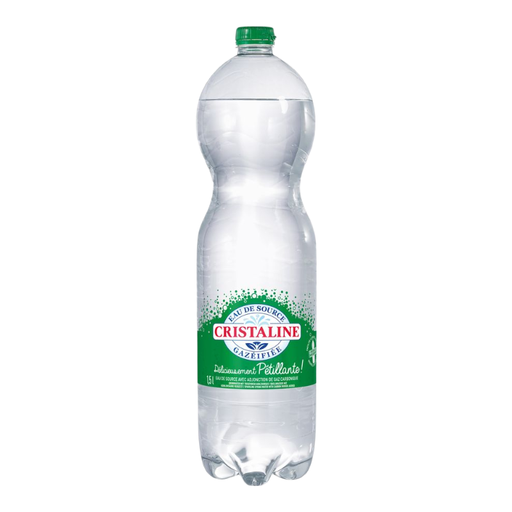
Why this choice suits this profile: Its large format works well for meals at home. Its stated composition of no sugar and no calories also makes it easy to compare with flavoured waters.
The ingredients list is limited to spring water and carbon dioxide, with no sugar or added fruit flavouring.
Family-sized 1.5 L bottle, lightly mineralised water, 0 kcal and packaging made in France according to the product sheet.
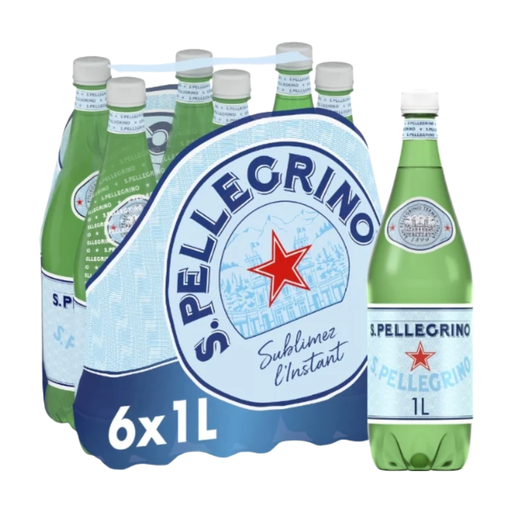
Why this choice suits this profile: This sparkling water pack is designed for group meals, reception tables and enthusiasts who pay attention to the mineral profile of their water.
The product sheet clearly distinguishes the sparkling mineral water from added carbon dioxide and details the mineral composition.
Pack of 6 bottles of 1 L, Italian origin stated and calcium, magnesium and sodium levels provided.
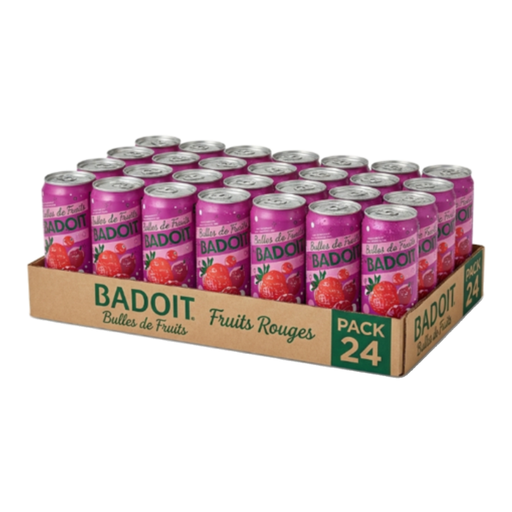
Why this choice suits this profile: The 24 individual cans are ideal for offices, events, snacks and any situation where everyone opens their own container.
The individual format prevents wasting an opened bottle. The product sheet also specifies the presence of juice from concentrate, sugar and flavourings.
24 cans of 25 cl, mixed berry flavour, 14 kcal and 3.2 g of sugar per 100 ml according to the information provided.
For a sugar-free option, Cooling Hydration GKF Sparkling Water – Peach Flavour 480 ml states 0 kJ, 0 kcal, 0 g of carbohydrates and 0 g of sugar per 100 ml. Its formula contains erythritol, sucralose, citric acid and flavourings, among other ingredients.
Sold in a can, NOW COCO Sparkling Coconut Water Peach & Mango 250 ml has 15 kcal and 3.3 g of sugar per 100 ml. It combines coconut water, sparkling water, mango juice and peach juice, with sucralose. So this is a fruity fizzy drink, not a natural water with no sugar content.
Lemon lovers can turn to BADOIT flavoured water in a 1 L bottle, stated at 1 kcal per 100 ml and 0 g of sugar. However, always check the label on each batch: the ingredients and nutritional information printed on the packaging are what count.
We’ve put together a complete, real-time updated list of products that fully meet these strict selection criteria and European safety regulations.
No. A natural sparkling water like CRISTALINE or La Salvetat has 0 g of sugar per 100 ml. However, a flavoured sparkling water or a fruity fizzy drink may contain sugar, juice or sweeteners. The ingredients list and nutrition table will help you tell the difference.
Bottles of 1 to 1.5 L are suitable for meals and storage at home. For an office, meeting or event, 25 to 50 cl formats avoid passing around an already-opened bottle. Packs of 6 or 24 units also make it easier to manage consumption.
Reseal it quickly, put it in the fridge and drink it within the time stated on the packaging, usually a few days. Store unopened bottles away from sunlight, frost and high temperatures. Bulging, leaking or damaged cans should not be consumed.