Fans of recipes with more juice
You check the stated citrus juice content before choosing, and are happy with a recipe that contains sugar.


To go with your TV snacks, start by deciding what matters most to you: the stated citrus juice content, the sugars per 100 ml or the serving format. A recipe with less sugar may contain sweeteners. Check the product description on the label, too: as the DGCCRF points out, a drink does not become orange juice simply because it contains fruit juice.
You check the stated citrus juice content before choosing, and are happy with a recipe that contains sugar.
You compare the ‘of which sugars’ line in the nutrition information and want to know whether the recipe contains sweeteners.
You’re deciding between cans to hand round and a bottle to share, taking the pulp content and storage instructions after opening into account.
For TV-night snacks, start with your main priority, then compare the product description, ingredients and nutrition information of drinks that fit the bill.
| Criterion | What to check | Who is it for? |
|---|---|---|
| Juice and product description | The product description and the percentage of orange or citrus juice in the ingredients. | I want the stated juice content to carry more weight in my decision, without mistaking a sparkling drink for orange juice. Around 27% of consumers put this first. |
| Sugars | The ‘of which sugars’ line per 100 ml, then the amount you plan to serve. | If I’m serving several glasses during the evening, I want to compare the sugar content in my portion. This is a priority for around 33% of consumers. |
| Format | The number and size of cans or the bottle, along with the storage instructions after opening. | When I’m serving a group, I look for packaging that suits the number of glasses and how I plan to serve them. Around 20% of consumers put format first. |
| Ingredients and pulp | Whether it contains sweeteners, pulp and any other ingredients that matter to you. | I want to know whether a ‘zero’ version contains sweeteners, or whether the drink has pulp. For around 20% of consumers, the exact ingredients come before all other criteria. |
An image of an orange or juice in the ingredients does not determine the product category. The DGCCRF points out that the descriptions of juices and nectars have regulated definitions.
Read the product description, then check the percentage of juice listed in the ingredients.
The figure per 100 ml is not the same as the amount in a whole can: at 8.1 g of sugars per 100 ml, a 33 cl can of SAN PELLEGRINO orange contains around 26.7 g of sugars, according to its Joybuy listing.
Compare the figures per 100 ml first, then work out the amount in the glass or can you plan to serve.
Auchan’s listings for its orange pulp drink zero and Orangina sugar-free both mention acesulfame-K and sucralose.
If sweeteners could affect your choice, check the ingredients as well as the nutrition information.
For its 1.5 L orange pulp drink, Auchan advises refrigerating it and consuming it within three days of opening.
Check the instructions for the bottle you choose. If everyone would rather open their own portion when it’s time to serve, consider cans.
The 33 cl cans of the orange and Aranciata Rossa recipes are handy for serving individual portions.
The retailer offers orange pulp drinks in 1.5 L bottles, including a zero version.
Carrefour offers its Pulp’Orange product in a pack of six 33 cl cans.
The options below reflect four TV-night priorities: juice content, sugars, cans with pulp and a bottle with pulp. This is a thematic order, not a ranking of quality or popularity.
| Position | Product | Features | Best suited to | Retailer |
|---|---|---|---|---|
| 1 | SAN PELLEGRINO orange, 6 × 330 ml | 16% orange juice; 8.1 g of sugars per 100 ml. | Comparing stated juice content while serving individual cans. Figures from the Joybuy listing; the recipe contains sugar. | Joybuy |
| 2 | AUCHAN orange pulp drink zero, 1.5 L | 10% citrus juice; 1 g of sugars per 100 ml; sweeteners. | Prioritising the ‘of which sugars’ figure in a bottle to share, while accepting the sweeteners listed by Auchan. | Auchan |
| 3 | CARREFOUR CLASSIC’ Pulp’Orange, 6 × 33 cl | 12% fruit juice from concentrate; 2% citrus pulp. | Serving cans with pulp, based on the product details published by Carrefour. | Carrefour |
| 4 | AUCHAN orange pulp drink, 1.5 L | 10% citrus juice; 1% orange pulp. | Serving a bottle with pulp. Auchan advises refrigerating it and consuming it within three days of opening. | Auchan |
These canned drinks let you compare orange recipes with those that combine orange with other fruits, then choose a format to serve during your evening.
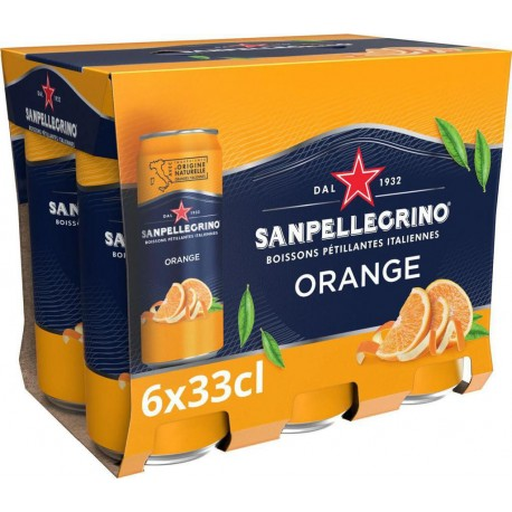 Image unavailable
For serving individual portions if you’re looking for a stated orange juice content. The Joybuy listing states 16% orange juice and 8.1 g of sugars per 100 ml.
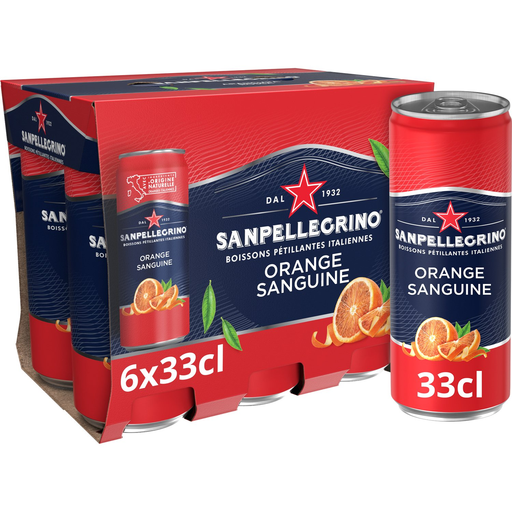 Image unavailable
A blood orange option to serve in individual cans. If you’re comparing sugar content, check the figure per 100 ml on the pack you choose.
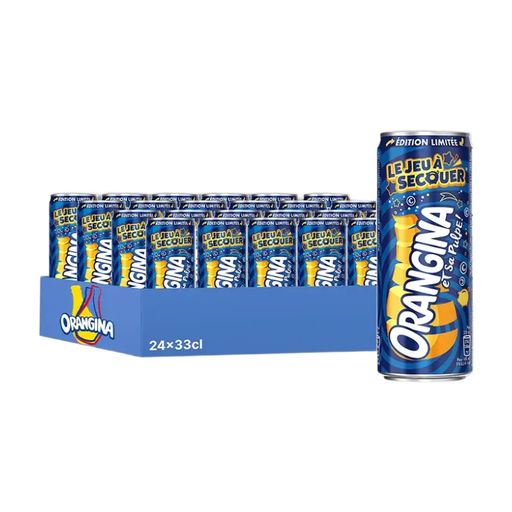 Image unavailable
A large pack of cans to consider when several people want individual portions. If pulp or sugars are important to your choice, check the product’s ingredients and nutrition information.
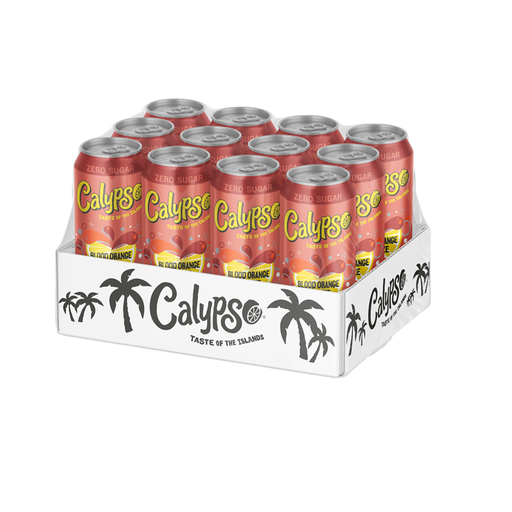 Image unavailable
A sparkling blood orange lemonade in individual cans. If ‘Zero Sugar’ is what appeals to you, compare the ‘of which sugars’ line and the ingredients on the packaging.
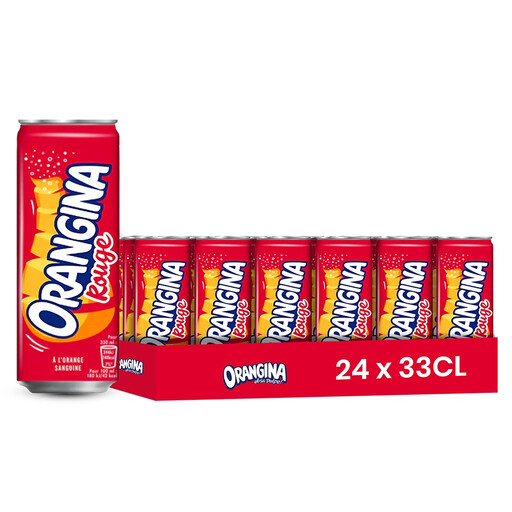 Image unavailable
An orange and red berry recipe for serving a group in cans. If you’re mainly looking for an orange drink, check the ingredients and juice content on the packaging.
Not simply because it contains orange juice. The DGCCRF points out that the descriptions of juices and nectars are regulated. Check the product description and ingredients of the drink you choose.
First compare the ‘of which sugars’ figure per 100 ml, then take the amount you’ll actually serve into account. For example, the Joybuy listing for SAN PELLEGRINO orange states 8.1 g per 100 ml, so its 33 cl can contains around 26.7 g of sugars.
Read the nutrition information and ingredients, especially if you want to avoid sweeteners. Auchan’s listing for its orange pulp drink zero states 1 g of sugars per 100 ml and mentions acesulfame potassium and sucralose.
Follow the instructions on the bottle you’ve bought. For its classic 1.5 L orange pulp drink, Auchan advises refrigerating it and consuming it within three days of opening.