Travellers buying before security
If you’re putting your meal together before entering the departures area, the drink’s container size must comply with the cabin liquid rules for flights departing from France.


For a meal at the airport, choose your drink based first on when you buy it. If you’re departing from France, a container larger than 100 ml bought before security won’t be allowed in the cabin. If you want something fizzy, check the packaging for an explicit indication that it’s sparkling rather than assuming a mixed-fruit juice is fizzy. A sparkling fruit drink shouldn’t automatically be treated as a mixed-fruit juice either.
If you’re putting your meal together before entering the departures area, the drink’s container size must comply with the cabin liquid rules for flights departing from France.
If you’re planning to have your drink with a meal in the departures area, you can look at the sizes available there, but don’t assume your terminal will have a particular option.
If having bubbles matters more to you than the mixed-fruit flavour alone, check the product name and packaging before choosing between a juice, a nectar and another fruit drink.
For this meal, first decide whether you’ll buy your drink before or after security. Then check whether it’s fizzy, and compare the product name, ingredients and container size of the options that suit your needs.
| Criteria | What to check | Who it’s for |
|---|---|---|
| Security screening | If you’re buying before security at an airport in France, check that each container holds no more than 100 ml and fits in the sealed, transparent bag with a maximum capacity of one litre specified by the Ministry for Transport. | If I’m preparing my meal before security, I don’t want to have to leave my drink at the checkpoint; around 42 % of consumers put this travel restriction first. |
| Fizziness | Look for an explicit indication that the drink is sparkling or carbonated on the packaging; “mixed fruit” alone isn’t enough. | I’m looking for bubbles to go with my meal and don’t want to choose a juice just because it says “mixed fruit”; this would be the top priority for around 33 % of consumers. |
| Recipe and container size | Compare the product name, ingredients, sugars per 100 ml and volume. The DGCCRF distinguishes between the product names used for juices and nectars, and states that drinks’ nutrition information is given per 100 ml. | For a meal on my own, I want to compare recipes without choosing a large container that I don’t plan to share; around 25 % of consumers would put this need first. |
A 20 cl carton or a 25 cl bottle holds 200 or 250 ml respectively. Both exceed the 100 ml limit for liquids taken into the cabin before security at airports in France.
If you’re buying before security, follow the container and bag rules set out by the Ministry for Transport. For a larger size, consider buying your drink after security.
Any drink that doesn’t pass security will have to be left behind.
“Mixed fruit” describes a blend of fruits, not whether a drink contains bubbles.
Look for an explicit indication that the drink is sparkling, and read its product name before treating it as a mixed-fruit juice.
Auchan and E.Leclerc, for example, list mixed-fruit drinks in sizes of 1 L or more. That may be more than you want to drink with a single meal.
Choose a size to suit the number of people and when you’re buying it. If it’s just for you, check which smaller sizes are actually available after security.
A claim about sugars doesn’t replace the product name or nutrition information when you’re comparing a juice with a nectar.
Read the ingredients list, then compare sugars and energy per 100 ml in the nutrition table, using the basis specified by the DGCCRF.
Auchan’s mixed-fruit range includes Tropicana bottles made with pressed fruit, including Pure douceur, a 90 cl juice made from 4 pressed fruits.
Carrefour’s range includes mixed-fruit juice, pure juice and nectars, with some products sold in packs of 4 × 20 cl.
Auchan’s range includes a 25 cl mixed-fruit juice and a 1.5 L pure mixed-fruit juice, among other options.
E.Leclerc’s Eco+ range includes a 1 L mixed-fruit juice made from concentrate and a 1 L mixed-fruit nectar.
Lidl France lists a Solevita product called “Pur jus multifruits”.
This option is a fruity drink with bubbles, but its name doesn’t allow it to be classed as a mixed-fruit juice. The pack of 24 cans is better suited to buying in advance than picking up a single drink for a meal at the airport.
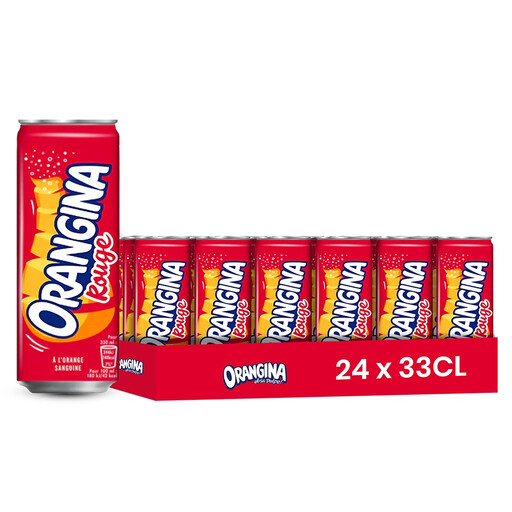 Image unavailable
Worth considering if you’re after a sparkling drink with orange and red berry flavours rather than a product specifically described as mixed-fruit juice.
This is a pack of 24 330 ml cans. Each can exceeds the 100 ml limit for liquids taken through security for cabin baggage on a flight departing from France.
If you’re planning to have one in the departures area, check whether you can buy a single can there after security. Also check the product name and nutrition information on the packaging before comparing this drink with a juice or nectar.
No, if you’re departing from a French airport. 20 cl is 200 ml and 25 cl is 250 ml, both above the 100 ml per-container limit set by the Ministry for Transport for liquids carried through security. Permitted containers must be placed in a sealed, transparent bag with a maximum capacity of one litre.
Yes. Liquids bought after security can be taken into the cabin, as Paris Aéroport explains for purchases made in this area. If you have a connecting flight, check the rules for the next part of your journey before choosing a large container.
Read the full product name and ingredients list. According to the DGCCRF, juice and nectar product names are subject to different rules. The word “mixed fruit” on its own doesn’t tell you which category the drink belongs to.
Compare the sugars per 100 ml in the nutrition information rather than the figures for each bottle. The DGCCRF states that information given per 100 ml provides a common basis for comparing pre-packed drinks.