
Same-day & Next-day Delivery

Quality Guaranteed

Unlock Your Welcome Offers: FREE Delivery | Up to 80% OFF | Free 30-day JoyPlus trial
Download the APP
Buying a sparkling mineral water multipack sounds simple enough… until you start comparing volumes, mineral content and bottle types. Between promises of "fine" bubbles, on-the-go formats and labels like French sparkling water or "low in sodium", certain details can make a noticeable difference to both the price and your dining experience.
This guide from the Joybuy Product Recommendation Officer helps you avoid the most common pitfalls and choose a sparkling water multipack that suits your home, office, restaurant or event.
Not all fizzy waters share the same origin or composition. A sparkling mineral water is defined by its characteristic mineral profile, which is stated on the label. The carbonation may be natural or the result of added carbon dioxide, depending on the product.
The term "naturally sparkling water" alone isn't enough to compare two bottles. Always check:
A multipack of 1 L or 1.15 L bottles generally works well for family meals, but it's less convenient to carry. Conversely, a 50 cl bottle slips easily into a bag and is simple to hand out at a meeting, yet its price per litre is often higher and its packaging generates more waste.
To compare offers on a solid basis, start by calculating the price per litre, then tailor your choice to how you'll use it:
A low-sodium sparkling water may be appealing for its mineral composition, but that one claim alone doesn't tell you about the taste or the overall mineral content. Compare sodium, calcium, magnesium, bicarbonates and dry residue.
For example, La Salvetat shows a sodium content of 0.005 g/L in the product information, while Badoit Green lists 180 mg/L. These two waters have very different mineral profiles. If you have specific medical needs, consult a healthcare professional rather than interpreting the label yourself.
A multipack of 6 × 1 L is a practical compromise for home and mealtimes. The 1.15 L bottles offer a little extra volume, while a pack of 24 × 50 cl is better suited to offices, events and people who drink smaller amounts throughout the day.
Also consider the total weight. A pack of 6 × 1 L weighs around 6 kg, not including the packaging. If you live upstairs or receive regular deliveries, several smaller packs may be easier to handle than one bulky crate.
The dry residue at 180 °C gives an indication of the total minerals present in the water. It alone won't determine your taste preferences, but it does make it easier to compare different products.
Here are some figures mentioned in the product listings:
These figures should be checked on the label of the batch you receive, as commercial presentation and product information can change.
PET is lightweight and practical for large volumes. 33 cl cans, such as those offered for Evian sparkling, can be suitable for individual servings and provide an alternative to plastic, depending on your local recycling facilities.
Before opening, store bottles in a clean, dry, odour-free place away from light. After opening, reseal them carefully and keep them in the fridge. To preserve the fizz, drink them promptly: depending on the product, several listings recommend consumption within 24 to 72 hours.
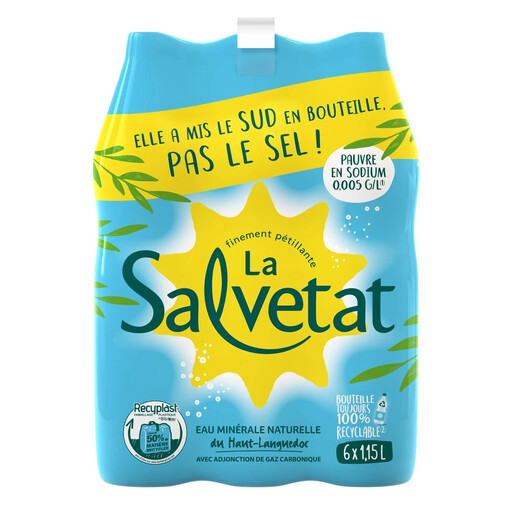
Why this profile suits it: The large format is ideal for everyday meals and storing in the family fridge. The listing states 6.9 L total and a low sodium content of 0.005 g/L.
The total volume is clearly stated, making it easier to compare the price per litre rather than the price per bottle.
6 bottles of 1.15 L, origin France stated and sodium content listed in the product information.
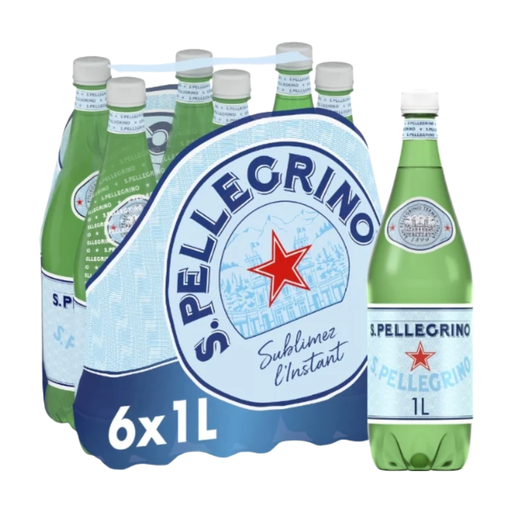
Why this profile suits it: The one-litre format sits naturally at the centre of a shared meal. The listing describes an Italian sparkling mineral water, with 164 mg/L calcium and 854 mg/L dry residue.
The composition and volume are available before purchase; the Italian origin avoids confusing this product with a French sparkling water.
6 bottles of 1 L, water with added carbon dioxide according to the listing, and detailed mineral composition.
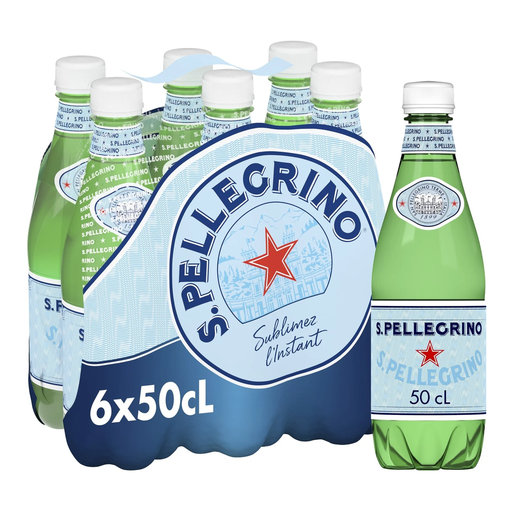
Why this profile suits it: The compact bottles are easy to hand out at the office, simple to carry and can be served individually at an event.
The 3 L pack avoids opening a large bottle that would lose its fizz before the end of service.
6 bottles of 500 ml, easy to store and serve without having to share a bottle.
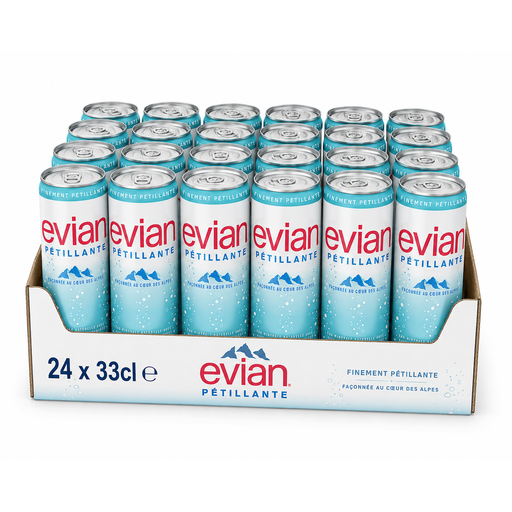
Why this profile suits it: The small can format makes serving simple at a buffet, cocktail party, picnic or event with many guests.
The individual format reduces waste from half-finished bottles and makes portion management much easier.
24 containers of 33 cl, water from Évian-les-Bains and detailed mineral composition in the listing.
Brands like Badoit, Rozana, San Pellegrino, La Salvetat and Evian sparkling cater to different needs. Badoit Green and Badoit Rouge are available in 6 × 1 L, Rozana in 6 × 1 L with 160 mg/L magnesium stated in its listing, while La Salvetat focuses on the 1.15 L format. The product listings let you check these features before placing an order.
Find an updated selection of products that meet these criteria for format, composition and packaging, available for delivery in France.
After opening, reseal the bottle carefully and store it in the fridge. To keep the fizz, it's best to drink it within 24 to 72 hours, depending on the instructions on the packaging.
No. Sodium is just one element among many. A water can be low in sodium while containing higher levels of calcium, magnesium or bicarbonates. To get a clear picture, compare the full mineral table.
Bottles of 1 to 1.5 L often offer more volume per container. However, only the price per litre allows a reliable comparison. Before finalising your purchase, also consider transport, storage and how long it will keep after opening.