Families comparing multipack sizes
You buy several litres for mealtimes and want to check the total volume before choosing between multipacks with different-sized bottles.


When shopping for a large family, first choose a pack size that suits your mealtimes and the space you have available. Then compare the waters by how fine the bubbles are and what the label says. If you need water to prepare food for an infant, keep still water labelled as suitable for this purpose rather than using the family’s sparkling water multipack.
You buy several litres for mealtimes and want to check the total volume before choosing between multipacks with different-sized bottles.
Some members of your household prefer fine bubbles, while others like a more intense fizz. In that case, the variant shown on the bottle matters more than the brand name alone.
You check the minerals and any warnings on the label for a member of your household. If you’re preparing food for an infant, make sure you have separate still water labelled as suitable for this purpose.
When shopping for a family, first check how much you can carry and store. Then choose your preferred level of fizz, without overlooking the composition details for each water.
| Criterion | What to check | Who is it for? |
|---|---|---|
| Multipack volume | The capacity of each bottle and the total volume, for example 6 × 1 L or 6 × 1.25 L. | If I want enough water for several meals without having to shop more often, I first check how many litres are in the multipack; around 36% of consumers would put this volume first. |
| Intensity of the bubbles | Look for “finely sparkling” or “intensely sparkling” on the chosen variant. | At mealtimes, I want a level of fizz that the people drinking it will enjoy; around 29% of consumers would say the bubbles are their top criterion. |
| Composition | The minerals listed and any warnings on the label for the exact product. | If the water is for several members of my household, I read the warnings before buying a large multipack; around 21% of consumers would make this check a priority. |
| Storage and handling | How many bottles you’ll need to carry and how much space you’ll need to store them. | If space is limited or the multipack is difficult to carry, I choose a pack I can manage day to day; around 14% of consumers would put this constraint first. |
Bubbles alone don’t tell you which category a product belongs to. Perrier describes Nature as natural mineral water with added carbon dioxide, while some Volvic and Vittel ranges also include flavoured drinks.
If you’re looking for plain sparkling mineral water to serve with a meal, check the product description and ingredients before choosing.
Don’t choose sparkling water for the household to prepare food for an infant. According to an opinion published by Afssa in 2003, water labelled as suitable for this purpose must, among other things, be non-carbonated.
Keep still water labelled as suitable for this purpose, and check the warnings on the sparkling water served to the rest of the household.
A large multipack means more bottles to carry and store, and then sort for recycling once they’re empty.
Check how much space you have before buying. In 2026, the French ministries responsible for ecological transition reiterated that plastic packaging should go in the yellow recycling bin in France.
Badoit offers a finely sparkling water and Badoit Rouge Intense for households who want to choose how fizzy their water is at mealtimes.
Perrier Nature is described by the brand as natural mineral water with added carbon dioxide, and is available in a 1 L bottle, among other formats.
Carrefour offers 6 × 1 L multipacks among its intensely and finely sparkling water products.
E.Leclerc’s range includes naturally sparkling Saint Diéry in a 6 × 1.25 L multipack and sparkling Alizée in a 6 × 1 L multipack.
Volvic offers still natural mineral water as well as a range of flavoured and infused drinks. Check the product description if you’re specifically looking for plain sparkling mineral water.
Vittel offers still natural mineral water in a 6 L format, among others. Consider this separately from your choice of sparkling water for mealtimes.
These sparkling mineral water multipacks let you compare bottles for mealtimes with a larger quantity of 500 ml bottles. Choose a size that suits the space you have and check the variant if the level of fizz matters to your household.
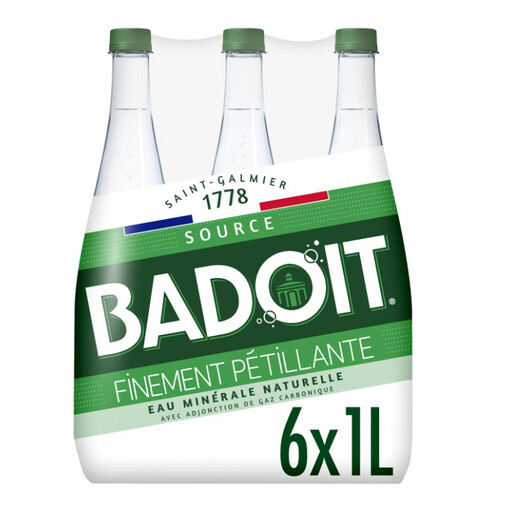 Image unavailable
This six-bottle multipack is a good choice if you want to serve the same sparkling water with several meals. If you prefer fine bubbles, check the variant on the label.
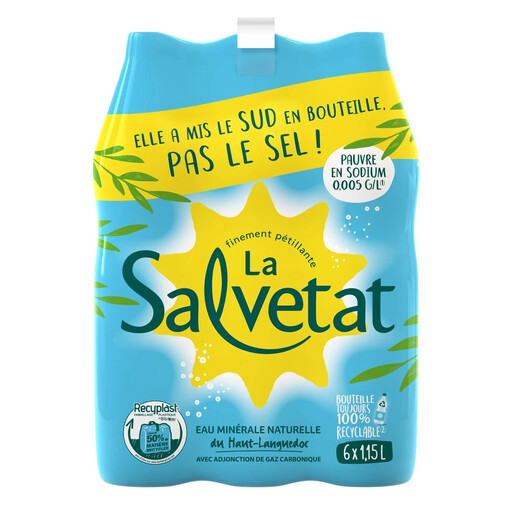 Image unavailable
The six 1.15 L bottles give you 6.9 L to store for your household’s meals. If composition is a priority, check the mineral information on the label for this product.
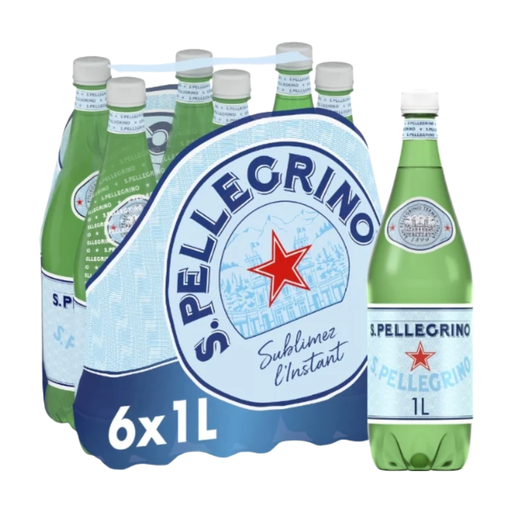 Image unavailable
This multipack contains 6 L in 1-litre bottles for serving at the table. Before choosing between this pack and the one with 24 small bottles, compare the size with the space you have available.
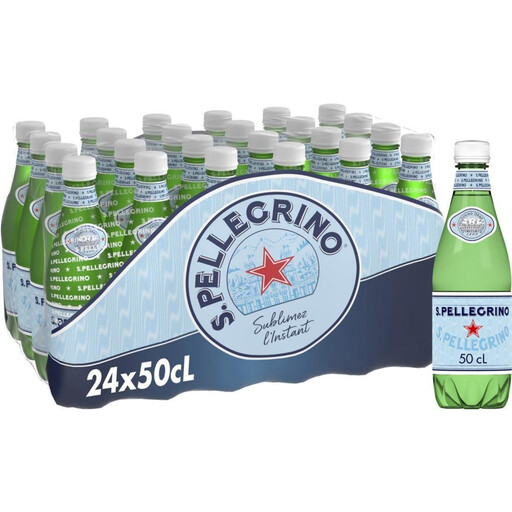 Image unavailable
The 500 ml bottles are handy for individual servings. The multipack contains 12 L in total, so make sure you have space to store and handle all 24 bottles.
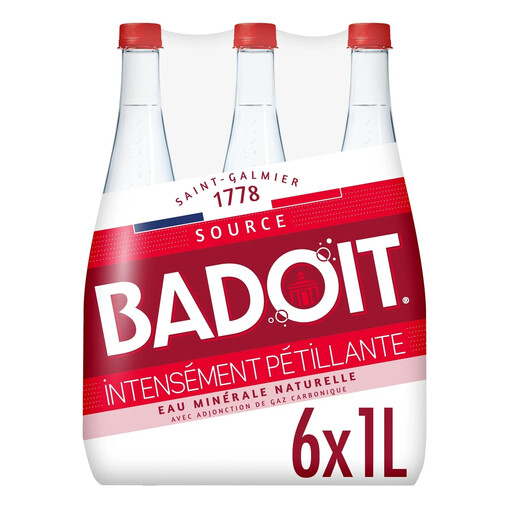 Image unavailable
This multipack contains six 1-litre bottles for mealtimes. If you’re choosing it for its intense fizz, check the variant on the label: descriptions of the bubbles can vary.
No. Choose still water labelled as suitable for this purpose. According to an opinion published by Afssa in 2003, water labelled as suitable for preparing infant food must, among other things, be non-carbonated.
The warning could affect your choice if young children will drink this water regularly. Carrefour states that its finely sparkling Classic' variant contains 1,6 mg/L of fluoride and specifies that it is not suitable for regular consumption by infants or children under 7. Check the label on the product you’re buying.
Compare the total volume, the capacity of each bottle and how many bottles you’ll need to store. A 6 × 1.25 L multipack and a 6 × 1 L multipack don’t contain the same amount of water; then check how fizzy each variant is.
Put plastic packaging in the yellow recycling bin. In 2026, the French ministries responsible for ecological transition reiterated that this guidance applies throughout France; also check the recycling instructions on the packaging.