
Livraison le jour même ou le lendemain

Qualité garantie

Débloquez vos offres de bienvenue: Livraison GRATUITE | Jusqu'à -80 % | 30 jours d'essai gratuits à JoyPlus
Téléchargez l'application
A sparkling lemonade is just as good with a meal as it is as a refreshing break or at a buffet. But with all the promises on the packaging, it's not always easy to know what you're getting. Lemonade, lime-flavoured fizzy drink, fruity recipe or sugar-free version: the differences come down to taste, format, ingredients and sugar content.
Before you order your lemonade online, keep three pitfalls in mind:
To compare different lemonades, start by checking the percentage of juice stated in the ingredients. A drink may contain lemon juice, lime juice, red berry purée or simply flavourings.
The Don Simon Sparkling Raspberry Lemonade, for example, contains 10% lemon juice and 0.5% raspberry purée. Its 1.5-litre bottle version also combines 7% lemon juice and 1% strawberry purée. Conversely, some citrus drinks rely mainly on natural flavourings or small amounts of concentrate.
For a lemon and lime drink, the PAGO Lemon & Lime Drink states 8.5% lemon and 5% lime, plus other citrus juices. However, note that this is a still fruit drink, not a sparkling lemon soda.
The European nutrition declaration allows you to compare products on a common 100 ml basis. Look in particular at:
Don Simon Raspberry Lemonade has 4.3 g of sugars and 18 kcal per 100 ml. OGEU lemonade has 7.4 g of sugars and 30 kcal per 100 ml. Meanwhile, CALYPSO Berry Bloom Zero Sugar claims 0 g of sugars and 2 kcal per 100 ml, with acesulfame K and sucralose.
A zero-calorie or very low-calorie lemonade can therefore meet a specific need, but its flavour profile won't necessarily be comparable to a sugary recipe. To make the right choice, look at the label as a whole rather than just the front of the can.
The packaging affects the price per serving, how long the fizz lasts after opening and how easy it is to serve:
Always follow the instructions on the packaging. Many drinks need to be refrigerated after opening and consumed within a few days. Unopened cans are generally best stored in a cool, dry place, away from heat and sunlight.
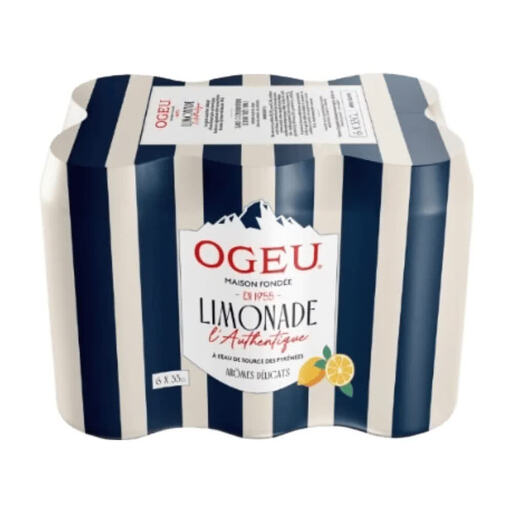
Why this suits this profile: With six 33 cl cans, this format lets you try a classic lemonade without having to get through a large quantity.
Individual portions reduce the risk of a large bottle losing its fizz after several days in the fridge.
Spring water from the Pyrenees, natural lemon and orange flavourings, 30 kcal and 7.4 g of sugars per 100 ml.
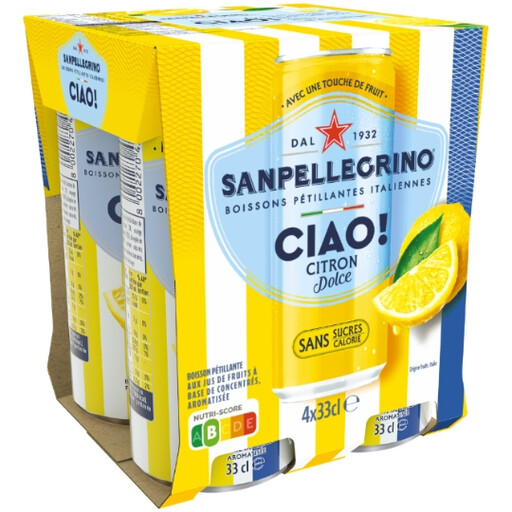
Why this suits this profile: Its individual cans and fruity profile fit perfectly on an elegant table or as a refreshing break.
The ingredients list details the fruit juices from concentrate as well as the energy value, which is 19 kcal per 100 ml.
A lightly sparkling drink, fruit juices from concentrate and recyclable aluminium cans, according to the information provided.
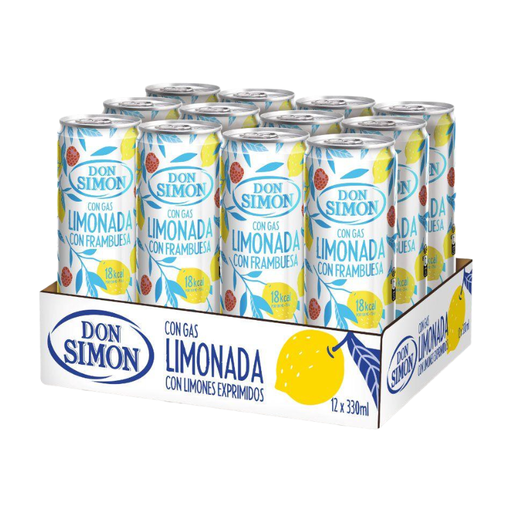
Why this suits this profile: With its 12 cans, this pack is ideal for families, large gatherings and parties where multiple servings need to be ready to go.
Individual portions avoid leaving a large bottle open and make it easier to control the amounts served.
10% lemon juice, 0.5% raspberry purée, 18 kcal and 4.3 g of sugars per 100 ml.
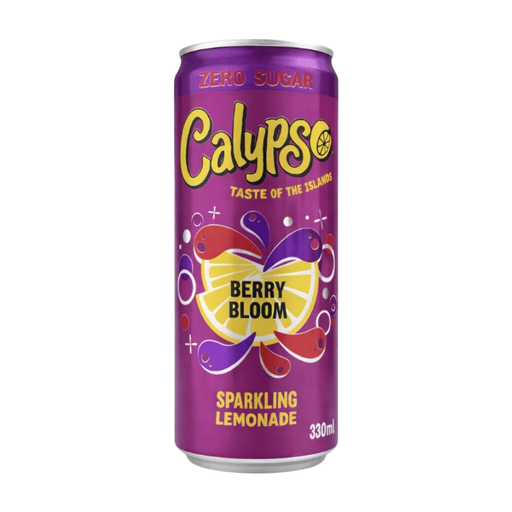
Why this suits this profile: This can is aimed at those looking for a fruity lemonade with a very low energy value.
The product page states 0 g of sugars and 2 kcal per 100 ml, while also listing the sweeteners used.
Berry Bloom flavour, fine bubbles, 330 ml format and a recipe with acesulfame K and sucralose.
We've put together a comprehensive, real-time updated selection of products that meet these strict criteria and the requirements of European safety regulations.
Lemon lemonade generally focuses on the sharpness and aroma of the yellow lemon. A lemon and lime drink brings a livelier note, with more vegetal accents. However, always check the ingredients: some recipes contain juice, while others rely mainly on flavourings.
It depends on the product. The product pages often recommend keeping the drink in the fridge and consuming it within two to four days. Seal the bottle or can carefully when possible and always refer to the label. After opening, the fizz will gradually fade.
No. A sugar-free or zero-calorie lemonade may contain sucralose, acesulfame K or another sweetener. To know the exact recipe, check the ingredients list and the nutritional information per 100 ml.