For an alcohol-free birthday celebration, first decide between sparkling apple juice made mainly from fruit and a fizzy drink flavoured with fruit juices: they have different ingredients. A 75 cl bottle is ideal for sharing at the table, while smaller bottles make individual servings easier. Check the sugar content per 100 ml too, even if the recipe says ‘no added sugar’.
Who are these drinks for?
Hosts planning an alcohol-free toast
If some of your guests don’t drink alcohol, look for a product clearly labelled ‘alcohol-free’ or ‘0% vol.’. Auchan’s product listings for Champomy and Cœur de Pom feature sparkling apple drinks suited to this kind of occasion.
Hosts who pay attention to ingredients
If the fruit content and ingredient list guide your choice, distinguish between apple and CO₂-based recipes and drinks made with juices from concentrate. Also check the ‘of which sugars’ line in the nutritional information.
Organisers looking for an easy-to-serve option
If you’re serving by the glass, compare 75 cl bottles with the number of guests. If everyone needs their own bottle, E.Leclerc also lists Festalie in a pack of four 27.5 cl bottles.
Which criteria should you prioritise?
For a birthday party, first decide what type of drink you want, then consider the flavour and how you’ll serve it. If you have several requirements, this helps you work out which one matters most when choosing.
| Criteria |
What to check |
Who is it for? |
| Alcohol-free toast |
Check that the product you choose is labelled ‘alcohol-free’ or ‘0% vol.’. |
If some guests don’t drink alcohol, I want to be able to offer them a sparkling drink that’s clearly labelled as alcohol-free. Around 31% of consumers would make this their top priority. |
| Ingredients and sugars |
The product description, ingredients and ‘of which sugars’ per 100 ml. |
I’d rather know whether I’m serving mostly fruit juice or a drink made with concentrates, without confusing ‘no added sugar’ with ‘sugar-free’. This would be the top criterion for around 31% of consumers. |
| Flavour |
The fruits listed in the ingredients and the exact type of drink. |
If I want something different from plain apple, I’ll look for a hint of raspberry or red berries, even if that means comparing drinks from different categories. Around 23% of consumers would prioritise flavour. |
| Serving format |
The bottle size, number of bottles and storage instructions after opening. |
If I’m serving lots of glasses, I want to have enough to go round without opening too many bottles. Format would be the top priority for around 15% of consumers. |
Common pitfalls to avoid
-
Assuming all sparkling fruit drinks are the same
A drink made mainly from apple and CO₂ is different from a fizzy drink containing water, juices from concentrate, sugar and flavourings. Auchan’s Cœur de Pom and E.Leclerc’s Festalie listings illustrate the difference.
Check the product description and ingredients to see whether you’re choosing a fruit-based recipe or a flavoured drink.
-
Taking ‘no added sugar’ to mean ‘sugar-free’
Auchan’s listings for the apple and apple-raspberry versions of Cœur de Pom each show 10 g of sugars per 100 ml, despite being labelled ‘no added sugar’.
Check the ‘of which sugars’ figure per 100 ml and consider how much you plan to serve.
-
Choosing a format without planning how to serve it
A 75 cl bottle for sharing and four 27.5 cl bottles call for different serving plans. The listings for the Champomy and Cœur de Pom products reviewed recommend refrigerating them and consuming them within five days of opening.
Estimate how many glasses you’ll need before choosing between sharing and individual portions, then follow the storage instructions on the bottle you buy.
Brands and ranges to know
Champomy
L’Original is a sparkling apple drink in a 75 cl bottle, ideal for sharing.
- Auchan’s listing describes a recipe made with 99% pure apple juice and carbon dioxide.
- To compare its sugar content, check the nutritional information on the packaging of the format you buy.
Cœur de Pom'
75 cl sparkling apple and apple-raspberry drinks, described as alcohol-free by Auchan.
- According to Auchan’s listings, the apple version contains 99.6% apple, while the apple-raspberry version contains 91.8% apple and 7.8% raspberry.
- ‘No added sugar’ doesn’t mean there are no sugars present: both listings show 10 g of sugars per 100 ml.
Bio Village
A 75 cl alcohol-free sparkling apple juice listed by E.Leclerc.
- E.Leclerc’s listing states that it contains 99.5% organic apple juice and carbon dioxide.
- Check availability with your chosen shop or online grocery service.
Transition
A 75 cl sparkling apple juice that Carrefour describes as a product in conversion to organic farming.
- Carrefour’s listing states that it contains 99.5% apple juice and CO₂.
- If production methods matter to you, check the product description and packaging details.
Festalie
A red-berry-flavoured sparkling drink, available in a pack of four 27.5 cl bottles.
- E.Leclerc’s listing states that this individual-serving format is 0% vol.
- Its ingredients include water, juices from concentrate, sugar and natural flavourings. It’s a different recipe from sparkling apple juice made mainly from fruit.
Champomy formats on Joybuy
These two Champomy Original formats are both sparkling apple drinks for sharing at a toast. The multipack is handy if you’re planning to serve several bottles, while a single bottle lets you opt for a smaller quantity.
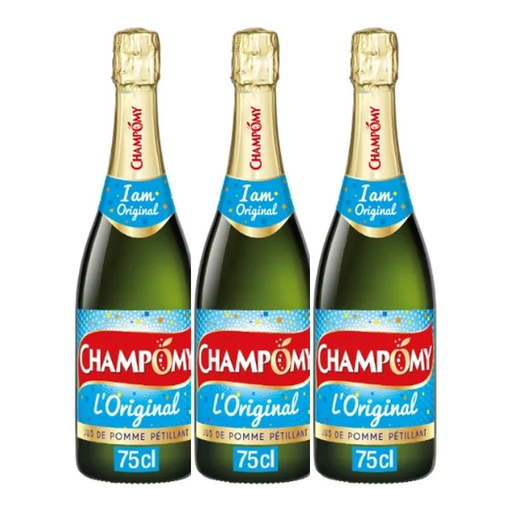 Image unavailable
Champomy Original, pack of 3 × 75 cl
Worth considering if you’d like to open several bottles throughout the evening, rather than opening them all at once.
Pack of three 75 cl bottles. Check the ‘of which sugars’ figure on the pack before comparing its nutritional information with another format.
View on Joybuy
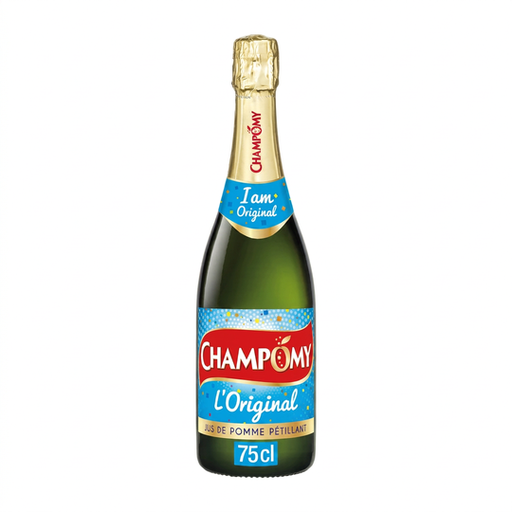 Image unavailable
Champomy Original, 750 ml
Worth considering if one bottle is enough to share for the toast.
750 ml bottle. To compare its sugar content with another product, check the nutritional information on the packaging.
View on Joybuy
Frequently asked questions
How do I choose an alcohol-free sparkling fruit drink?
Check that the specific product is labelled ‘alcohol-free’ or ‘0% vol.’ rather than relying on the word ‘sparkling’ alone. Auchan’s Cœur de Pom listings and E.Leclerc’s Bio Village and Festalie listings include an alcohol-free indication for the products described.
Does ‘no added sugar’ mean sugar-free?
No. A fruit drink can contain sugars that occur naturally in the fruit. Auchan’s listings for the Cœur de Pom apple and apple-raspberry sparkling drinks each show 10 g of sugars per 100 ml. Compare the ‘of which sugars’ figure for the products you’re considering.
What should I look for on the label before choosing?
Start with the product description, ingredient list, net quantity and nutritional information, particularly the sugars per 100 ml. For pre-packed food in France, the DGCCRF lists these among the labelling details to check. Also look for any declared allergens and the date shown on the product.
What should I do with an opened bottle after the party?
Follow the storage instructions for the product you’ve bought. The listings for the Champomy and Cœur de Pom bottles reviewed recommend refrigerating them after opening and consuming them within five days.


