Solo traveller who wants to finish their drink
If you’re having a meal on your own and don’t want to leave a large bottle open, compare sizes from 27.5 to 33 cl. If the bottles are sold in a multipack, check how many you’ll need to carry too.


For a meal on your own on the train, compare the sizes first: a 33 cl bottle or a 27.5 cl individual bottle means less drink to carry after your meal, while a 75 cl bottle is better suited to sharing. Then check the product description and ingredients: sparkling apple juice, a juice drink made from concentrates and an aperitif containing dealcoholised wine won’t all meet the same needs.
If you’re having a meal on your own and don’t want to leave a large bottle open, compare sizes from 27.5 to 33 cl. If the bottles are sold in a multipack, check how many you’ll need to carry too.
If several people want the same drink, a 75 cl bottle can be served with the meal. However, it takes up more room in your luggage than a smaller bottle.
If the presence of dealcoholised wine, sulphites or added sugars matters to you, check the product description and ingredients of the specific drink rather than relying on the word ‘sparkling’ alone.
First choose an amount you can drink or share during your journey, then compare the recipes by checking the label.
| What to consider | What to check | Who it matters to |
|---|---|---|
| Individual size | The capacity of each bottle and, for a multipack, how many bottles you’ll need to carry. | If I’m eating alone, I’d rather finish my drink than leave a large bottle open. Around 40% of consumers prioritise an individual-sized format. |
| Sharing | The 75 cl size and whether it can serve several people who want the same drink. | When sharing, I look for enough to serve everyone with their meal rather than separate portions. Sharing comes first for around 30% of consumers. |
| Ingredients | The product description, ingredients, sulphites, alcohol information and sugars per 100 ml. | Before choosing a flavour, I want to know whether it’s sparkling juice, a drink made from concentrates or an aperitif containing dealcoholised wine. For around 30% of consumers, the recipe is the top priority. |
The ingredients vary: Carrefour lists apple juice and carbon dioxide for Champomy, while Auchan lists dealcoholised wine, sucrose and sulphites among the ingredients for D’Artigny.
Read the product description and ingredients. If you specifically want a 0% vol. label or wish to avoid wine-based ingredients, check these details on the bottle you choose.
Fruit contains natural sugars, so the claim on the Cœur de Pom product page doesn’t mean the drink contains no sugars.
Check the ‘of which sugars’ line in the nutrition information per 100 ml, and bear in mind how much you plan to drink.
A 75 cl bottle may be left open after a meal on your own, while the products compared are also available in 33 cl bottles or 27.5 cl individual bottles.
Choose the size to suit the number of people who’ll be drinking it and the space you have to carry the bottle.
A product page doesn’t guarantee that the drink you want will be available at the shop you visit before setting off.
Check availability with your chosen shop and check the ingredients on the bottle you’re given.
A 75 cl bottle of sparkling apple juice to consider for a meal shared with others.
A 75 cl sparkling apple drink offering another recipe to compare for sharing.
An organic sparkling apple juice listed by Carrefour in a 33 cl bottle.
A sparkling red fruit drink available in a pack of four 27.5 cl bottles.
A sparkling red fruit aperitif in a pack of four 27.5 cl bottles, distinct from sparkling fruit juice.
This 750 ml bottle of sparkling apple juice is best suited to a meal where several people want to share the same drink. If you’re travelling alone, decide before you buy what you’ll do with the rest.
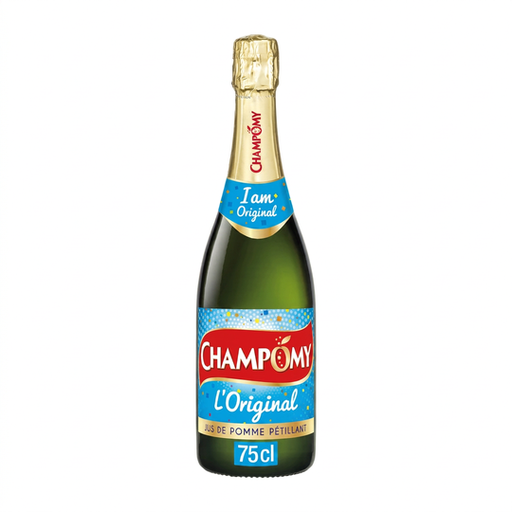 Image unavailable
Worth considering if you can share the bottle with others during your meal; its size is less practical if you’re drinking alone.
A sparkling drink made with apple juice and CO₂. To compare sugar levels, check the nutrition information on the bottle.
A 33 cl bottle is easier to finish with a meal on your own than a 75 cl bottle. The 27.5 cl individual bottles are another small-portion option, but check whether they’re sold in a multipack and how many bottles you’ll need to carry.
No: sugars naturally present in fruit may still be in the drink. If this matters to you, check the ‘of which sugars’ value per 100 ml in the nutrition information for the specific product.
No: Auchan’s product page for D’Artigny describes a non-alcoholic drink whose recipe contains 30% dealcoholised wine. If you want to avoid all wine-based ingredients, check the ingredients list; if you specifically require 0% vol., look for that explicit statement on the product you choose.
First check the size and product description, then the ingredients and nutrition information per 100 ml. Also look for sulphites and alcohol information if these affect your choice.
Check what’s available for your train and journey rather than relying on a particular product. SNCF Connect describes, among other things, a catering service on some INTERCITÉS services that require reservations, but this doesn’t guarantee that the drink you’re looking for will be available.