What should you look for?
After a light workout, flavour and portion size can guide your choice of sparkling juice. After strenuous exercise, also think about how you’ll meet your fluid and nutritional needs. Reviews published in the International Journal of Environmental Research and Public Health and Current Sports Medicine Reports distinguish rehydration from carbohydrate and protein intake.
| What to consider |
What to check before buying |
Who is it for? |
| Recovery after strenuous exercise |
Check the carbohydrate and protein values per 100 ml, then consider what your meal or snack will provide alongside them. |
If I need to train again soon, I don’t want to rely on sparkling juice alone to meet different needs. Around 46% of consumers put overall recovery first. |
| Fruity drink and serving size |
Compare the sugars per 100 ml and the amount you plan to drink, particularly if you’re considering a 75 cl bottle. |
After light activity, I’m mainly looking for fruity flavour and fizz, while choosing how much to serve. This is the priority for around 36% of consumers. |
| Understanding the label |
Read the product name and ingredients before comparing the nutritional information. |
Before choosing, I want to know whether the drink is fruit juice, nectar or another type of fruit drink. For around 18% of consumers, clarifying the category and ingredients comes first. |
A sparkling drink on Joybuy
This sparkling fruit drink may appeal if you’re mainly looking for this kind of flavour after light activity. Check its product name before comparing it with the sparkling pure juices mentioned above.
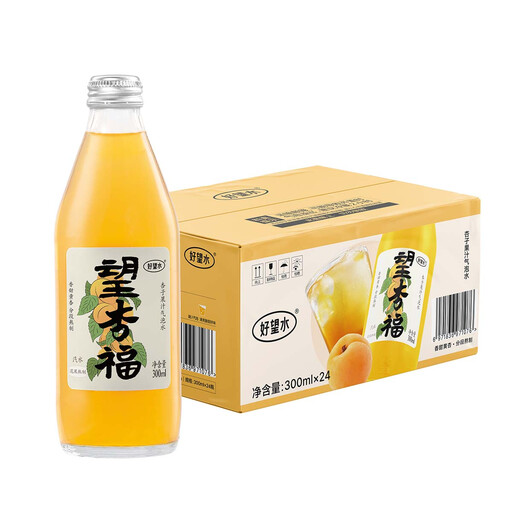 Image unavailable
Cooling Hydration Hao Wang Shui, sparkling apricot drink, 24 × 300 ml
Worth considering if you’re mainly looking for a sparkling fruit drink after light activity, rather than relying on it alone for recovery. The pack contains 24 bottles of 300 ml. Check the product name and nutritional information on the label before comparing it with sparkling pure juice.
View on Joybuy
Frequently asked questions
Is sparkling fruit juice enough after a strenuous workout?
No, not on its own if you also need to meet your rehydration and nutritional needs after strenuous exercise. Reviews published in the International Journal of Environmental Research and Public Health and Current Sports Medicine Reports consider these needs separately, so plan your drinks and meal or snack accordingly.
Does ‘no added sugars’ mean sugar-free?
No: juice can contain sugars that occur naturally in fruit. The DGCCRF explains that the claim ‘contains naturally occurring sugars’ is reserved for fruit juices. When comparing two drinks, also check the ‘of which sugars’ value per 100 ml.
How can you tell sparkling pure juice from nectar?
Start with the product name, then read the ingredients. The DGCCRF distinguishes between the ‘fruit juice’ and ‘nectar’ categories; whether a drink is sparkling doesn’t tell you which one it belongs to.
How should you store an opened bottle of sparkling juice?
Follow the storage and use-by-after-opening instructions on the bottle you’ve chosen. Don’t automatically apply the guidance for one product to another.
How much juice should you drink after exercise?
Juice can be enjoyed as a fruit drink, but water should be your everyday drink of choice. Manger Bouger recommends limiting fruit juice and advises having no more than one glass a day as part of its general guidance.


