
Livraison le jour même ou le lendemain

Qualité garantie

Débloquez vos offres de bienvenue: Livraison GRATUITE | Jusqu'à -80 % | 30 jours d'essai gratuits à JoyPlus
Téléchargez l'application
Sparkling drinks and carbonated waters easily earn their place on the dinner table, at the office, with aperitifs or at events. But with so many formats, ingredients and marketing claims, it’s not always easy to know what you’re buying. Natural mineral water, fruity soda, sparkling fruit drink or prebiotic beverage: it pays to check the ingredients, packaging and storage instructions carefully before you place an order.
Sparkling water or natural mineral water contains mainly water and carbon dioxide. A canned soda can also contain sugar, fruit juice from concentrate, acidity regulators, flavourings or preservatives.
The word “fruity” doesn’t guarantee a high juice content. To know exactly what you’re buying, check the ingredients list and, where available, the percentage of juice stated on the label.
A low-calorie drink can still contain sugar, while a sugar-free drink may be sweetened. These claims alone aren’t enough to judge the taste or the overall composition of the product.
For example, Perrier Forever Red Fruits has 0 kcal and 0 g of sugar per 100 ml, whereas Perrier Chic Rosélini contains 11 kcal and 2.3 g of sugar per 100 ml. The nutritional table tells you far more than the can design or the claims on the packaging.
A pack can represent several litres and take up a surprising amount of cupboard space. Before ordering, check the number of units, the capacity of each bottle or can, and the total volume.
A pack of 24 cans of 330 ml contains 7.92 litres, while a pack of 6 bottles of 1.15 litres gives you 6.9 litres. To compare different formats properly, the price per litre is the most reliable indicator.
For a French or Italian sparkling water, look at the mineral composition, the sodium content and whether carbon dioxide has been added. San Pellegrino, for example, contains 164 mg/l of calcium, 49.5 mg/l of magnesium and 31.2 mg/l of sodium.
For a fruity soda, check in particular:
A can of Soofty in melon, peach, watermelon, cherry or mojito flavour contains around 10.5 g of sugar per 100 ml, which is about 34.7 g per 330 ml can. The strawberry version of Soofty has roughly 28 kcal per 100 ml and contains acesulfame K and sucralose.
Formats of 25 or 33 cl are ideal for individual consumption and avoid leaving an open bottle lying around. 50 cl bottles are handy for the office, on the go or for a meal outside. Sizes of 1 or 1.15 litres are better suited for sharing at the table.
With an aperitif or during a meal, the fine bubbles of a natural mineral water complement dishes without adding sugar. For a party, an event or a large family, a pack of 24 cans makes serving easy and cuts down on trips to the supermarket.
Store drinks in a dry place, away from sunlight, frost and heat sources. An opened can or bottle should generally be consumed quickly and placed in the fridge if the label recommends it.
Don’t forget the total weight either. A pack of 24 cans or 24 bottles is great for building up a stock, but it’s much less convenient to carry than a smaller pack of 4 or 6 units.
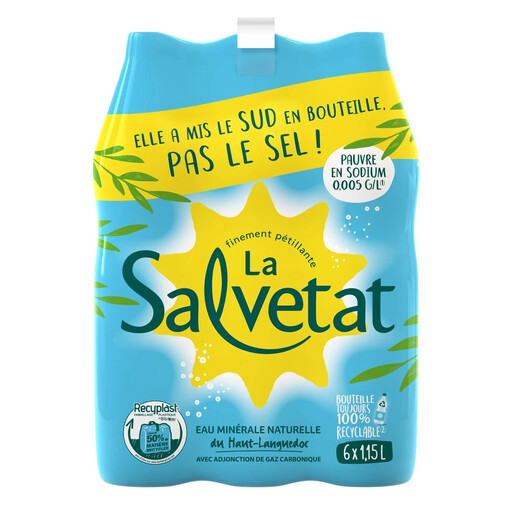
Why this suits this profile: With six 1.15-litre bottles, this pack gives you a good supply for everyday meals. The water is plain, with no sugar or calories stated.
The ingredients are simple and the stated sodium content is 0.005 g/l, making it easy to compare with other waters.
Family-sized pack, 0 kcal and 0 g of sugar stated per 100 ml, natural sparkling mineral water from the south of France.
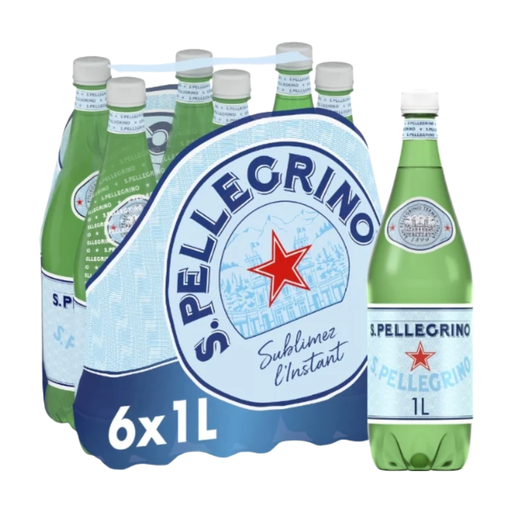
Why this suits this profile: The one-litre format works well for meals with several people, and the detailed mineral profile lets you choose based on concrete data.
The product page clearly states the Italian origin, the minerals present and the total volume of 6 litres, rather than relying on a simple image promise.
Natural sparkling mineral water, fine bubbles, 0 kcal and 0 g of sugar stated per 100 ml.
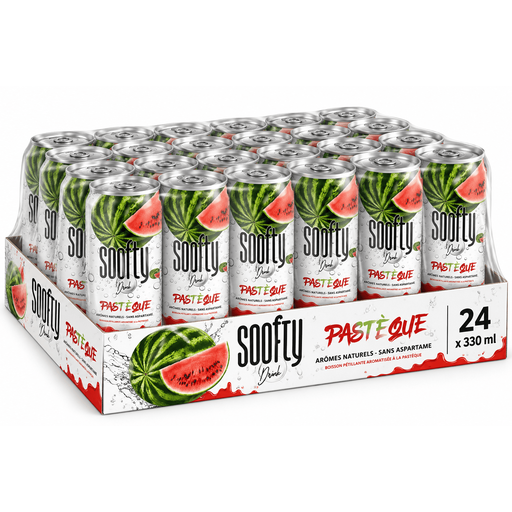
Why this suits this profile: The 24 cans of 330 ml are ideal for offices, parties, clubs and events where individual servings save time.
The total quantity, the capacity of each can and the nutritional values are clearly stated, helping you plan storage and consumption.
Watermelon flavour, 24 cans, approximately 42 kcal and 10.5 g of sugar per 100 ml.
We’ve put together a complete, real-time selection of products that meet these strict criteria and the requirements of European safety regulations.
Sparkling water can be made fizzy by adding carbon dioxide. Natural mineral water, on the other hand, comes from a recognised source and has a stable mineral composition, which is stated on the label. The product page lets you check its origin, the minerals present and its sodium content.
Compare the amount of sugar per 100 ml and per container. Plain sparkling waters usually show 0 g of sugar. Some sugar-free flavoured waters, like Perrier Forever Red Fruits, also state 0 kcal and 0 g of sugar. For fruity sodas, rely on the nutritional table rather than the flavour highlighted on the packaging.
To keep the fizz and flavour, drink a can straight after opening. For a bottle, reseal it and put it in the fridge. Always check the recommendation on the packaging: depending on the product, it’s usually between 24 and 48 hours.