For a mussels and chips supper, choose sparkling apple juice by checking the ingredients and confirming that the bottle you plan to serve explicitly states that it is alcohol-free. Don’t rely on the word “sparkling” alone. Then compare the sugar content per 100 ml and the bottle size: “pure juice” or a high proportion of apples won’t, on its own, tell you how it will taste.
Who is this guide for?
Hosts looking for alcohol-free fizz
If you’re serving guests who don’t drink alcohol, look for a clear statement on the bottle you choose. Carrefour lists Champomy among its alcohol-free sparkling drinks and describes Cœur de Pom as naturally alcohol-free.
Shoppers who care about ingredients
The proportion of apples and the “pure juice” description can help you tell different recipes apart. Carrefour’s product listings, for example, state the apple content for Cœur de Pom and describe Les Jus Cooifruit as “100% pure apple juice”.
Anyone planning a meal around the table
For a group, compare the total amount you need with the available bottle sizes. Maison Sassy offers 33 cl and 75 cl bottles; the 33 cl option shown on its website is sold in a pack of twelve.
What should you check before choosing?
Start with the drink category and a clear alcohol-free statement, then check the ingredients and nutritional information. Finally, choose a bottle size that suits how you plan to serve it.
| Criteria | What to check | Who it matters to |
|---|
| Alcohol-free status |
Read the product description and look for a clear statement on the specific bottle; don’t confuse sparkling juice with cider. |
If any of my guests don’t drink alcohol, I want to be sure about what I’m serving them. Around 31% of consumers may put this confirmation first. |
| Apple content |
Compare the ingredients, stated apple content and any “pure juice” description. |
I want to distinguish a recipe made with apple juice and CO₂ from a bottle described as “100% pure juice”. This would be the top priority for around 31% of consumers. |
| Serving size |
Check the bottle size and whether it’s sold individually or in a multipack. |
To serve everyone without opening more bottles than necessary, I start by working out how much I need. Bottle size may be the top priority for around 23% of consumers. |
| Organic status or origin |
Look for information about organic certification and where the apples come from, and check the ingredients too. |
I want to choose based on a stated origin or organic claim, without assuming anything about the taste or sugar content. Around 15% of consumers may prioritise this criterion. |
Mistakes to avoid
-
Assuming all sparkling apple drinks are alcohol-free juice
“Sparkling” describes the bubbles, not the exact type of drink. Cider, even when labelled alcohol-free, isn’t automatically a substitute for the sparkling apple juice you’re looking for.
Check the product description and alcohol-free statement on the bottle you plan to serve.
-
Assuming “pure juice” tells you how it will taste
Ingredient information alone doesn’t tell you whether a drink will taste drier or less sweet. Nor does it replace a comparison of the nutritional values.
Read the ingredients and compare the “sugars” figure per 100 ml, without treating these figures as a promise about the taste.
-
Comparing a multipack with a single bottle without checking the volume
The 12 × 33 cl pack shown by Maison Sassy contains a different amount from a 75 cl bottle. The right option depends on how many people you’re serving and how you’d like to hand out the drinks.
Work out the total volume you need before choosing between individual bottles and bottles to share.
-
Relying only on the online product listing
The bottle you receive is the one you’ll serve, so check its label to confirm the product description, ingredients, size and nutritional information.
Read it again before serving, particularly if the ingredients or any allergens matter to your guests.
Brands to consider for sparkling apple juice
Champomy
A 75 cl option that Carrefour lists among its alcohol-free sparkling drinks.
- Carrefour’s listing includes apple juice and carbon dioxide in the ingredients and describes the recipe as 99% pure apple juice.
- This doesn’t specify the apple variety or origin, or tell you how it will taste to each person.
Cœur de Pom
A 75 cl sparkling apple drink that Carrefour describes as naturally alcohol-free.
- Carrefour’s listing states that it contains 99.6% apples and 0.4% CO₂.
- These proportions don’t tell you whether the drink will taste drier or suit everyone at the table.
Les Jus Cooifruit
A 75 cl sparkling option that Carrefour describes as pure apple juice from the Orléanais region.
- Carrefour’s listing describes it as “100% pure apple juice”.
- Before serving it to guests who don’t drink alcohol, check that the bottle you’ve chosen has the relevant statement.
Maison Sassy
Maison Sassy offers organic sparkling apple juice in 33 cl and 75 cl sizes.
- According to the manufacturer, CO₂ is added to the juice; the 33 cl option shown is a pack of twelve bottles.
- Check that the pack you choose gives you the amount you want to serve.
Kerisac
A 75 cl sparkling apple juice option featured on a Carrefour product listing.
- Carrefour’s listing includes “apple juice” in the ingredients.
- To check the detailed ingredients or confirm that it’s alcohol-free, read the information on the specific bottle.
Sparkling apple juice on Joybuy
This 750 ml bottle of Champomy Original is a good option for sharing sparkling apple juice with your meal. If alcohol-free status or sugar content affects your choice, check the information on the label.
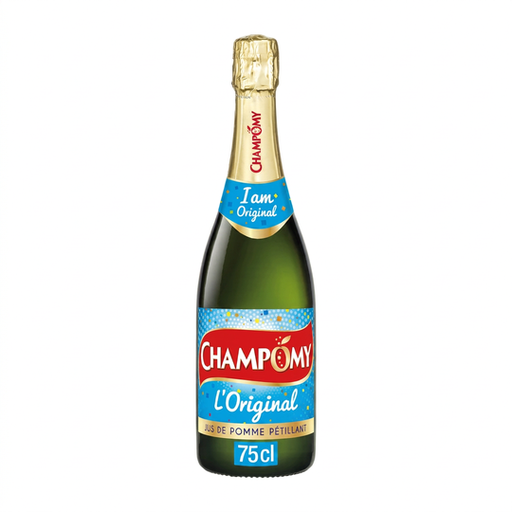 Image unavailable
Champomy Original, sparkling drink 750 ml
A bottle to share if you’d like to serve an apple-based sparkling drink with your meal.
Stated size: 750 ml.
Before serving, check the label for an alcohol-free statement and the sugar content per 100 ml.
View on Joybuy
Frequently asked questions
Is sparkling apple juice always alcohol-free?
No. The word “sparkling” alone doesn’t confirm this for a particular bottle. Look for a clear statement on the product: Carrefour lists Champomy among its alcohol-free sparkling drinks and describes Cœur de Pom as naturally alcohol-free. Check drinks sold as ciders separately.
What does “contains naturally occurring sugars” mean?
According to the DGCCRF, this statement is reserved for fruit juices. When comparing two bottles, also check the “sugars” figure per 100 ml in the nutritional information: the statement alone doesn’t give you this value.
Can you compare the sugar content of different-sized bottles?
Yes. Compare the figures on their nutritional panels using the same 100 ml basis. The DGCCRF explains that nutritional values are given per 100 g or 100 ml to make comparisons easier; then factor in how much you plan to serve.
What should you check on the bottle before serving?
First, check the product description, ingredients and any alcohol-free statement that matters to your guests. Also check the bottle size, date, any listed allergens and the nutritional information on the bottle you receive.


