Hosts planning an alcohol-free brunch
If your guests don’t drink alcohol, look for an ‘alcohol-free’ statement on the bottle you choose. Check the product description rather than relying on the word ‘sparkling’ alone.


For a Sunday brunch, first choose a drink clearly labelled as sparkling apple juice, then check its ingredients and look for an ‘alcohol-free’ statement if that’s essential for your guests. A 75 cl bottle is well suited to serving at the table; a 33 cl bottle may be a better fit for a small brunch if you want to avoid leftovers. Check the specific product you’re buying for organic certification, the origin of the apples and any information about the recipe.
If your guests don’t drink alcohol, look for an ‘alcohol-free’ statement on the bottle you choose. Check the product description rather than relying on the word ‘sparkling’ alone.
The ingredients list can help you tell a drink made with apple juice and carbon dioxide from one with a different recipe. Check separately for ‘no added sugars’ or ‘sulphite-free’ statements if these matter to you.
If you’re only serving a few glasses, compare 33 cl and 75 cl bottles in particular. The smaller size may mean less drink left over after serving.
Start by checking the product description and ingredients, then choose a bottle size to suit the number of glasses you plan to serve. Check each bottle individually for organic, alcohol-free or recipe-related claims.
| What to look for | Check | Who is it for? |
|---|---|---|
| Apple-based recipe | Read the product description and ingredients: not-from-concentrate juice, juice from concentrate and blends of several fruits are all different recipes. | If I want apple to be the main ingredient in the drink I serve, I need to know what type of juice is in the bottle. Around 31% of consumers prioritise checking the recipe. |
| Alcohol-free and recipe claims | Look for an explicit ‘alcohol-free’ statement. Check separately for ‘no added sugars’ and ‘sulphite-free’ if needed. | If some of my guests don’t drink alcohol, I want to be able to choose a bottle that clearly says so. This is the top priority for around 31% of consumers. |
| Organic and origin | Look for organic logos on the product you choose, and check where the apples come from if that matters to you. These are two separate details. | I prefer a bottle with an organic label or an origin that meets my buying preferences. This is the top priority for around 23% of consumers. |
| Bottle size | Compare the 33 cl and 75 cl sizes with the amount you want to serve. | For a small brunch, I’d rather not open a large bottle if some of it might be left over. Bottle size is the first thing around 15% of consumers consider. |
‘Sparkling’ describes the bubbles, not whether a drink contains alcohol. If you’re choosing a drink for an alcohol-free brunch, check this separately.
If this is essential, choose a product explicitly labelled ‘alcohol-free’ and check the label again when you buy it.
Two sparkling apple juices can differ in the type of juice used and in their other ingredients. The product category alone doesn’t tell you whether a drink has no added sugars or is sulphite-free.
Compare the product description, ingredients list and claims on each bottle.
An organic statement on a particular bottle doesn’t necessarily apply to every product from that brand.
Check the logos and recipe claims on the size and product you choose.
These examples refer to specific sparkling apple juice products, not every drink offered by each brand.
Auchan describes its 75 cl Original bottle as a recipe made with 99% pure apple juice and bubbles.
Auchan presents Fines Bulles in a 75 cl bottle, labelled ‘alcohol-free’, ‘no added sugars’ and ‘sulphite-free’.
E.Leclerc describes a 75 cl Bio Village product as organic, alcohol-free sparkling apple juice.
Auchan lists a 75 cl bottle of organic sparkling apple juice from Thomas Le Prince.
Carrefour lists a 33 cl bottle of organic sparkling apple juice from Maison Sassy.
This 750 ml bottle of sparkling apple juice is suitable for sharing. If your brunch requires a drink explicitly labelled alcohol-free or with a ‘no added sugars’ claim, check these details on the product before choosing it.
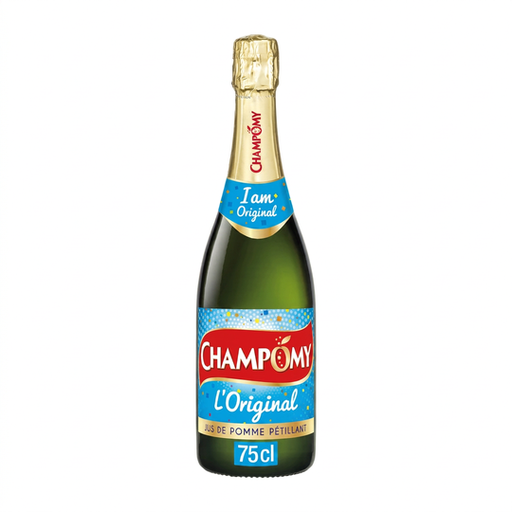 Image unavailable
The 750 ml bottle is a good choice if you want to serve several glasses at brunch. The ingredients listed for this product include apple juice and carbon dioxide. Check the bottle for any other recipe claims that matter to you.
Choose a bottle with an explicit ‘alcohol-free’ statement rather than relying on the word ‘sparkling’ alone. Check the product description and ingredients too. For example, Auchan describes Coeur de Pom’ Fines Bulles as alcohol-free.
No. An organic claim doesn’t replace either of these recipe claims. If they matter to you, look for them separately on the bottle you choose.
Choose according to how many glasses you plan to serve: 75 cl is good for sharing, while 33 cl may help reduce leftovers at a small brunch. Adjust the number of bottles to suit your guests and the other drinks you’re serving.
Follow the instructions on the bottle you buy. For its Festi Party product, Auchan recommends refrigerating it after opening and drinking it within four days. Don’t assume the same guidance applies to other products.