Which format is right for you?
Extra capacity isn’t the only thing to consider when choosing a format. How often you need to access your food and how much space you have available also matter.
Households that regularly freeze portions
If you often reach for a particular meal or portion, the drawers in an upright freezer make it easier to separate different types of food. Check the available height and how much room you’ll need to open the door.
Households with a pantry, garage or utility room
A chest freezer can hold batches of food in one compartment, provided you plan how to organise everything and reach items at the bottom. Before choosing a model for an unheated room, compare its specified ambient temperature range with the conditions in that room.
Small homes looking for a little extra capacity
A tabletop or under-counter freezer is worth considering if you only need a little extra storage. Measure the space and check the freezer capacity, as well as the clearance needed to open the door of the model you’re considering.
What should you check before choosing?
Start by working out what your current appliance is short of: space for frozen food only, or fridge space too. Then compare models that will fit your space, rather than choosing based solely on their stated capacity.
Upright
Consider this if: you check your frozen food often and want to sort it into drawers.
Bear in mind: you’ll need enough height and clearance to open the door.
Chest
Consider this if: you store food in batches and can organise it in one compartment.
Bear in mind: you’ll need floor space, room above the lid and a way to organise food so you can reach items at the bottom.
Tabletop or under-counter
Consider this if: you only need a little extra capacity or the available height limits your options.
Bear in mind: check that its capacity will really be enough for the food you usually keep in your freezer.
Larger fridge freezer
Consider this if: both the fridge and freezer compartments are too small, particularly if you’re replacing your main appliance.
Bear in mind: compare the capacity of the freezer compartment, not just the total capacity of the fridge freezer.
| What to consider | What to check | Think about your needs |
|---|
| Space and capacity |
Compare the freezer capacity in litres with the amount of food you plan to store. Measure the height, width and depth, then check the clearance needed for installation and opening as specified in the manual. |
I’m short of space in my current freezer, but the extra appliance needs to fit in the room and open without anything getting in the way. |
| Storage and maintenance |
Check the drawers or baskets included with the exact model. Find out what type of cooling it uses and check the defrosting instructions: not all freezers have No Frost. |
I often need to find individual portions, so accessible compartments matter to me. If I choose a chest freezer, I’ll plan how to organise stacked food. |
| Room temperature |
Compare the lowest and highest temperatures at the installation location with the climate class or stated temperature range for the model. ADEME recommends taking the recommended ambient temperature into account. |
My garage or utility room can get cold in winter, so I’ll check the exact model rather than assume every freezer is suitable for the room. |
| Energy use |
For models of a similar format and capacity, check the energy class and annual energy consumption in kWh/year on the label or product page. |
This appliance will be running all the time, so its annual energy consumption matters just as much as the extra space it gives me. |
| Power cuts and freezing capacity |
Check the stated power-cut storage time in hours. If you often add a large amount of food to freeze, also check the freezing capacity in kg/24 h. |
I want to compare the power-cut storage times of the models I’m considering and check whether their freezing capacity suits my habits. |
A guide to brand ranges
The features mentioned below apply to specific models. They won’t necessarily be found across every freezer from the same brand.
Beko
The range includes upright and chest freezers with a variety of installation and storage features.
- Beko France lists an SN-T climate class for the B5RFNE315G and a stated power-cut storage time of 23 hours for the HSM14540 chest freezer.
- Check the climate class, capacity and power-cut storage time of the model you choose: the details for one model don’t apply to the whole range.
Bosch
The range includes under-counter models and freestanding upright freezers.
- Bosch lists dimensions of 850 × 560 × 580 mm for the GTV15NWEB under-counter model; the GSN58AWEV is listed as having No Frost.
- Not all models have No Frost. Check the cooling system of the model that suits your space.
Whirlpool
The range includes chest and upright freezers with different operating conditions and stated power-cut storage times.
- Whirlpool lists an operating function down to -15 °C for the W3RHS31DW2 chest freezer and a power-cut storage time of 32 hours for the WHM4612.
- These features vary by model, so check that they suit the room you have in mind and your storage needs.
Spare freezers on Joybuy
These options include compact or drawer-style upright models and chest freezers, so you can add a separate freezer space. First choose a format that suits your storage needs and available space, then check the features of the model you’re considering.
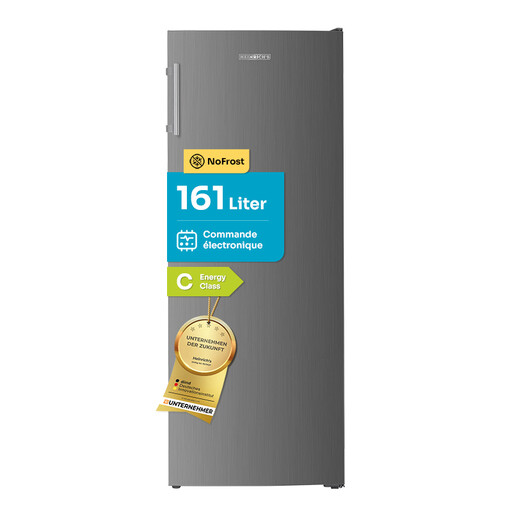 Image unavailable
Heinrich´s 161 L upright freezer, stainless steel
Its upright design and three stated drawers make it a good option if you want to keep food separate. The model name mentions No Frost, a reversible door, an alarm and energy class C. Check the dimensions, door clearance and climate class for your intended location.
View on Joybuy
 Image unavailable
COMFEE' RCU60WH2(E), 60 L upright freezer
Its 60 L capacity is worth comparing with the amount of food you want to store. The title lists a reversible door and energy class E, but the compartment details differ across the product information. Check the layout before choosing, and measure the available space and door clearance too.
View on Joybuy
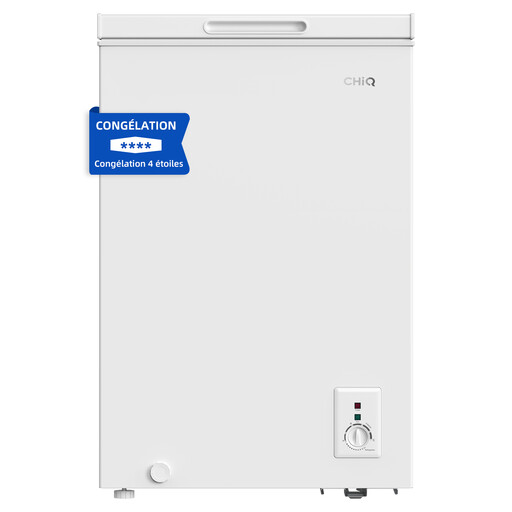 Image unavailable
CHiQ JR99DWE, 99 L chest freezer
This 99 L chest freezer is worth considering if you can organise your food in one compartment and reach items at the bottom. The model name mentions a removable basket and energy class E. The product description recommends manual defrosting when the frost exceeds 5 mm; check the clearance needed to open the lid too.
View on Joybuy
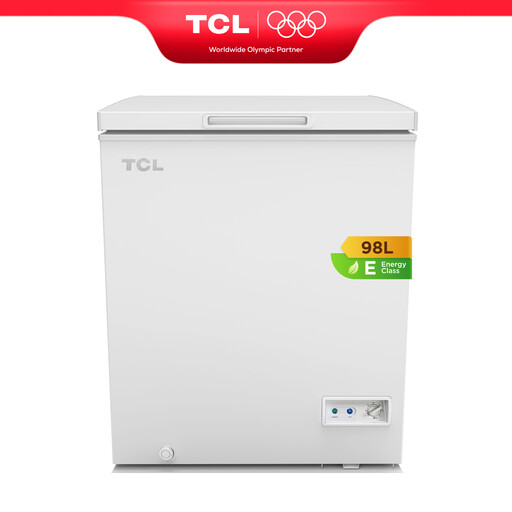 Image unavailable
TCL CF126EWE0FR, 98 L chest freezer
Its stated capacity of 98 L and included basket make it an option for extra chest freezer storage, provided that capacity suits your needs. The model name mentions a counterbalanced lid and energy class E. The product description refers to a switchable compartment: check the capacity and conditions for the freezer mode you need, as well as the space required to open the lid.
View on Joybuy
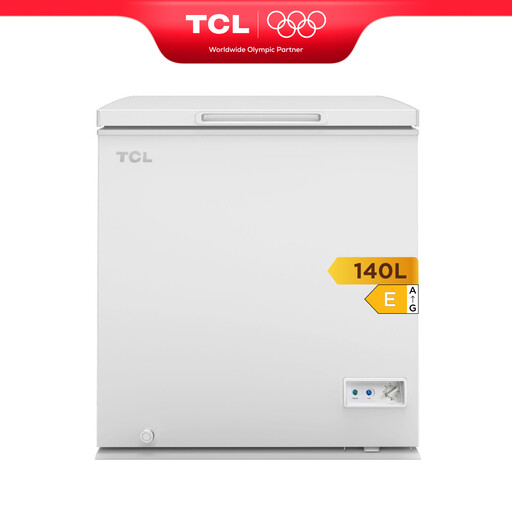 Image unavailable
TCL CF182EWE0FR, 140 L chest freezer
This chest freezer has a stated capacity of 140 L and comes with a basket to help organise some of your food. The model name mentions a counterbalanced lid and energy class E. If you choose this format, measure the space and the clearance above the appliance. Also compare its climate class and power-cut storage time with those of other models you’re considering.
View on Joybuy
Frequently asked questions
How can I tell if a freezer is suitable for an unheated garage?
Compare the temperatures in your garage with the climate class or operating temperature range for the exact model. ADEME recommends checking the recommended ambient temperature for the location. A model’s stated ability to operate in cold conditions doesn’t apply to all freezers.
Will a chest freezer always keep food frozen for longer during a power cut?
Don’t decide based on format alone. Compare the stated power-cut storage time for each model and check the measurement conditions given in its product information. This figure varies between models.
Does No Frost eliminate all maintenance?
No. Check the care instructions for the model you choose, even if the manufacturer says No Frost means you won’t need to defrost it manually. Not all models have this feature, including some under-counter appliances.
Could a tabletop freezer provide enough extra capacity?
Yes, if its freezer capacity is enough for the extra food you want to store. The Bosch GTV15NWEB under-counter freezer is an example of this format, with stated dimensions of 850 × 560 × 580 mm. Before ruling out an upright or chest freezer, compare the capacity and dimensions of the model you’re considering with your needs.
What should I look for on a freezer’s energy label?
Compare the energy class, annual energy consumption in kWh/year and capacity of appliances suited to the same use. The European Commission says the QR code on the label links to product information in the EPREL database. Also check the product page to confirm the details you need to make your choice.


