
Livraison le jour même ou le lendemain

Qualité garantie

Débloquez vos offres de bienvenue: Livraison GRATUITE | Jusqu'à -80 % | 30 jours d'essai gratuits à JoyPlus
Téléchargez l'application
Whether you're trying to pack a suitcase without having to sit on it or free up an overflowing wardrobe, the space-saver storage bag seems like a miracle solution. The problem? The market is flooded with products that make tempting promises but often deliver disappointing quality. A bag that reinflates in a few days, a zipper that breaks on the first use… these issues are unfortunately all too common.
As a Product Expert at Joybuy, I'm here to help you see things more clearly. Let's break down the pitfalls to avoid and the essential criteria for a smart purchase that's perfectly suited to your needs, whether for travel or for wardrobe optimisation.
Before you fall for a discounted set of storage bags, it's best to know the design flaws that can turn a good deal into a useless gadget.
To avoid these disappointments, a few technical points are worth checking. This is what separates a short-lived gadget from a true ally for your organisation.
This is the number one criterion that determines the lifespan and effectiveness of your storage bag.
The reliability of a storage bag depends on its fastening system. It's a detail that leaves no room for error.
There is no one-size-fits-all bag, but rather a solution for every need, whether for wardrobe organisation or for travel.
To illustrate these criteria in practice, here is a selection of products that meet specific needs.
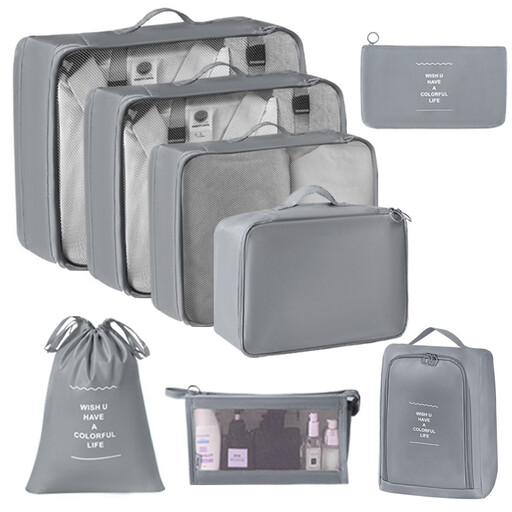
Why it's the right choice: Perfect for compartmentalising your suitcase, whether for a business trip or a family holiday. The different sizes allow you to sort clean clothes, dirty laundry, shoes, and a toiletry bag. Unpacking and repacking your suitcase has never been so quick and easy.
Made from water-resistant and tear-resistant nylon, this set is equipped with dual metal zippers. It thus avoids the classic pitfall of seams and zips that give way under the pressure of a jam-packed suitcase.
Its breathable mesh top panel allows you to identify the contents at a glance and ensures good ventilation, preventing musty odours.
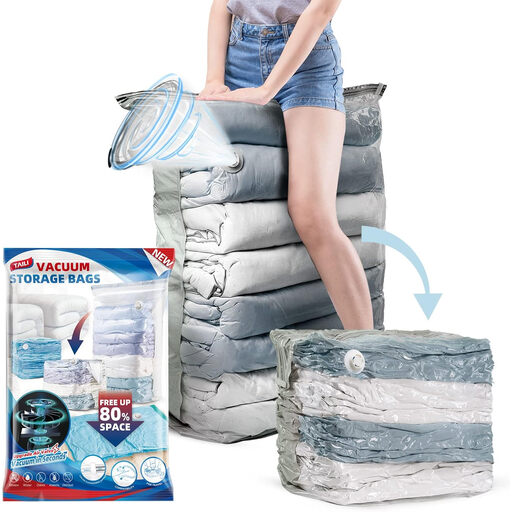
Why it's the right choice: Essential for storing the bulkiest items: winter duvets, blankets, puffer jackets... Its "cube" format, which stands up on its own, makes filling it incredibly simple. Once compressed, it fits neatly on a shelf or under a bed.
Made from durable PA+PE, this bag features a double-zip seal with a locking slider. Its innovative capless valve (no more lost caps!) is compatible with all vacuum cleaners and ensures a perfect seal to prevent the bag from reinflating.
Its wide base allows it to stand upright, which makes all the difference when filling it by yourself. A single one of these cube bags can hold the equivalent of several classic flat bags.
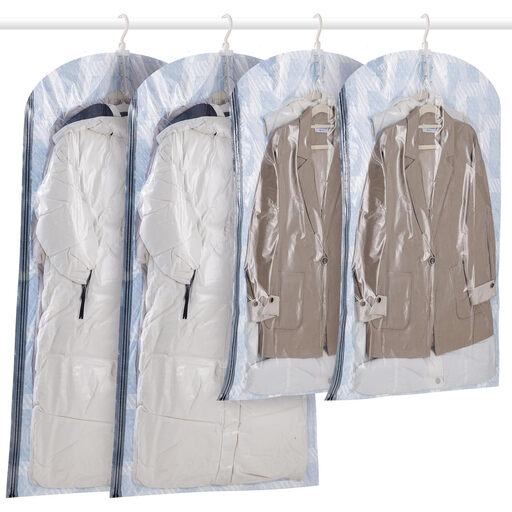
Why it's the right choice: The solution for anyone whose wardrobe is at breaking point. This system allows you to hang and vertically compress coats, suits, or dresses without wrinkling them, while drastically reducing their thickness. The two-size pack accommodates both jackets and long coats.
The PA+PE material protects clothes from dust and moisture. Its double zip has a colour-change indicator to visually confirm that the seal is perfect, eliminating the risk of air leaks.
Its internal five-ring hook rotates 360°, allowing you to grab a specific garment without decompressing the whole bag. Cleverly, it's also designed to fit most wardrobe rails.
We have selected a full range of products that meet our quality criteria and current safety standards.
A good quality bag (PA+PE material, double zip, high-performance valve) should stay compressed for several months, or even up to a year. If it reinflates in a few days, it's a sign of a micro-leak. Remember to check the zip and valve carefully before each use.
Yes, absolutely. They are designed to be reused many times. Their longevity will directly depend on the quality of the materials (nylon, PA+PE) and zips. To make them last, avoid overfilling them, exposing them to sharp objects, and forcing the zippers.
That's an excellent question. For delicate textiles like silk, or items filled with down and feathers, it is advisable not to remove 100% of the air. A 70% compression is enough to achieve significant space savings while preserving the structure of the fibres and the loft of the feathers. In any case, check your garment's manufacturer recommendations before compressing it.