
Livraison le jour même ou le lendemain

Qualité garantie

Débloquez vos offres de bienvenue: Livraison GRATUITE | Jusqu'à -80 % | 30 jours d'essai gratuits à JoyPlus
Téléchargez l'application
With soaring energy bills, optimising your thermal comfort without breaking the bank has become a top priority. The space heater has emerged as a smart, flexible solution. The problem? The market is saturated with marketing promises that can easily mislead you. The wrong appliance can turn out to be noisy, power-hungry, or, even worse, completely unsuited to your needs.
As a product expert for the editorial team, my mission is to help you decode the spec sheets to make a truly informed decision. Here are the most common pitfalls to avoid and the essential criteria to scrutinise.
The 3 Pitfalls to Avoid Before You Buy:
To avoid buyer's remorse, focus on these three key points that determine the performance, consumption, and safety of your future appliance.
The type of technology directly impacts comfort and use.
A high-performance portable electric heater should give you control.
Safety should never be an afterthought, especially with children or pets. Always check for the presence of these features:
Here are a few models that meet specific needs, in line with the selection criteria we've just discussed.
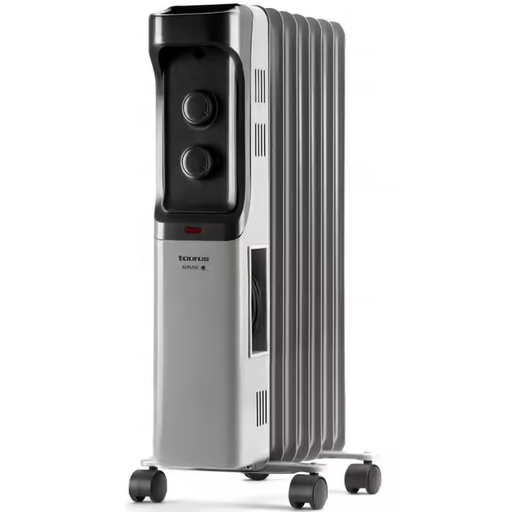
Who is it for? Perfect for those who want to maintain a cosy temperature in a bedroom or office without any noise disturbance. Its oil-filled technology provides gentle and continuous heat, ideal for sleep or concentration.
It avoids the 'fast but noisy heating' trap. Its operation is completely silent, and its mechanical thermostat, though simple, allows you to regulate the temperature to prevent overconsumption.
Its stable and enveloping warmth, thanks to its excellent thermal inertia. Highly portable with its wheels and carrying handle.
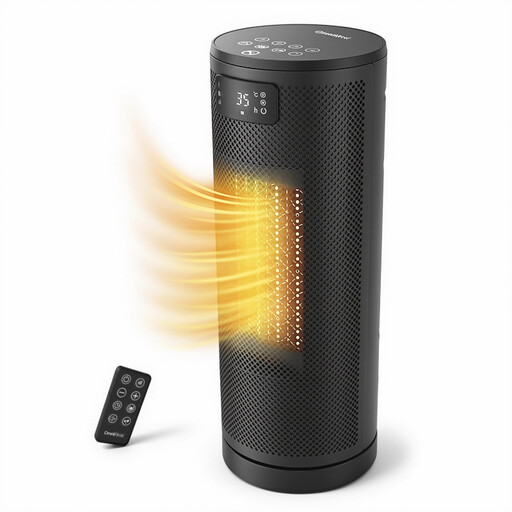
Who is it for? For those who demand rapid heat without sacrificing control. Perfect for an office, living room, or guest room, it combines the responsiveness of a ceramic heater with smart features for optimised consumption.
It counters the "uncontrolled consumption" trap with its adjustable thermostat (from 5 to 35 °C), 24-hour timer, and ECO mode that adjusts power automatically.
Its precise control over temperature and consumption. The oscillation feature is a real bonus for better heat distribution.
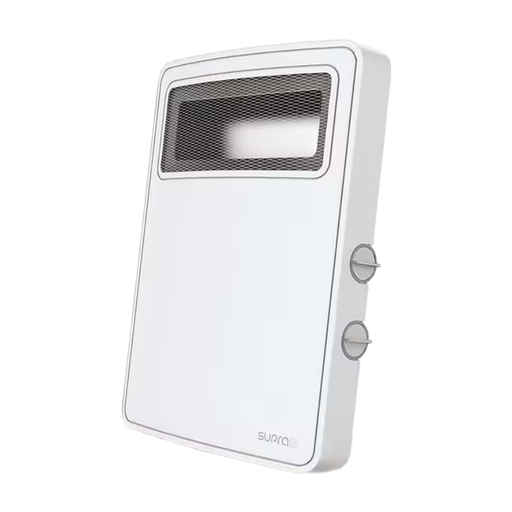
Who is it for? A portable and safe solution for those who need effective supplemental heat, including for occasional use in the bathroom. Its slim design and handle make it very easy to move and store.
It directly addresses the safety pitfall in damp environments. Its IP21 certification makes it suitable for bathroom use (while respecting safety zones), a criterion that too many competing models ignore.
Its IP21 certification, which allows for safe use in a bathroom. It also includes tip-over and overheat protection.
We've compiled a comprehensive and up-to-date selection of products that meet our strict selection criteria and safety standards.
As a general rule, you need about 10 watts per square foot (W/sq ft) for a well-insulated room with a standard ceiling height (around 8 ft). For a 150 sq ft room, a 1500W unit is a good starting point. Consider a slightly more powerful model if your room is poorly insulated or has high ceilings.
No, at the same power rating, their instantaneous consumption is identical. A 2000W appliance consumes 2 kWh per hour of operation, whether it's an oil-filled or fan heater. The entire difference lies in thermal inertia and usage patterns. Thanks to its inertia, an oil-filled radiator retains heat longer and will therefore run in less frequent cycles. A fan heater, with no inertia, will be needed more often for quick bursts of heat. The choice depends on your needs: constant warmth (oil-filled) or rapid heat-up (fan heater).
It's possible, but only if you choose a suitable appliance. Make sure it is equipped with a precise thermostat, a timer (or programmer), and, most importantly, essential safety features (overheat and tip-over protection). For overnight use, an oil-filled radiator is often the most suitable choice due to its silent operation and stable heat. In any case, the golden rule remains the same: keep the appliance unobstructed and far from any flammable materials (curtains, bedding, laundry, etc.).